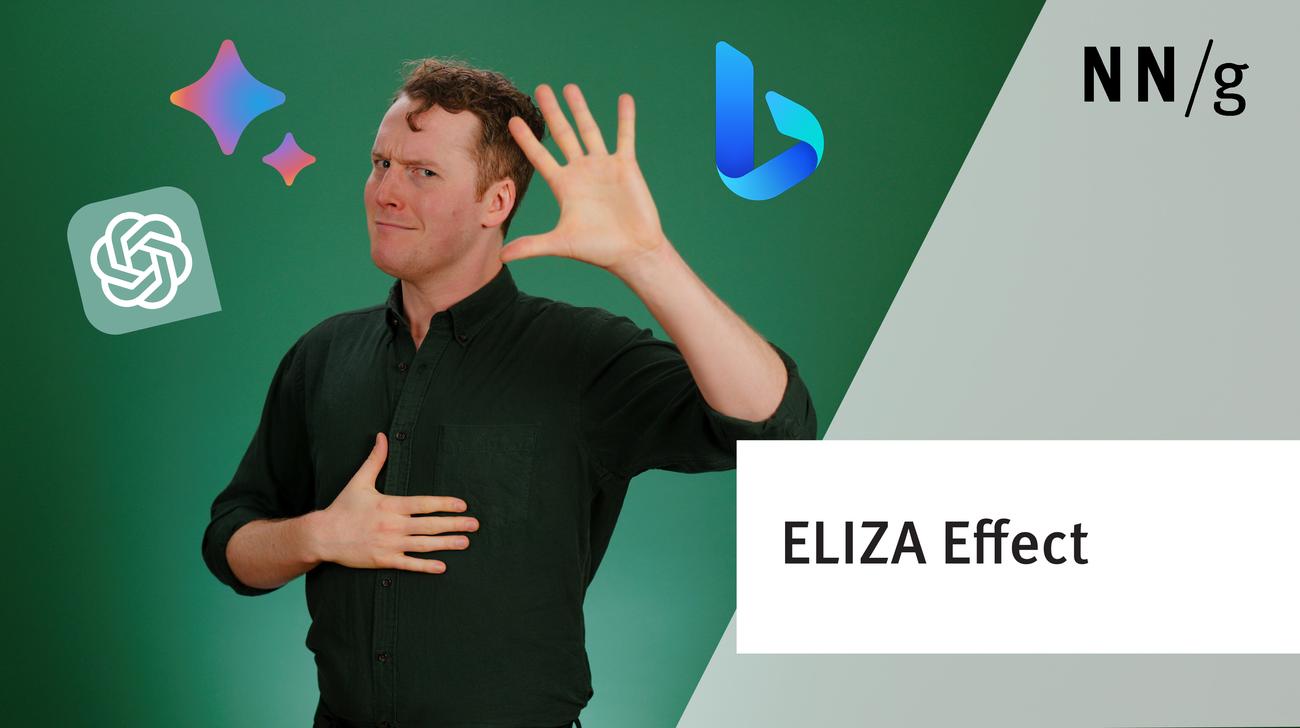
Conversational AI interfaces like OpenAI’s ChatGPT, Microsoft’s Bing Chat, or Google’s Bard are fun to use in part because they feel personable and somewhat human; chatting with AI in this way can feel like talking to another person. Some folks have even gone so far as to report developing feelings of attachment towards certain chatbots. Others have been so convinced of AI’s intelligence that they have confidently published their fears of sentience. Companies clearly don't see a problem with making bots seem human: Meta just announced an entire suite of AI personalities that users can interact with and learn from. But just because chatbots feel human doesn't mean they are good AI products.

Do not confuse our inherent ability to attribute human characteristics to artificial intelligence (AI) models with true technical breakthroughs. A mock virtual psychotherapist named ELIZA provides a valuable lesson to contextualize the current AI boom.
ELIZA: A Deceptively Simple Chatbot
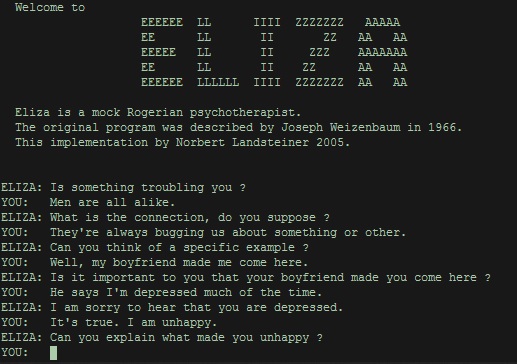
ELIZA was developed by Joseph Weizenbaum, a professor at M.I.T., in the 1960s. ELIZA would take the position of a text-based therapist. It would ask: Is something troubling you? Then it would identify a keyword in the user’s response (I’m feeling sad) and repeat it back in a question such as Is it important that you’re feeling sad? or Why are you feeling sad? When ELIZA failed to identify a keyword in its simple vocabulary, it would respond with a generic phrase: please go on or what is the connection, you suppose?

By communicating its role as a psychotherapist, ELIZA set the conversational context and its users' expectations. This conversational context, combined with simple programmatic logic, led users to treat ELIZA as if it was a human. They divulged deep secrets to their virtual psychotherapist. In fact, Joseph Weizenbaum’s secretary became so attached to the program that she requested to have private conversations with ELIZA. ELIZA seemed to listen to people and understand their problems.
But ELIZA didn’t really understand anything. In fact, ELIZA was less than human, less than a parrot even. Based on the context of a human-like conversation, users were predisposed to attribute their own words and feelings to a program. ELIZA was simply holding a mirror up to its users, reflecting their thoughts and feelings back to them.
Users are fascinated to see aspects of themselves mirrored back to them. In fact, they may even find utility in a program which simply returns their opinions and feelings, reworded and reframed.
The ELIZA Effect’s Implications for Artificial Intelligence
Whether a system fools someone into thinking it's a real person scratches only the surface of artificial intelligence. AI can be much more. It's about developing meaningful, helpful, and novel solutions to problems. To make impactful products that are easy to use, it's not enough to create programs that feign humanity. Designers, engineers, and UX researchers need to know why users behave the way they do, why they find enjoyment in products, and why they have certain experiences.
Anecdotal reporting suggests that the conversational nature of AI can make it difficult to receive actionable and useful information from a chatbot; the semblance of humanity may prevent users from learning how best to derive utility from a product. We need to do more research to verify this hypothesis and understand to what extent conversational interfaces affect users’ ability to derive utility from a product.
UX Research Is Essential for AI Development
Improving interfaces to be enjoyable and easy to use is exactly what UX professionals have been doing for decades. Many of the foundational UX concepts and research approaches that have been established by the UX field apply directly to AI development. Comfort and leniency can substantially benefit products' user experience. However, when conducting research for AI products, UX professionals must establish clear product objectives. Is the goal to encourage a feeling of emotional connection or understanding, or to increase the productivity of a knowledge worker? UX researchers have the skills to objectively evaluate the benefits and drawbacks of different AI-interface approaches and can do so by remaining focused on the experience of users.