In a thought-provoking episode of the NN/g UX Podcast, Tim Neusesser and I spoke with Henry Modisett, head of design at Perplexity AI. Our discussion highlighted the challenges of making AI tools usable and approachable for the average person — not just early adopters and tech geniuses. Despite the novelty of the technology, the challenges we discussed will be familiar to UX professionals working on a wide range of products.
We also dipped into some exciting predictions for the near future, including how AI will revolutionize user experiences.
Meet Henry Modisett and Perplexity AI

Perplexity is a fast-growing AI startup focused on delivering reliable information as quickly as possible. It recently raised $73 million in Series B funding, with high-profile investors including NVIDIA and Jeff Bezos. In January, it was the eighth most popular productivity app in the US Apple App Store.
Henry Modisett is Perplexity’s head of design. Before joining Perplexity as a founding designer, Henry worked for Google and Quora. His experiences in those companies gave him a unique perspective on information seeking, which perfectly prepared him for his work at Perplexity.
Henry:
“Perplexity was supposed to be just the fastest way to get information. What it's become is something even bigger than that, which is [...] this bridge between you and all the information that’s available in the world.”
Product Niches Enable Simpler Design
Many generative-AI tools help shortcut the information-seeking process. However, Perplexity stands out against general-purpose AI tools (like ChatGPT) because it’s specifically designed for information seeking.
Henry:
“Finding information as fast as possible has been a flag that we planted really early on in our product-design and engineering principles. [...] It feels funny to say that’s our niche, because it’s one of the most human needs.
Like, Open AI is building an amazing thing. But they’re building a platform that’s going to have to work for all kinds of use cases that we’re not thinking about.”
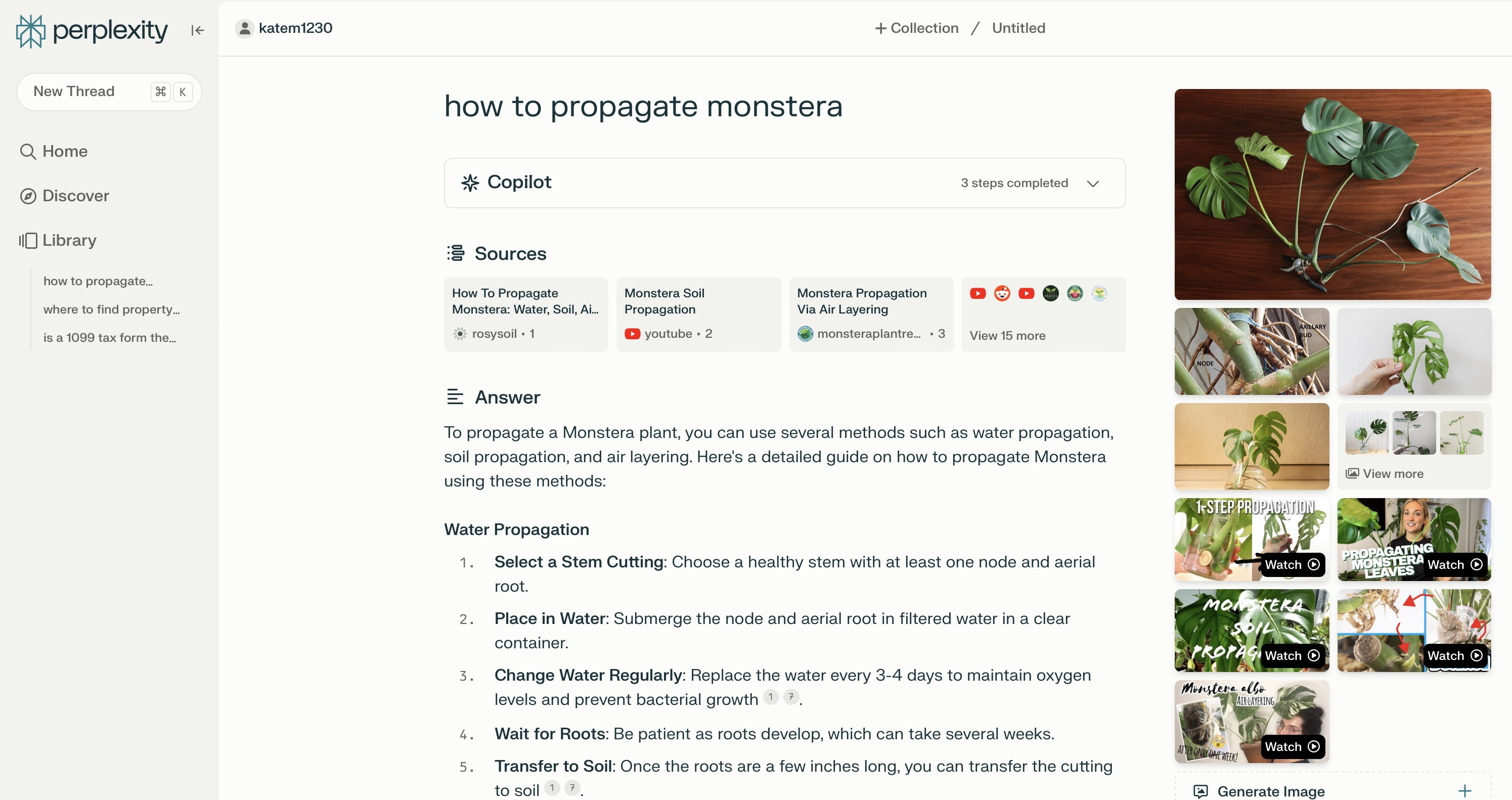
This is a long-standing principle of user experience (called the flexibility–usability tradeoff) — the more flexible a system is, the less usable it tends to be. In other words, the bigger and more complex the product, the harder it is to deliver a pleasant experience. ChatGPT and Perplexity are not immune to this principle, even though they’re encountering it on a different scale.
By having a slightly more narrowed (though still enormous) scope, Perplexity was able tailor its UI to information seeking.
Henry:
“People want information as fast as possible and want to trust that information. Well, then it's like actually quite a simple design problem and that's why the product feels quite simple.
There are the sources and then there's an answer, and it's not a conversation. We'll show you text, we'll show you videos, we'll show you images, we'll show you maps — just trying to instantly give you what you want and represent that information in a variety of forms.”
Generative-AI product development is the Wild West right now. With billions of investment dollars, massive consumer and enterprise interest, and an unprecedented pace of technological advancement, it’d be easy for any product team to lose focus. Henry attributes much of Perplexity’s success to their clarity of purpose.
Henry:
[When we’re assessing a new technical capability], we ask, ‘Does it make sense in our product?’ Because there’s some stuff that doesn’t and we won’t use it. We have to have the idea of who we are and what we want to be great at.
There’s the technology, there’s the market, and they’re all nuts.
There’s a massive competition happening with millions of dollars, and we’re just trying to make a useful product, which is a nice clarity about who we are.”
Making Generative-AI Consumer-Friendly
Despite their ascendant popularity, generative-AI tools like ChatGPT and Midjourney are still extremely difficult to use. Prompt writing is challenging even for tech-savvy people, let alone for someone with medium-to-low technical skills.
Henry:
“I think prompting is the worst software experience ever. [...] We’re in a small blip of software experience where this is even going to be a thing; there’s no way it survives.”
This is another instance where Perplexity’s focus on information seeking is a benefit. In our studies, we’ve observed that many people who are new to prompt writing will simply type in a few keywords — as they would in a search box.
(This is another age-old principle of user experience: people leverage their existing knowledge and habits to understand new interfaces. This is why external consistency is beneficial to user experiences.)
Typing a few keywords into ChatGPT or Midjourney won’t get you anywhere, but that isn’t the case with Perplexity. Henry and his team have designed Perplexity with consumers in mind, and so its prompt input field intentionally resembles a traditional search field.
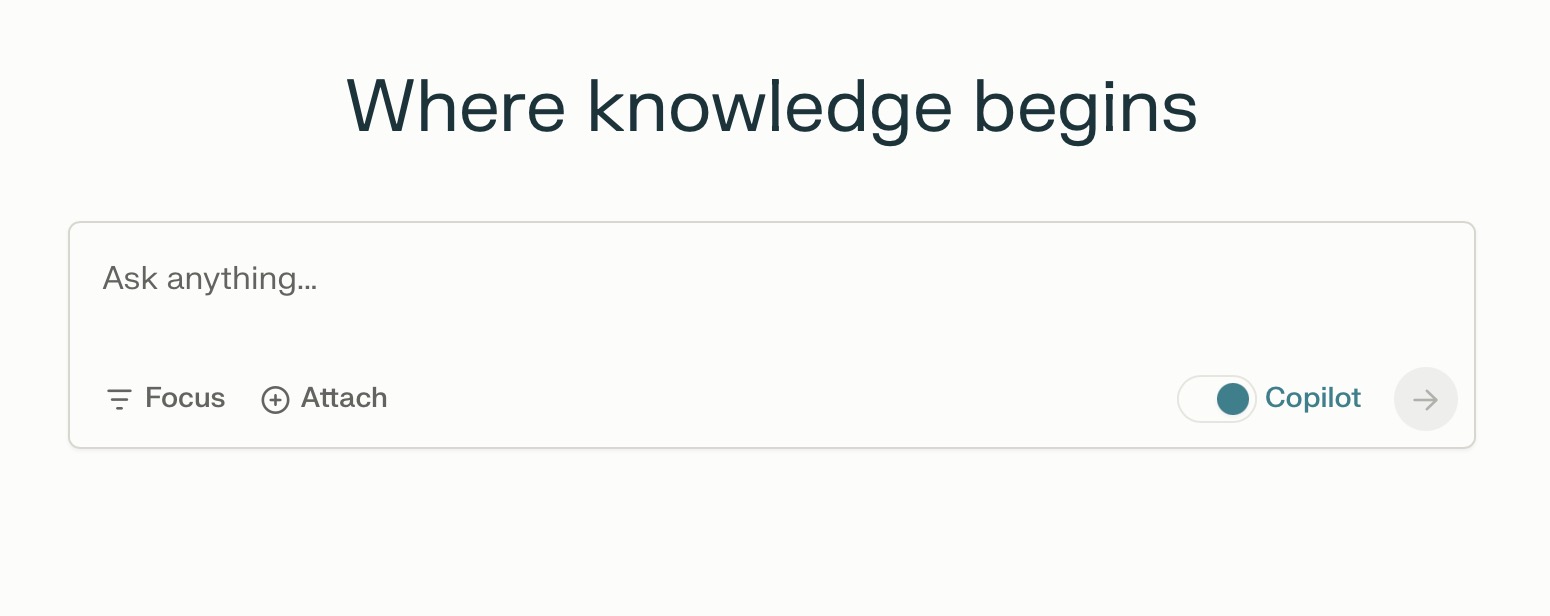
While users can add more context and complexity to their information request, they don’t have to. Even a few keywords can yield a useful result.
Henry:
“You can type and it feels familiar. You can just type something, maybe ‘how you would use Google or ChatGPT’ [...] My goal is just to get you to try it.”
Integrating AI Into Products: Customized UIs, Chat, and Anthropomorphism
As UX professionals, we have an exciting challenge ahead of us — finding ways to integrate AI-driven automation into our products in meaningful ways. Suddenly, we can create experiences that have never been possible before.
Tim, Henry, and I discussed some exhilarating possibilities, including generative UI: allowing AI agents to make real-time decisions about how to tailor interfaces for individuals.
Unfortunately, most of the widespread AI integration we’re seeing now lacks creativity. Many companies are rushing to cram AI chatbots into their products as a quick, obvious way to integrate this new technology. While these chatbots can be useful, they are not always the right solution.
Henry:
“I think the thing I feel confident about is that not everything should be a chat. Actually, most products should not be a chat, and most products don’t benefit from having an anthropomorphized concept. [...]
This technology is just going to be available in everything and everywhere. It’ll just be a way to enable some core product experience. It’ll make some new software that’s amazing, and it’ll accelerate some old software.”
Listen In for the Full Conversation
To hear Henry, Tim, and me discussing these complex aspects of AI and UX, listen to our full podcast episode.
For more thought-provoking conversations about current UX topics, subscribe to the NN/g UX Podcast.