In our first ecommerce studies in 2000–2001, users failed almost half the time when they tried to shop on ecommerce sites. No wonder the dot-com bubble burst, with sites that bad.
More than 20 years later, it’s much easier to shop online. We recently completed a large international research project in preparation for the new edition of the Ecommerce User Experience report series. In these studies, the 39 participants (in the US, India, and China) were able to successfully complete all but a few of the tasks they attempted.
Ecommerce shopping is easier than ever before — but when most ecommerce sites cover the basics, “easy” alone is no longer enough.
Today’s consumers are not satisfied with sites that simply make it possible to shop. The experience must be designed to answer all questions for all types of customers and help them easily decide which products to purchase.
Some of the most notable advancements we observed in our latest ecommerce research include:
- Robust comparison and decision-support tools
- Comprehensive review-filtering functionality to identify reviews from people similar to the shopper
- Sophisticated ways to see products, including augmented-reality tools
- Short, looping in-page videos shown amongst imagery, showcasing products in motion, rather than the long advertising-style videos of the past
- Shifts toward text message notifications as a communication channel for timely messaging
- Improved buy-online-pickup-in-store service design
- Focus on communicating brand values, such as diversity, environmental consciousness, and ethical manufacturing
- Increasingly sophisticated and successful social-networking integration — including the addition of innovative techniques like livestream selling
- Appropriate and useful product recommendations instead of the random, annoying recommendations of the past
The most successful retailers recognize that the shopping experience extends beyond site checkout. They thoughtfully design the entire shopping journey, including the fulfillment, delivery, or pickup processes, which are quick, convenient, seamless, and well communicated.
Two factors in particular have raised the standards of ecommerce-experience design and have influenced what customers expect from online retailers:
- The COVID-19 pandemic
- The rise of direct-to-consumer sites
COVID-19 Triggered an Ecommerce Evolution
When the COVID-19 pandemic first spread across the world in early 2020, many people were suddenly trapped in their homes. As a result, the demand for ecommerce rapidly increased.
There’s good reason to believe that this increase will continue even beyond the pandemic. Many people who had never (or rarely) shopped online before did so in 2020, and it’s hard to give that convenience up after you’re exposed to it.
This shift forced retailers of all types to adapt to a new reality and new consumer behaviors. In addition to improvements in the online information provided to customers, we observed advancements outside of the digital interface, in the services that stores provided to customers.
Retailers began to offer more choices and flexibility to ecommerce shoppers, including more options for:
- Payment
- Financing
- Shipping and delivery
- Recurring orders
- Customer-support channels
One of the most notable shifts in customer service was the rise of curbside-pickup services offered by many major retailers. While convenient and safe for shoppers, these services presented new logistical challenges to companies. The retailers who invested time and effort to design a seamless process, and lead customers through it were the most successful.

Direct-to-Consumer Brands Lead the Way in Ecommerce Innovations
Direct-to-consumer (DTC) ecommerce brands design and manufacture products and then sell them directly to their customers online — rather than using other retailers as intermediaries.

An influx of niche DTC retailers across almost every product category have entered ecommerce markets in recent years. Many of these are selling products that were traditionally difficult to sell online, such as expensive and tactile products like:
- Makeup: Glossier, ColourPop
- Skincare: Beauty Pie, Disco
- Underwear and bras: Thirdlove, EBY
- Mattresses: Casper, Purple, Avocado
- Furniture: Joybird, Article
- Fitness equipment: Tempo, Mirror
- High-end jewelry: Vrai, Mejuri
Because these brands were developed with online retail as the primary (and often only) distribution channel and because DTC retailers often specialize in a single type of product, they have the luxury of being extremely focused. They often invest heavily in selling their niche products online. Their product pages can be highly customized and tailored to explain the fine details of these products to consumers and often demonstrate innovative designs.
Though many online retailers offer similar types of information, DTC sites are doing it better. However, you don’t have to work for a DTC brand to learn from and adopt their successful ecommerce strategies.
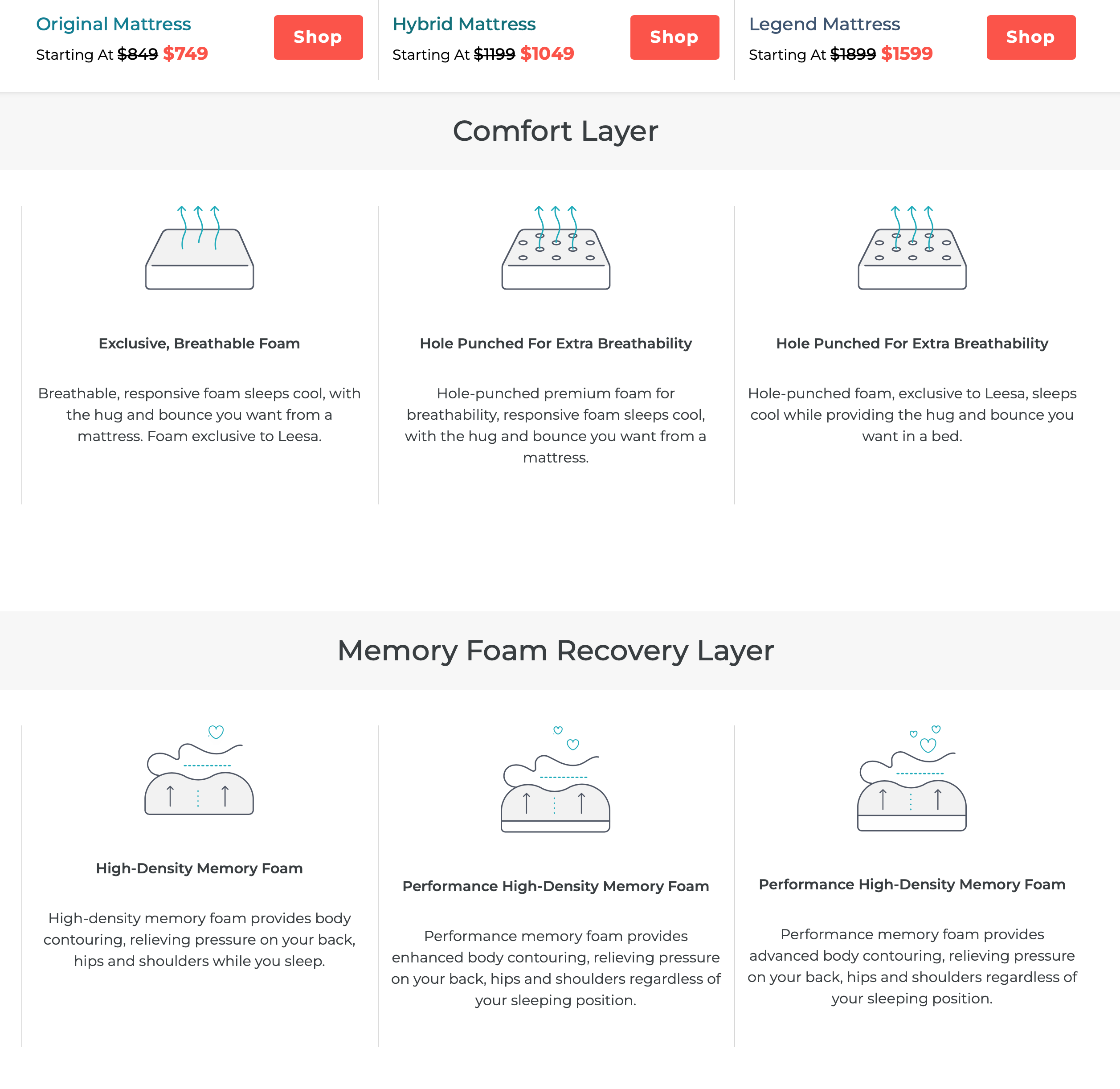
In particular, these sites excel at their graphic and text content, which they use to highlight key features and benefits of their products. For example, Leesa.com, a retailer that specializes in selling foam mattresses online, provided product text and visual information like illustrations and interactive models to help customers understand the complexities of a multilayer mattress.

Beyond interactive imagery and thoughtfully written descriptions, DTC sites also offered innovative ways for shoppers to experience their products digitally — particularly through video and augmented reality (AR).
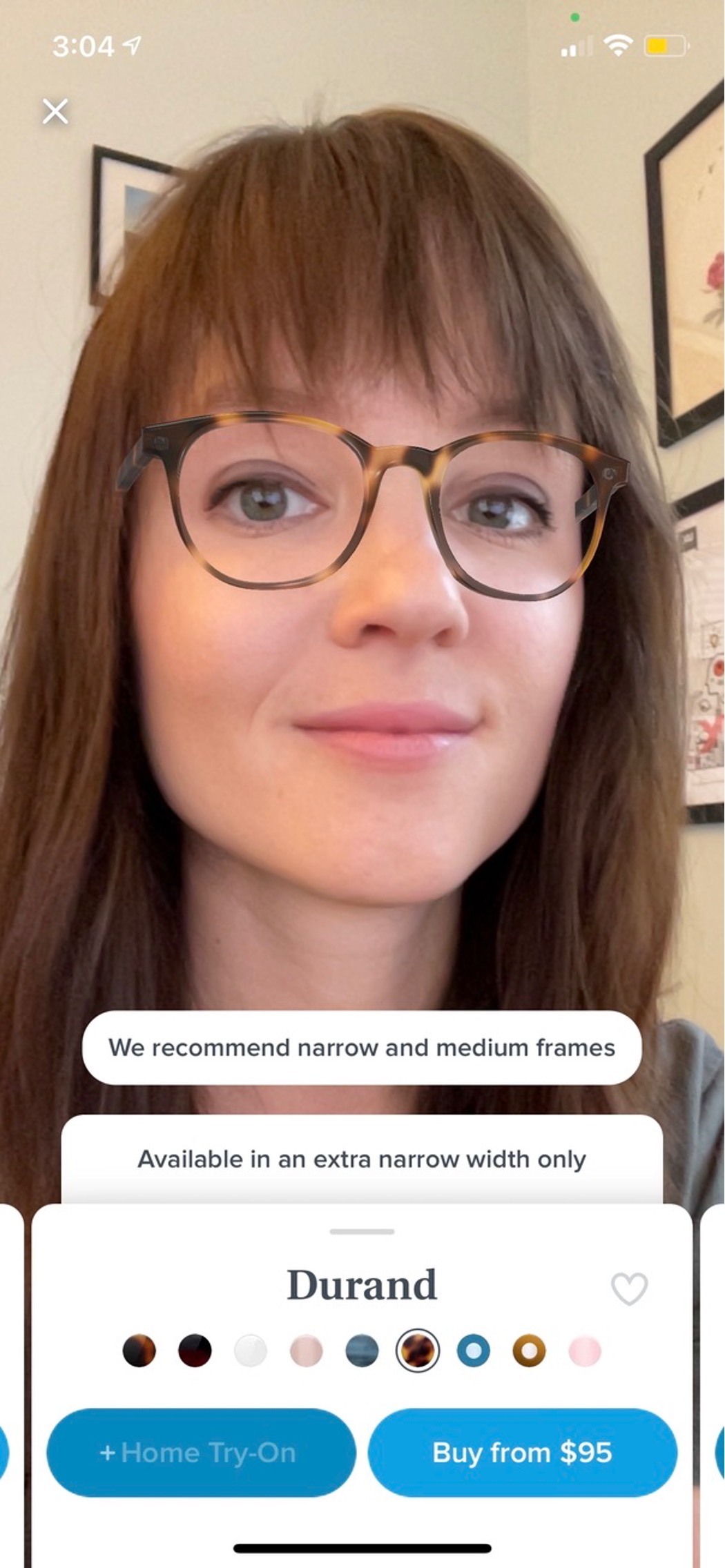
For example, Warby Parker, a DTC brand selling eyeglasses, used augmented reality directly in the product page to help shoppers visualize the glasses on their face.
Make no mistake: users shop for products on both traditional ecommerce sites like Target and Wayfair and on niche DTC sites. If a competitor’s experience makes shoppers feel more informed and confident about making a purchase, they will often choose that competitor. We know that many consumers are willing to pay a premium for good experiences, even if the products they purchase are comparable to those from other retailers that lag behind.
For this reason, traditional ecommerce sites should work toward a strategy that can compete with DTC brands, starting with a subset of high-priority product categories.
Invest in flexible product page structures that can be adapted to introduce the same quality of imagery, detail, and immersive shopping experiences that draws users to DTC brands.
Discover the best ways to tailor product content to your shoppers by conducting research. Start from a deep understanding of the questions and concerns of your specific customers.
Conclusion
Simply delivering a standard ecommerce experience is no longer enough — an influx of new ecommerce demand, combined with the innovations driven by direct-to-consumer sites, have elevated users’ expectations.
It is difficult to beat Amazon.com in fulfillment speed. But it’s absolutely possible to beat them in website design and email usability — areas where Amazon’s user experience quality is degraded by its unwieldy and monstrous size.
To learn more about these and other factors that have sparked change in the ecommerce landscape, as well as how to adapt your site to compete, see the new 5th edition of our Ecommerce User Experience report series.