In the 2023 Intranet Design Annual, winners used AI-powered features to help employees be more efficient by providing quick access to the right information, tools, and services. This article discusses noteworthy AI intranet features and their practical applications in the workplace.
Intranets often get a bad reputation for findability and navigation issues and are typically managed by understaffed teams. Because they typically store lots of structured and unstructured data, they inherently provide a vast dataset AI can analyze and derive insights from to personalize content, automate content management, and improve search results to reduce information overload and irrelevance.
- Answering Questions and Locating Documents
- Supporting Remote-to-Hybrid Work Transitions
- Suggesting Collaboration Tools for Teams
- Growing and Developing Employees' Careers
- Assisting Overloaded IT and HR Teams
- Personalizing and Retiring Content
- Improving the Relevancy of Search Results
- Future Predictions for AI on Intranets
Answering Questions and Locating Documents
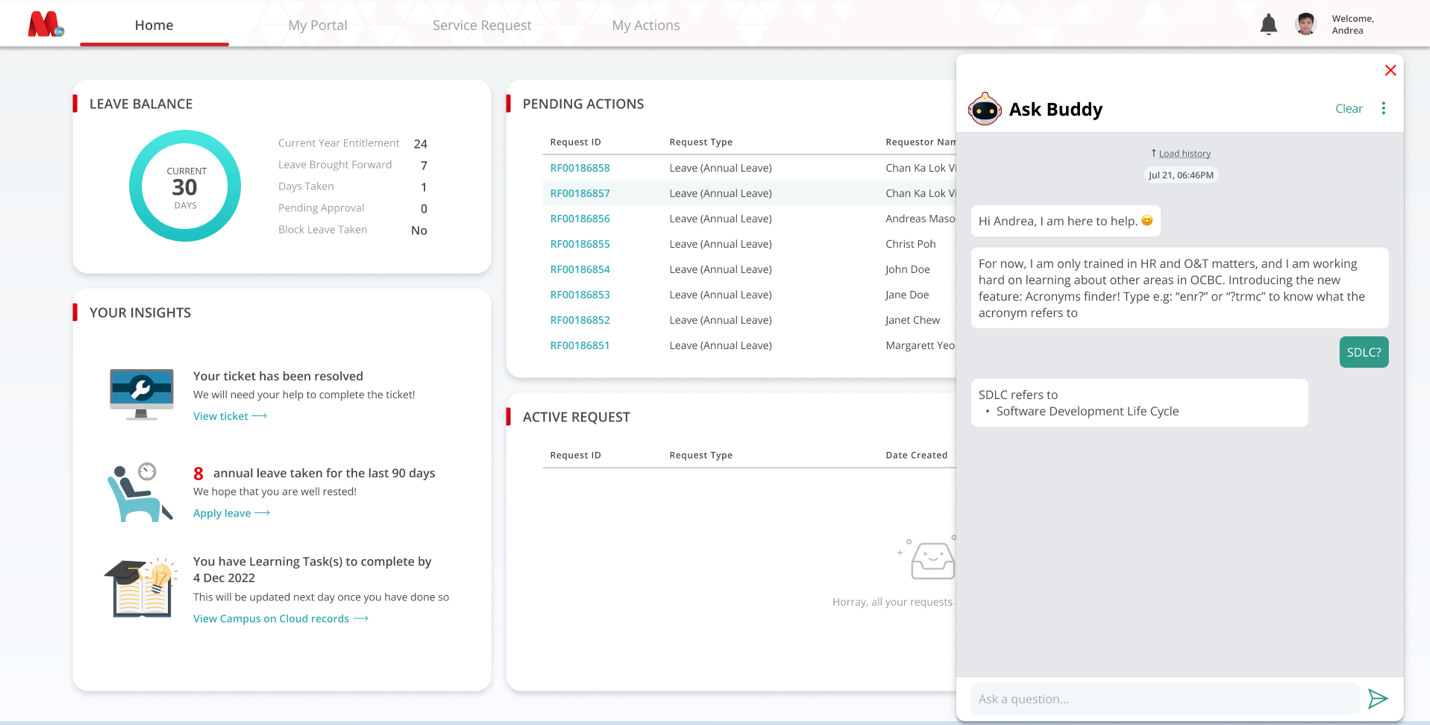
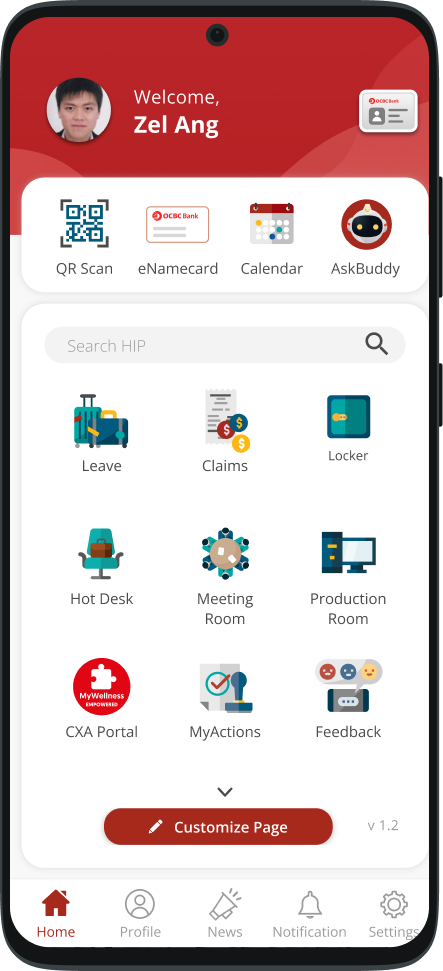
OCBC Bank's AI-driven chatbot, Buddy, can answer over 2,000 questions, locate documents, and search over 4,000 acronyms to provide plain-language clarifications. Buddy uses machine-learning algorithms, including natural language processing (NLP), to continually improve its understanding of employees' language and preferences.
Assigned content creators across departments create answers to questions, and the AI engine trains Buddy to interpret employees' inputs. By collecting and analyzing responses and feedback, Buddy grows its intelligence and response effectiveness. Employees can access Ask Buddy from the intranet's homepage on desktop and mobile. From new hires to seasoned staff, Buddy supports all employees and helps them quickly access relevant content using conversational AI.
Supporting Remote-to-Hybrid Work Transitions
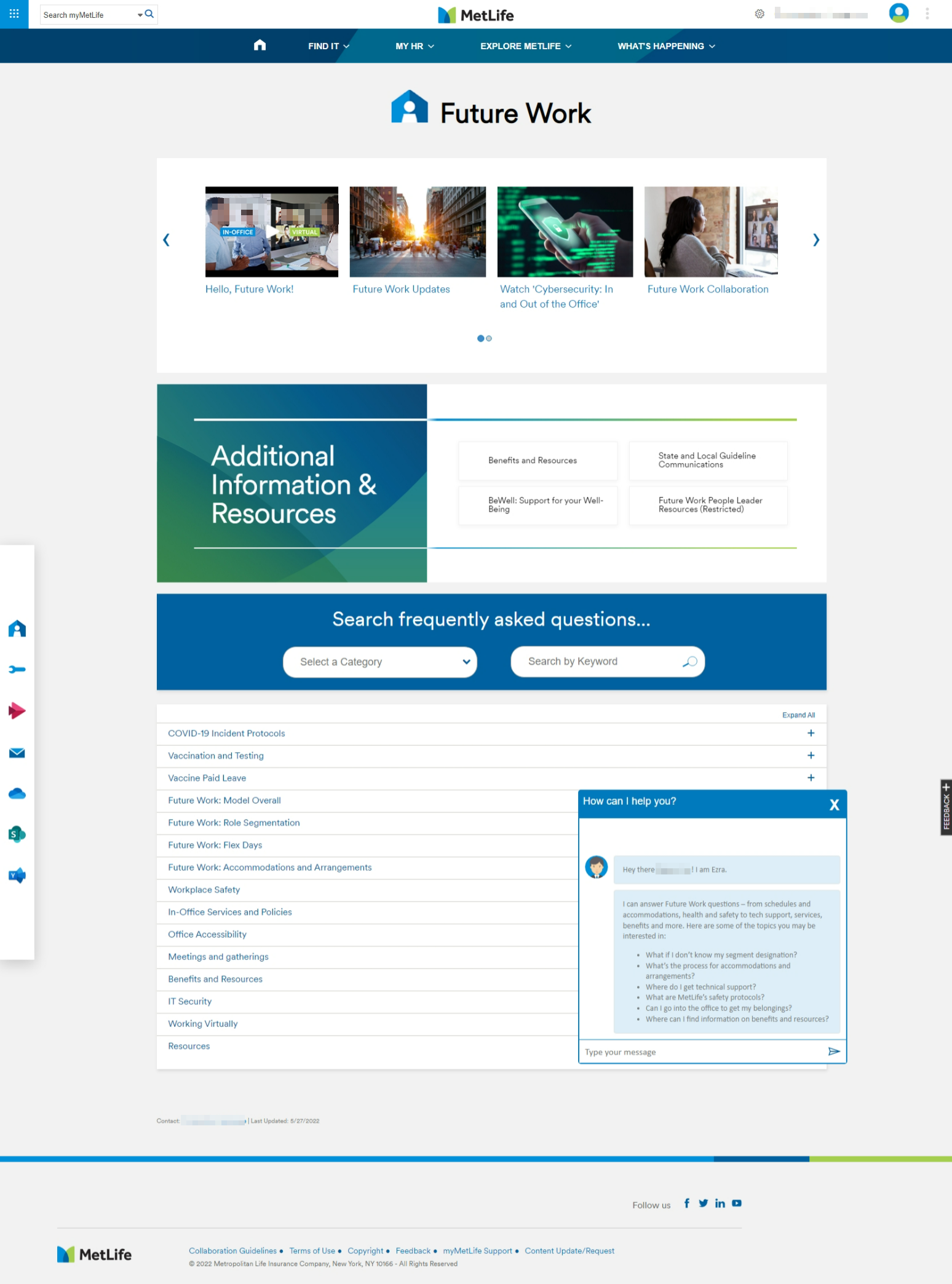
On MetLife's intranet, an AI-powered chatbot, Future Work, provides employees with guidance and resources on topics such as COVID-19 and transitioning from remote to hybrid work. Future Work has been one of the most used areas of the intranet for the past three years. The chatbot gives quick, clear answers to questions about everything — from in-office attendance expectations to reserving desks, so employees can keep working without waiting for clarifications from a human.
Suggesting Collaboration Tools for Teams
Another feature on MetLife's intranet leveraging AI is a Collaboration Tools Wizard. Depending on the roles involved in a project and the type of collaboration needed (e.g, for a brainstorming session, long-term planning, or daily team check-ins), AI will suggest an approved set of tools for the team to use. Employees can also choose from standard, preset scenarios and audiences with precise descriptions and recommendations. The Collaboration Tools Wizard simplifies decision making and team collaboration, as there's no more wasting time on trial and error with tools that aren't fit for projects and the people involved.

Growing and Developing Employees' Careers
AI features are also giving employees a hand with their career growth and development. Based on their past experiences, interests, skills, and career goals, AI will suggest new colleagues to connect with, projects to explore or take on, and even further training and internal roles that may be of interest. Instead of trying to navigate their career growth alone, employees get tailored, personalized suggestions. AI features make it easy to discover new opportunities within the company and connections they may have otherwise missed. It's like having a personal career coach on the intranet, which is important for retaining employees and growing talent.
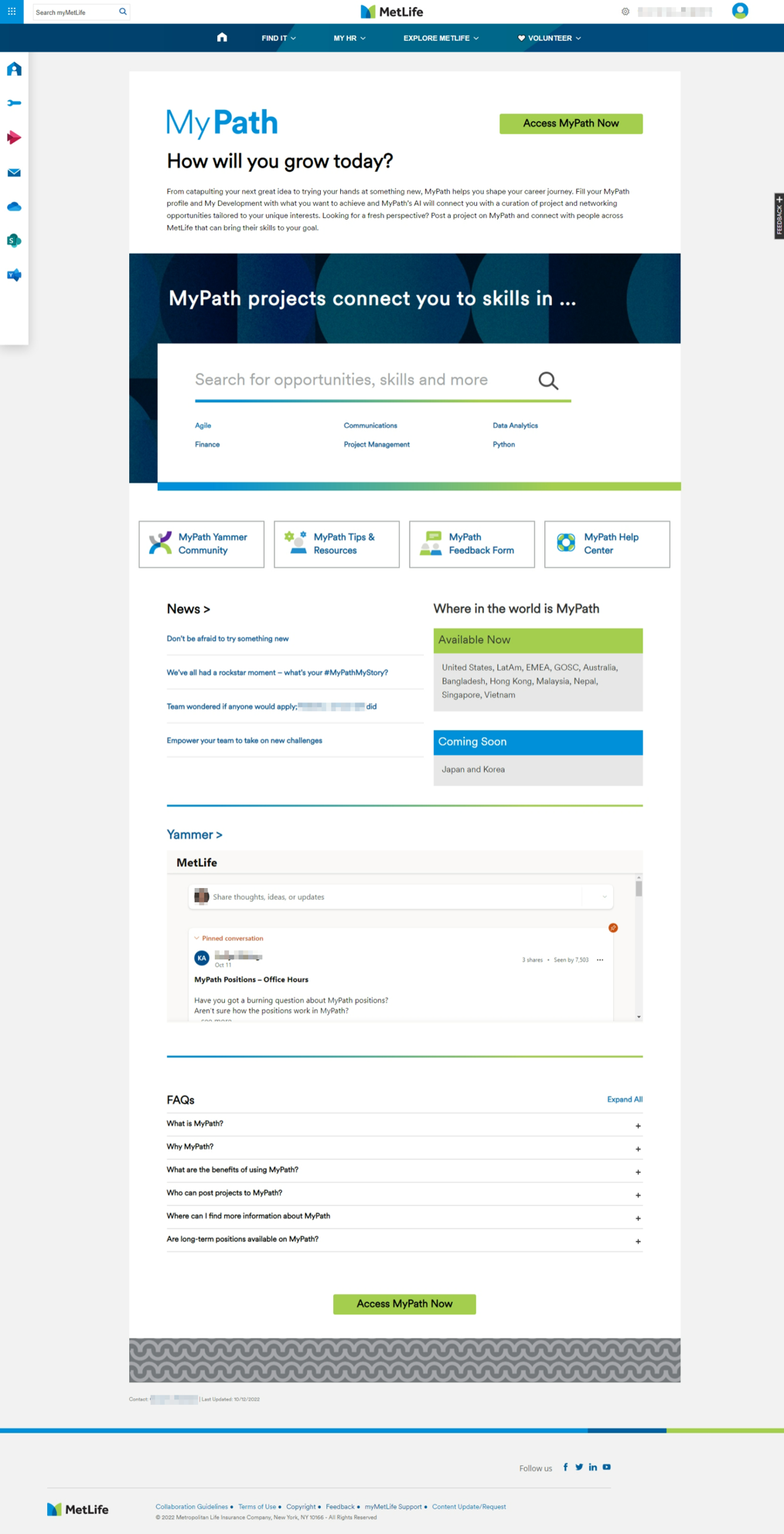
For example, MetLife's MyPath program leverages AI to match employees with relevant people, projects, and organizational positions based on their skills, experiences, and career ambitions.
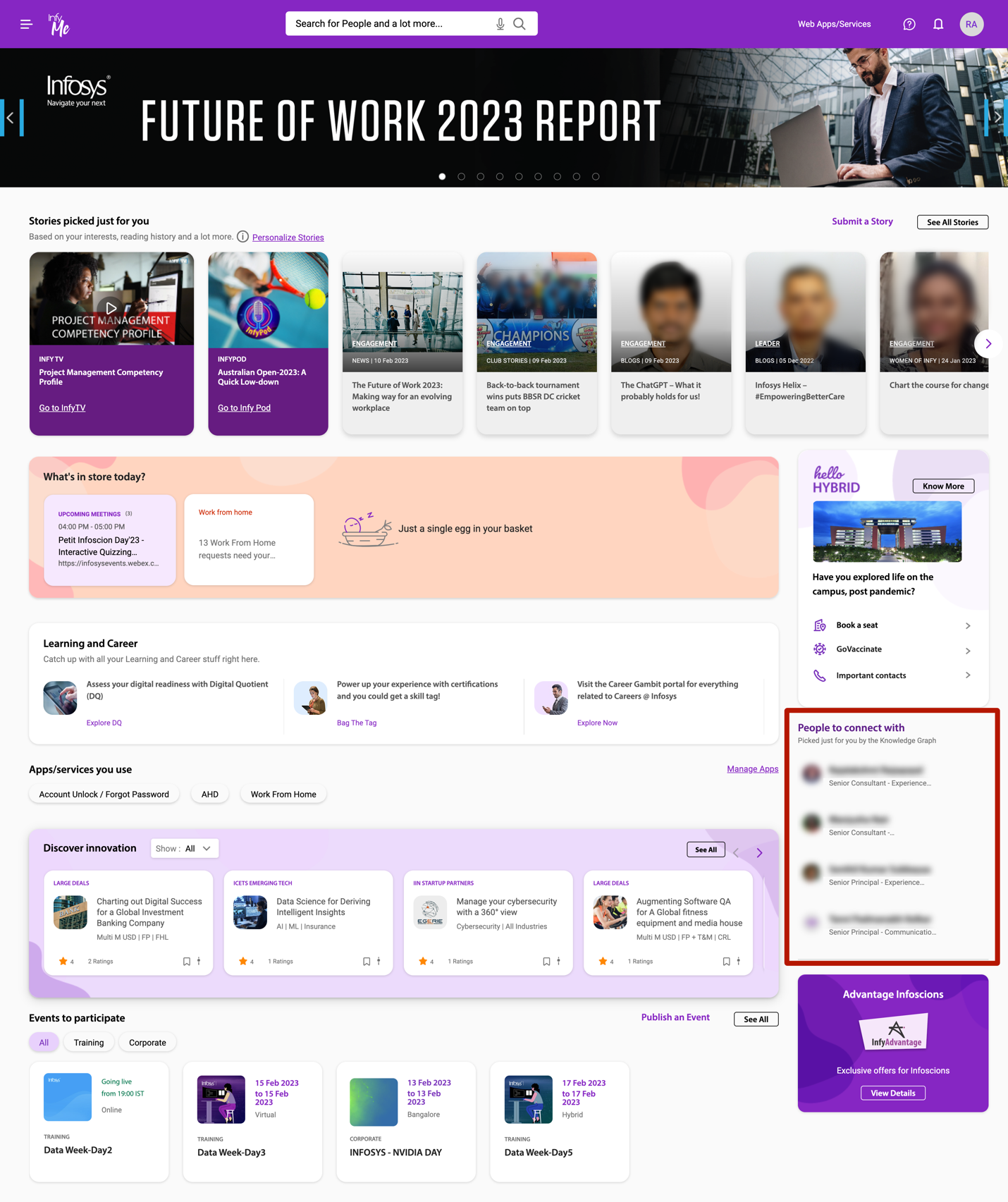
Similarly, to foster connections with new colleagues, Infosys's intranet uses artificial intelligence to suggest people who share similar interests or could be part of an employee's network. For a large organization like Infosys, with around 350,000 global employees, using AI helps make the company feel close-knit.
Assisting Overloaded IT and HR Teams
AI-based features also act as virtual assistants for busy IT and HR teams, helping cut down on the usual flood of support tickets by quickly answering common questions. In the process, AI also suggests related topics to help employees get answers before they even need to ask. Instead of waiting in long support queues or searching for answers, employees can get instant, relevant help. This means less downtime and more focus time for work.
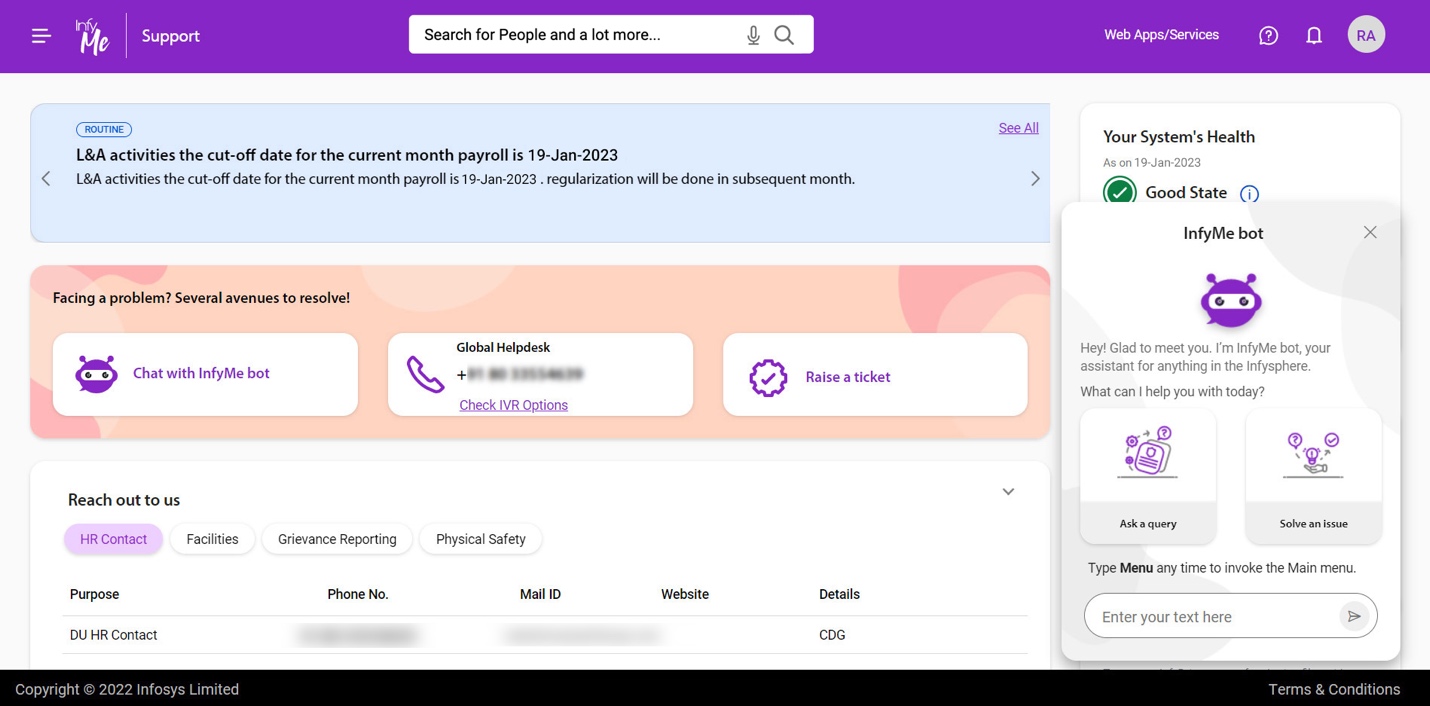
For example, Infosys utilizes an AI-based virtual assistant, the InfyMe chatbot, to answer questions related to:
- Hardware and software support
- Resetting passwords
- Unlocking accounts
- Company policies
- Business processes
According to the Infosys intranet team, from January 2021 to September 2022, the AI chatbot was used by 305,867 unique users and handled 919,075 questions, with an average accuracy of 88%. Chatbot usage at Infosys has increased by 63% from 398,431 messages (in 2021) to 649,164 messages (in 2022), with 85% of user questions resulting in task completion, thus eliminating a high volume of support tickets.
Personalizing and Retiring Content
Internal-communications teams are also getting a productivity boost from AI by using the technology to translate content for employees at office locations around the world. They also use it to personalize what employees see on the intranet, ensuring its relevant content. Employees can give instant feedback on the news, landing pages, and search results. This feedback tweaks the AI to show more of what they care about. Internal-communications teams gain time to work on the quality of their intranet content instead of the quantity.
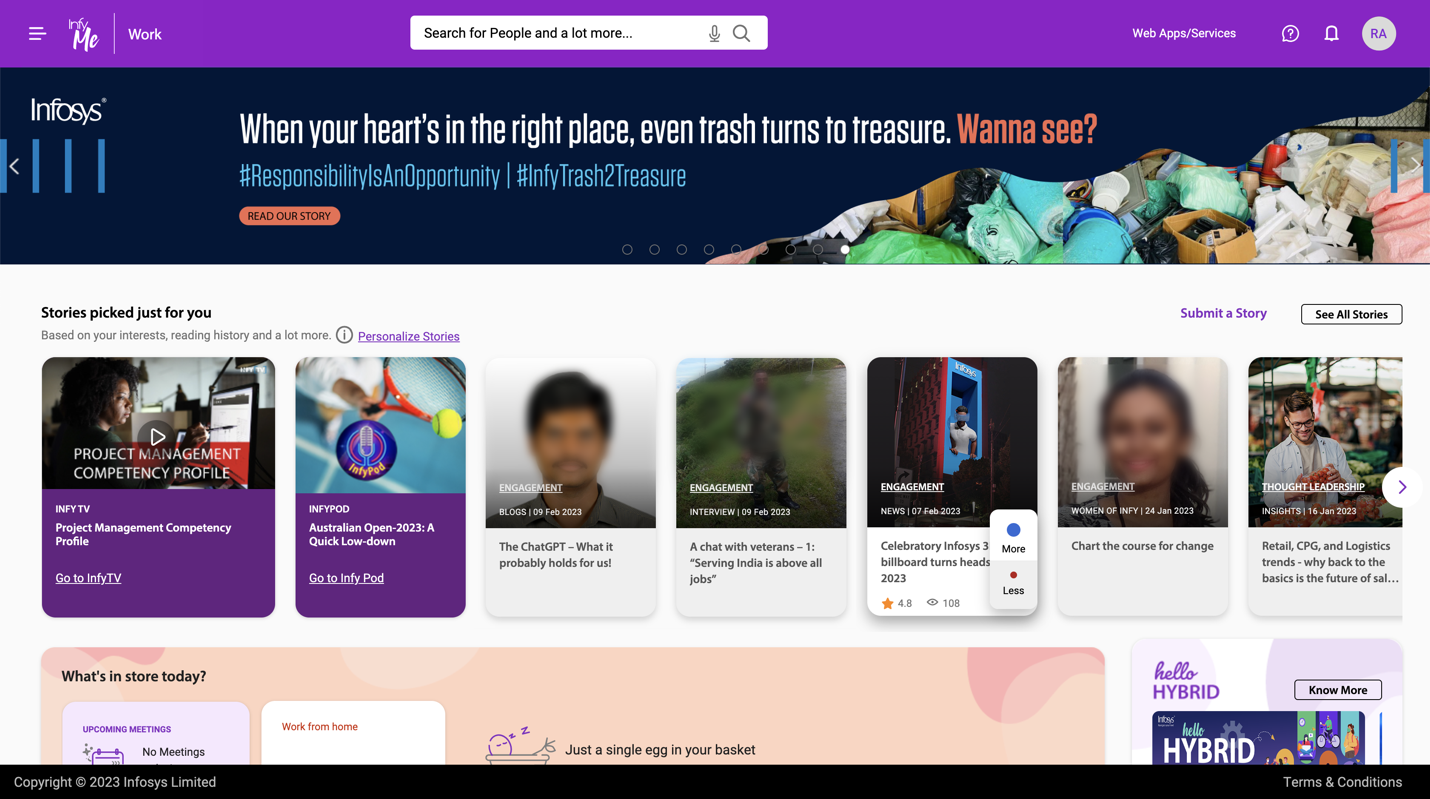
Infosys's intranet is highly personalized and focused on reducing content clutter. It uses Infosys's AI recommendation engine to connect information across the organization and generate insights from real-time employee activities and preferences. The platform then adapts its content suggestions by analyzing employees' feedback, upvotes, reading history, and trends among similar employee profiles.
This continuous learning process allows the platform to adapt its content offerings, allowing employees to indicate their preferences for specific content types. Ultimately, the goal of using AI is to offer content that resonates with employees while maintaining a focused and relevant intranet experience.
Additionally, AI also does housekeeping: it automatically removes or archives content that's ready to be retired from the intranet.
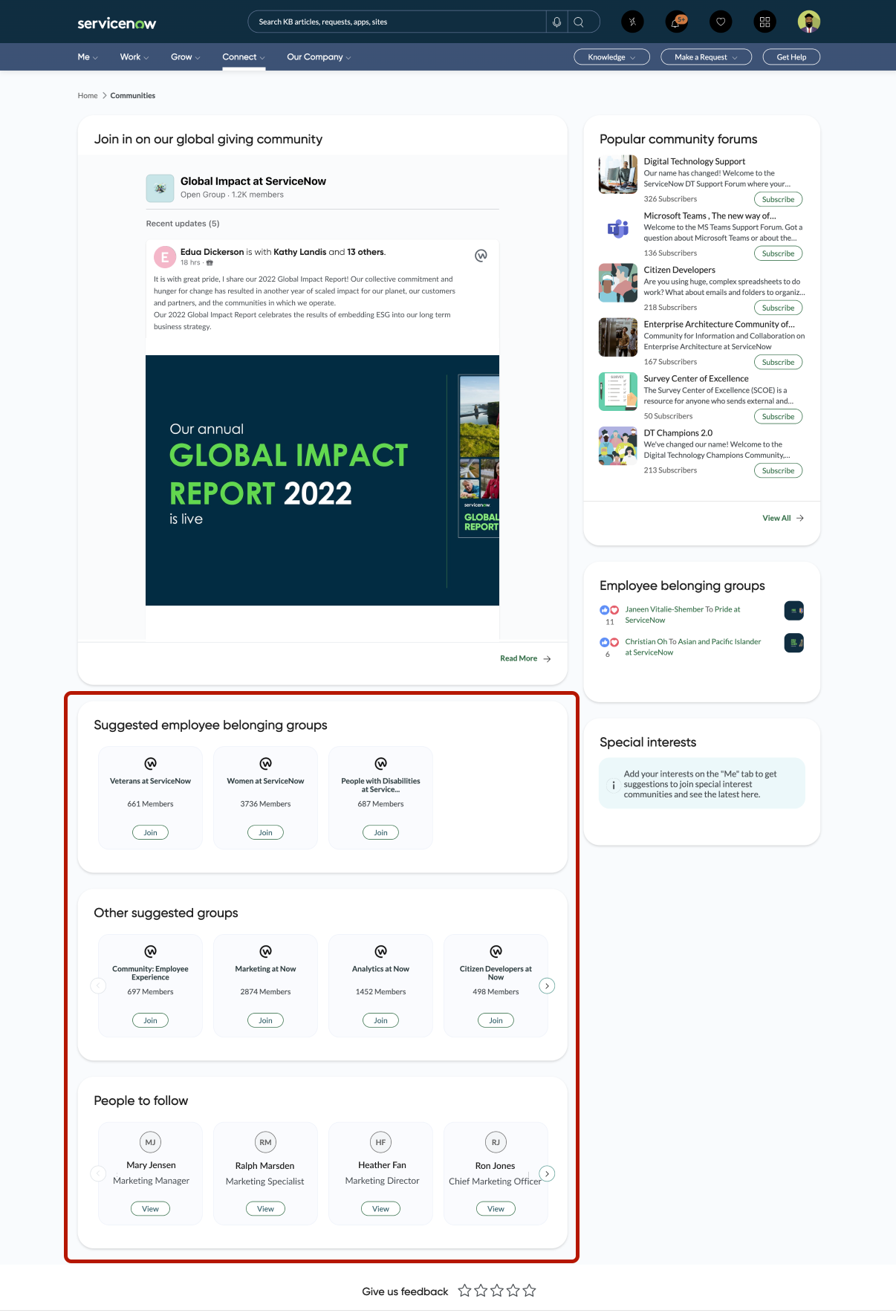
ServiceNow's intranet utilizes AI and machine-learning algorithms along with information about employees’ roles, locations, and past intranet behaviors to provide content suggestions on the homepage, employee profile, and community pages.
Improving the Relevancy of Search Results
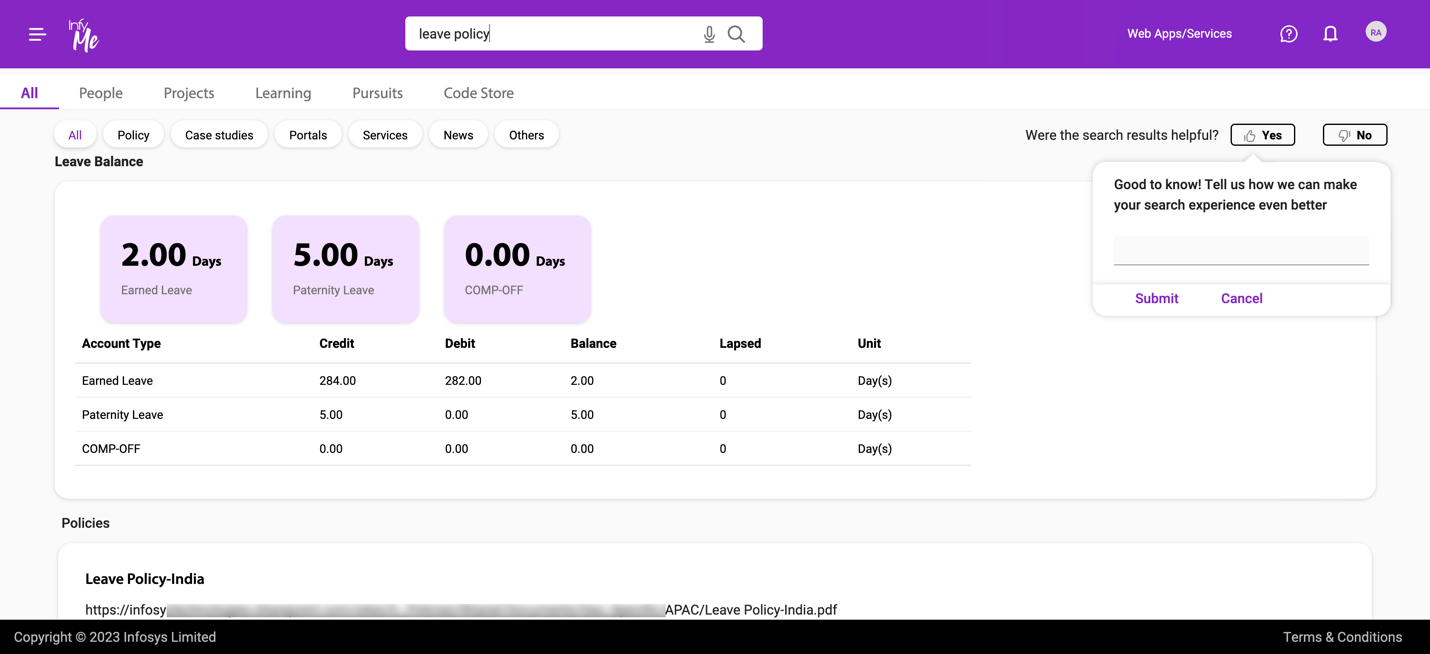
Intranet teams are also using AI to improve search results. For example, Infosys's intranet search is one of the most-used features on InfyMe. It uses natural-language processing to understand employees’ search intent before displaying results. The team used two years of insights from search usage to fine-tune natural-language processing and AI algorithms to deliver contextual results based on employees’ profiles. Autosuggestions are also tailored to employees’ locations and business units. A search micro-feedback component uses thumbs-up or thumbs-down controls and an open form field to capture employees' comments. This feedback is used by both the AI, to improve results, and by the intranet team, to draw qualitative insights and drive design.
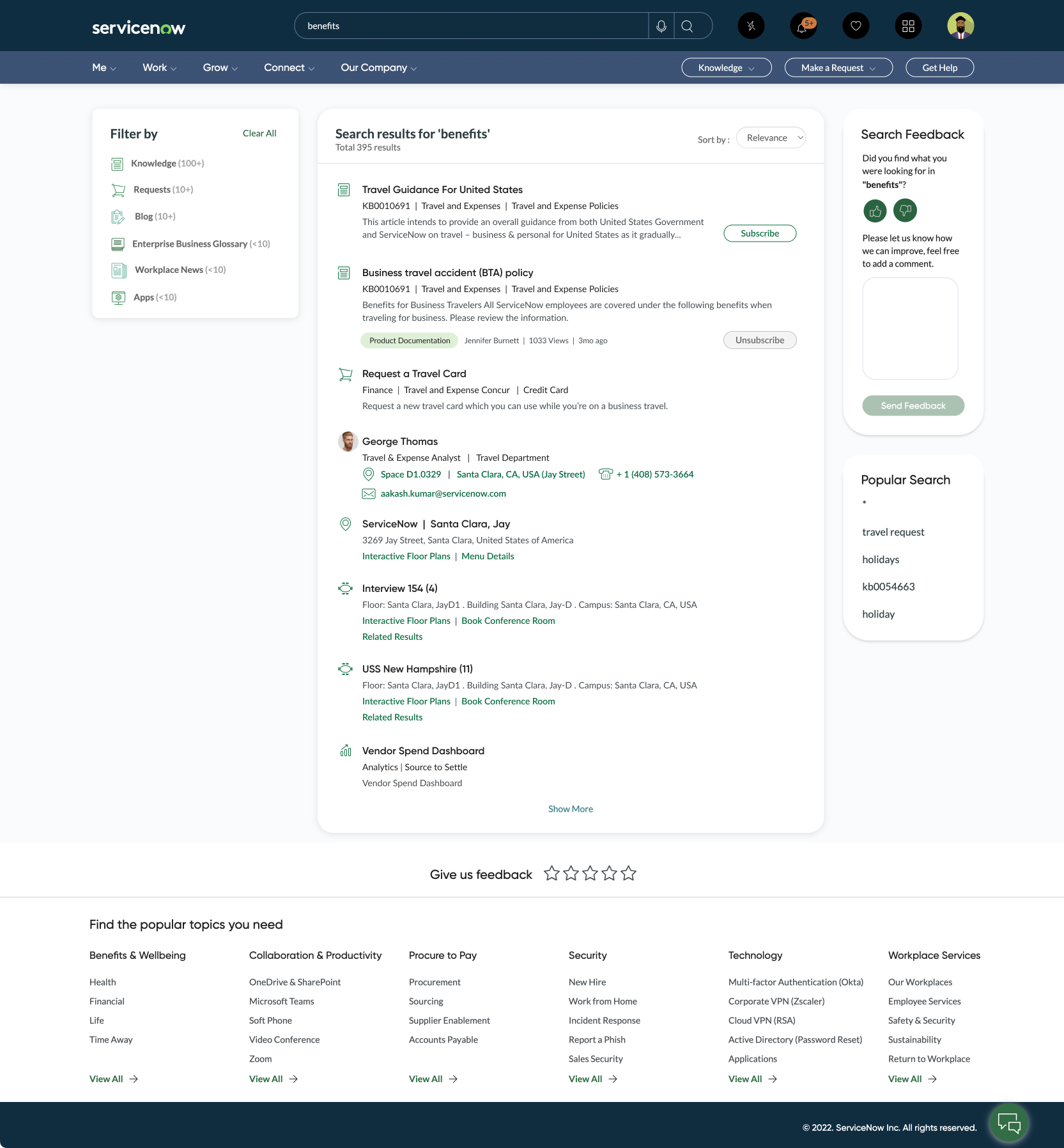
ServiceNow's intranet also leverages its AI Search platform to display more-relevant, better-localized results faster. The search helps employees across various office locations find the necessary information without navigating through multiple systems or interfaces. The search feature indexes many data types, such as knowledge articles, people contacts, the enterprise business glossary, and business applications. Employees can also leave search feedback, which further trains the AI.
Future Predictions for AI on Intranets
AI tools on intranets will continue to boost productivity and work quality in the future. Using these tools has significant potential to automate dull and repetitive tasks, minimize errors, and methodically evaluate and prioritize employee-generated ideas to improve their experience continuously.
Whether through new applications, like using AI-powered voice commands to enable hands-free navigation and meeting-scheduling or using AI to automatically categorize, tag content, and send alerts to retire content, AI can help eliminate everyday stressors and avoid wasted time at work.
Intranet teams are recognizing the transformative power of integrating AI into their digital workplaces. Look for use cases and opportunities in your own organization to incorporate AI-driven features on the intranet. Investing in AI for intranets is not just about keeping up with trends; it's about paving the way for a more efficient, connected, and productive future for employees.