Customer journeys are collections of touchpoints between users and organizations. In recent years, as new devices such as smartphones, smartwatches, and tablets have entered the market, new types of interactions between customers and organizations have also emerged. People are no longer constrained to the telephone, mail, or the web.
Customers Can Engage on a Variety of Channels and Devices
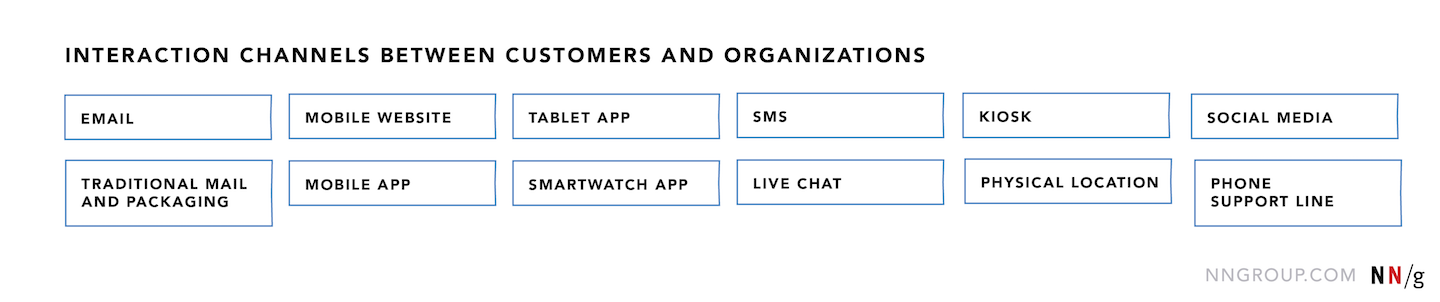
Nowadays, there are many ways in which customers can interact with companies, including:
- Mobile web
- Mobile or tablet applications
- Smartwatch apps
- Live chat
- AI-based chatbots
- Kiosks
- Instant messaging
- Social-networking pages
For this reason, customer journeys are much more dynamic and interconnected than ever before. Today’s organizations must go beyond the business-as-usual mindset to provide strategic solutions that meet the needs of their connected customers.
To create an effective omnichannel UX strategy, companies must first understand the foundational concepts of omnichannel UX. With this knowledge, organizations will be well-equipped to understand their own customer-engagement ecosystem and how people use channels and devices to complete tasks.
These concepts can help organizations design holistic omnichannel journey experiences and avoid overfocusing on devices at the expense of channels. In this article, we explain the basic components of the omnichannel ecosystem (channels, devices, and touchpoints) and how they impact the customer journey.
Interaction Channels
A channel is the medium of interaction between a customer and an organization.
Interaction channels can be bidirectional or unidirectional.
Bidirectional channels
These channels support instant two-way interactions between customers and the organization. They include:
- Traditional one-on-one or physical channels such as talking to a representative in person or by telephone or browsing in a physical store
- Digital channels, such as websites, mobile and tablet apps, text messaging, social media, live chat, and email, accessed through computing devices such as smartphones, computers, tablets, smartwatches, and smart thermostats
Unidirectional channels
These channels are not immediately interactive; they usually support one-way communication from customers to organizations or vice versa. Examples include postal mail, print and TV advertisements, and packaging. (Using techniques like QR codes can serve as “semi-live hyperlinks” that put a smidgen of reverse directionality into otherwise unidirectional channels.)
Organizations Have Their Own Channel Ecosystem
Every organization will have its own set of relevant channels that make up its unique channel ecosystem.
Some organizations, like banks and retail stores, will rely heavily on physical locations, while internet-based companies may not have these physical channels but support a multitude of digital channels to do business with customers.
Some organizations may even create their own unique channels and devices to support their business. For example, Amazon’s Echo is a smart speaker connected to the voice-controlled intelligent personal assistant Alexa.
Each Device Supports Certain Channels
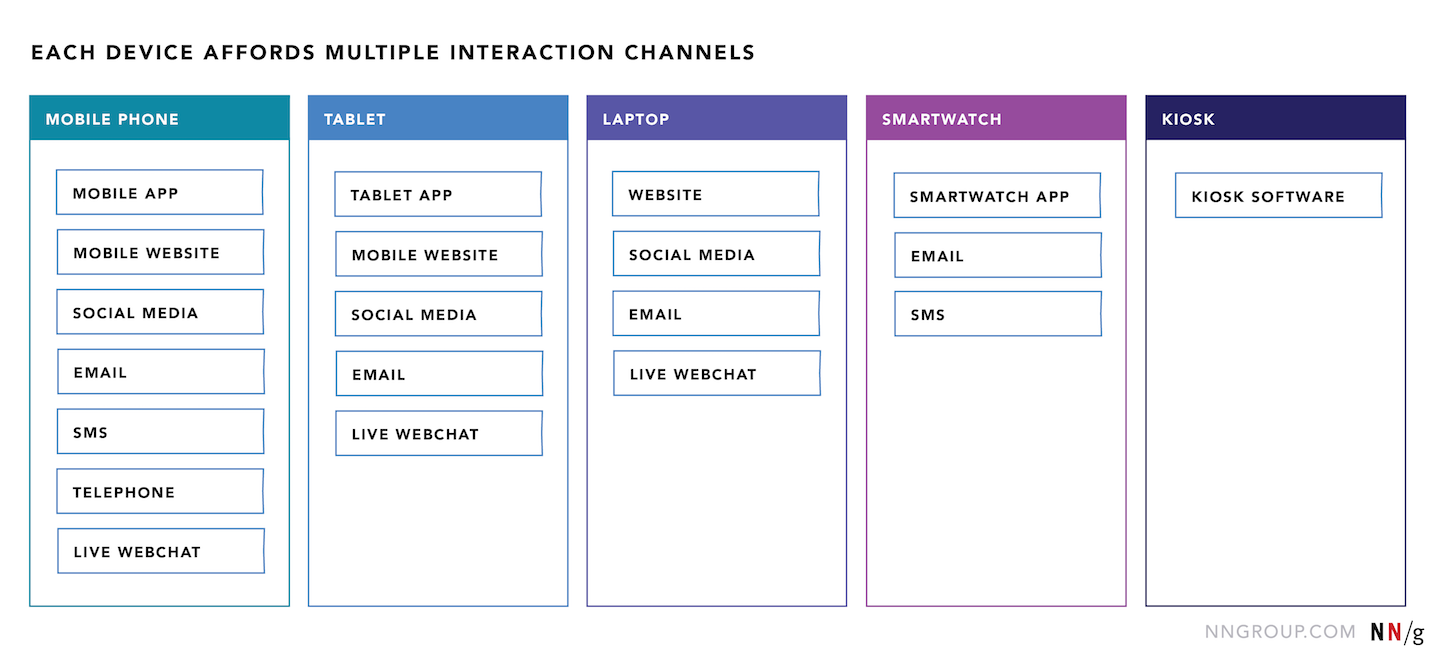
One common misconception is that computing devices such as smartphones, smartwatches, and tablets are interaction channels themselves. However, devices are not channels. Devices simply provide the means to access channels (usually digital channels, but there may be exceptions; for example, smartphones allow us to call an organization over the phone). Each device affords different channels.
Some channels are device-specific (e.g., mobile website, mobile app, smartwatch app), whereas others exist across multiple devices (e.g., live chat, email). Each channel’s experience can, and sometimes should, differ for an optimized experience on the device accessing it. For example, an email would be presented differently on a smartwatch than on a computer.
Touchpoints Are Interaction Instances
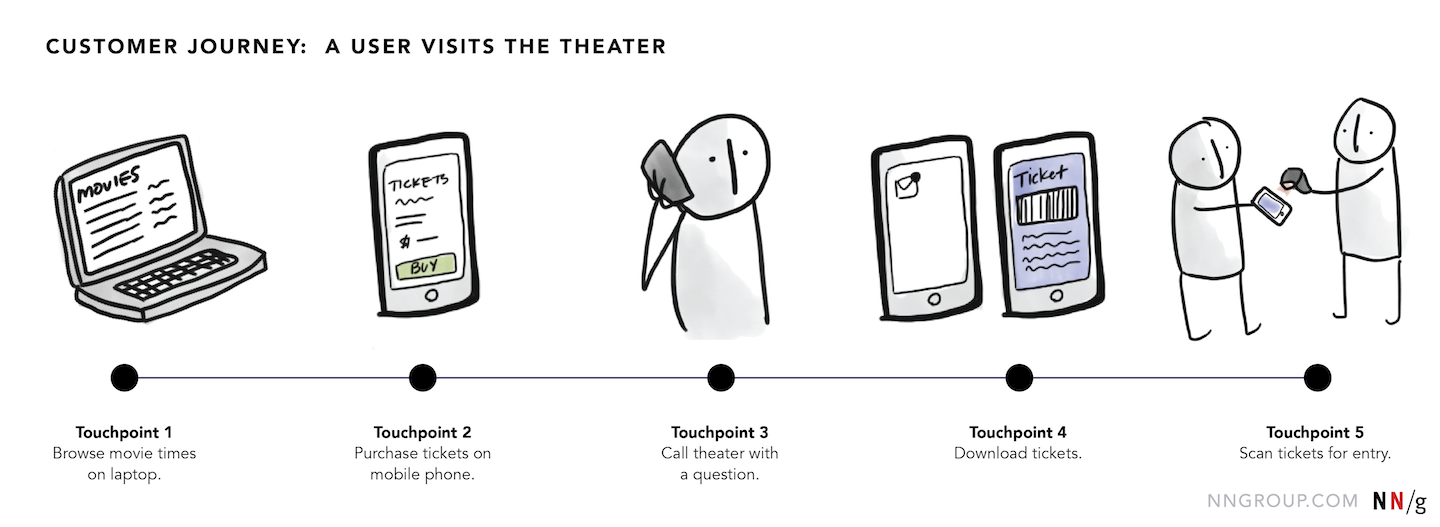
During a customer journey, a user may interact with an organization several times using several different channels. Each of these interaction instances represents a touchpoint between the customer and the organization.
A touchpoint represents a specific interaction between a customer and an organization. It includes the device being used, the channel used for the interaction, and the specific task being completed.
A customer journey is made up of a series of touchpoints, with each defining the details of the specific interaction.
Conclusion
Look at your organization’s channel ecosystem. What channels do you support? Across which devices? Ask yourself if there are important gaps to be filled in your channel solutions. Study the touchpoints of common customer journeys to understand the context of each interaction and how customers are using your current solutions to complete tasks.
Examining your channel ecosystem in this way can propel you toward fully understanding your channels and how customers are using them in order to make strategic improvements to the customer experience.