The Great Resignation is sweeping through the country. People have been resigning from their positions in record numbers since the spring of 2021. How has this historic phenomenon affected UX teams? What are they doing to evaluate and hire new talent, and how are they trying to keep their existing talent?
We surveyed 676 UX professionals and asked questions about their role, UX team, and approaches to hiring and retaining employees. Besides multiple-choice questions, the survey included an open-ended question on what works well and doesn't with hiring and retention for their UX team. Participants shared 305 comments; themes across these were identified using thematic analysis.
- Research Method
- Team Size and Open Positions
- Satisfaction with Hiring and Retention Topics
- Use of Structure in UX-Team Hiring Interviews
- Compensation and Competition Hurt Retention
- Cultivating Self-Determination Helps Retention
- Standards Are Rarely Established Before Hiring
- "Culture Fit" Is a Hiring Priority
- Low UX Maturity Hurts Retention
- Portfolios Reign, but Whiteboarding and Take-Home Exercises Are Popular
- Weak Recruiter Relationships and Talent Pipelines
- Summary of Findings and Guidance
- References
Research Method
Data was collected using a digital survey in February 2022. The 676 survey respondents had these attributes:
- All respondents were current members of a UX team.
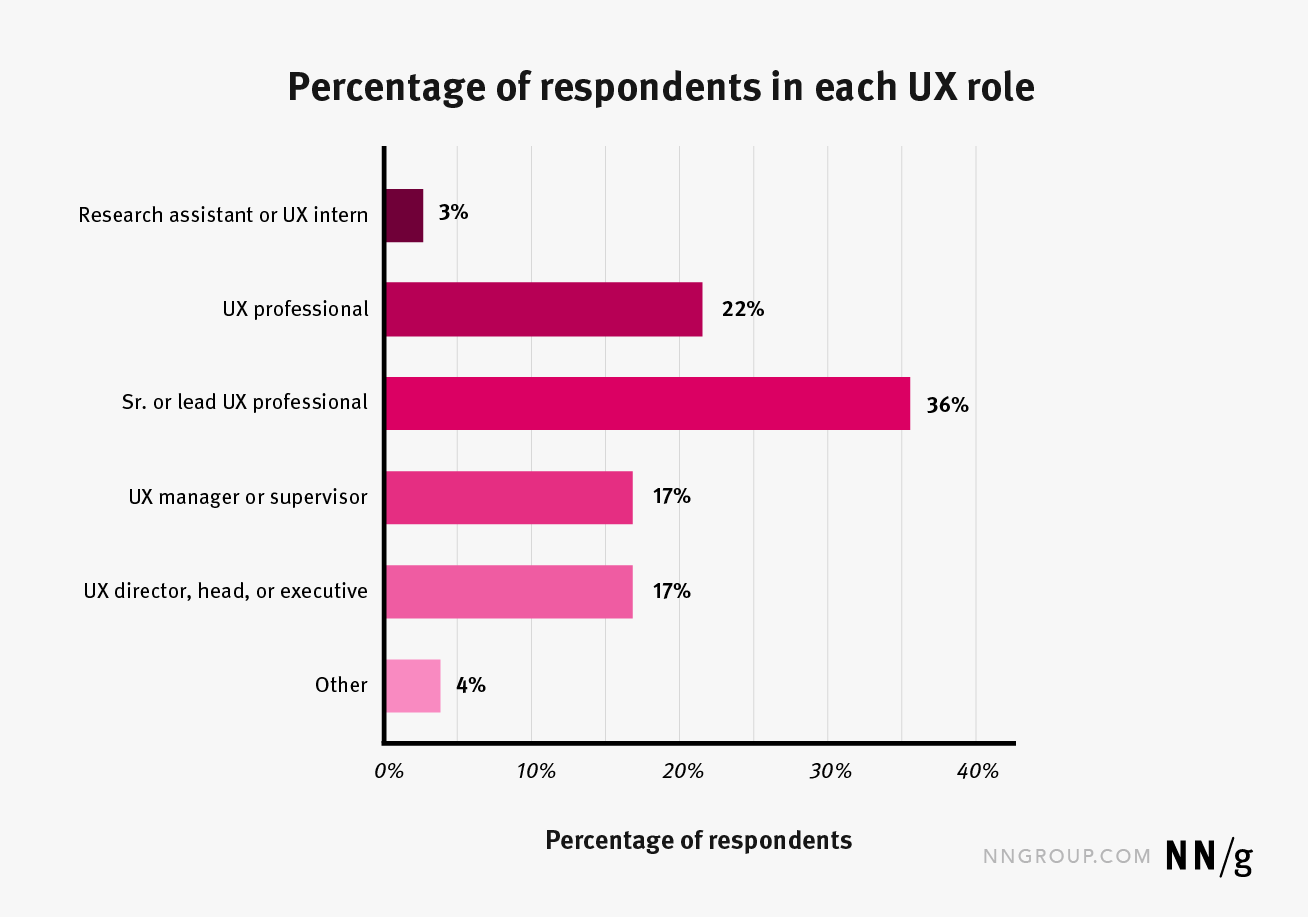
- 60% of the respondents were managers and 40% were individual contributors. 93% said they participated in hiring for their UX team.
- Only 44 respondents (7% of respondents) did not actively read or use NN/g resources.
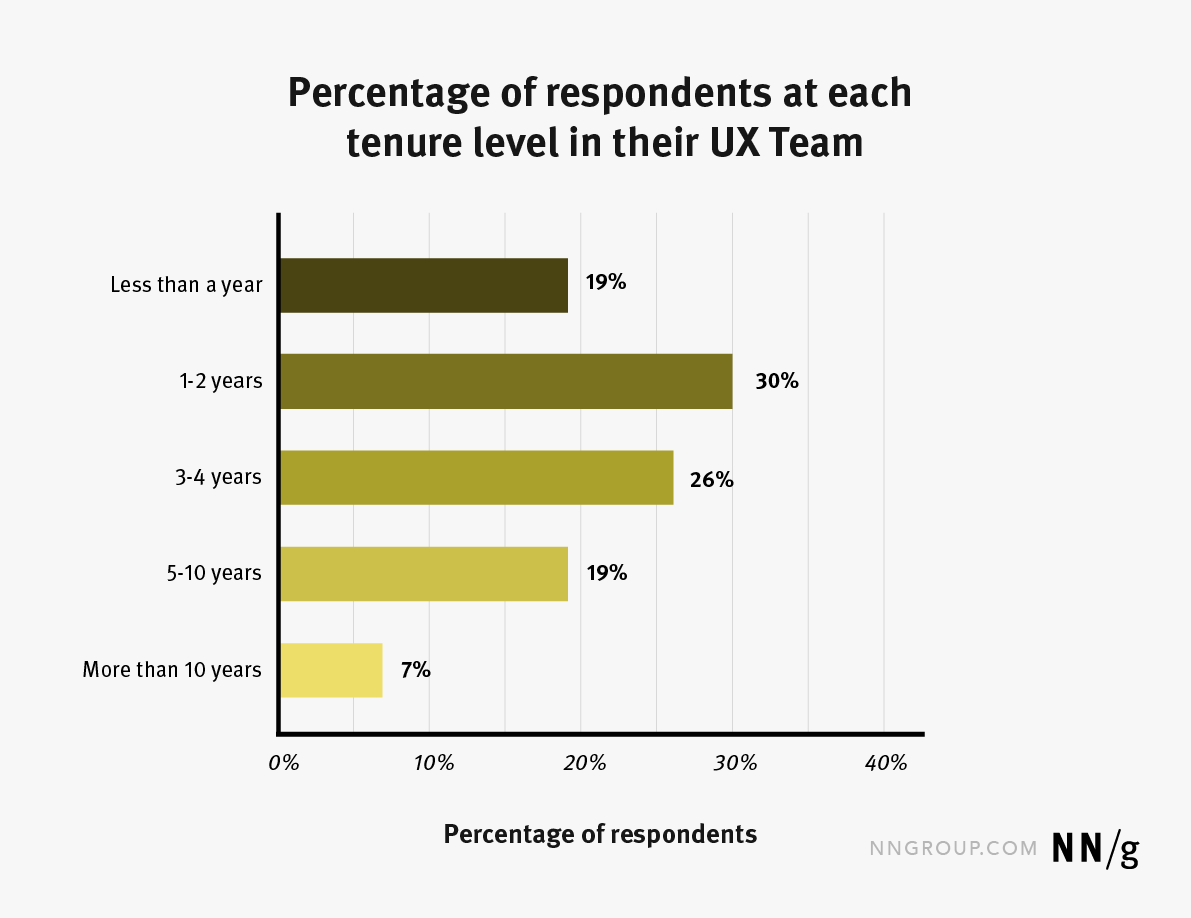
- More than half of the respondents had been with their current UX team for 1–4 years. We assume this should be sufficient time for respondents to familiarize themselves with their team's hiring and retention practices.
Team Size and Open Positions
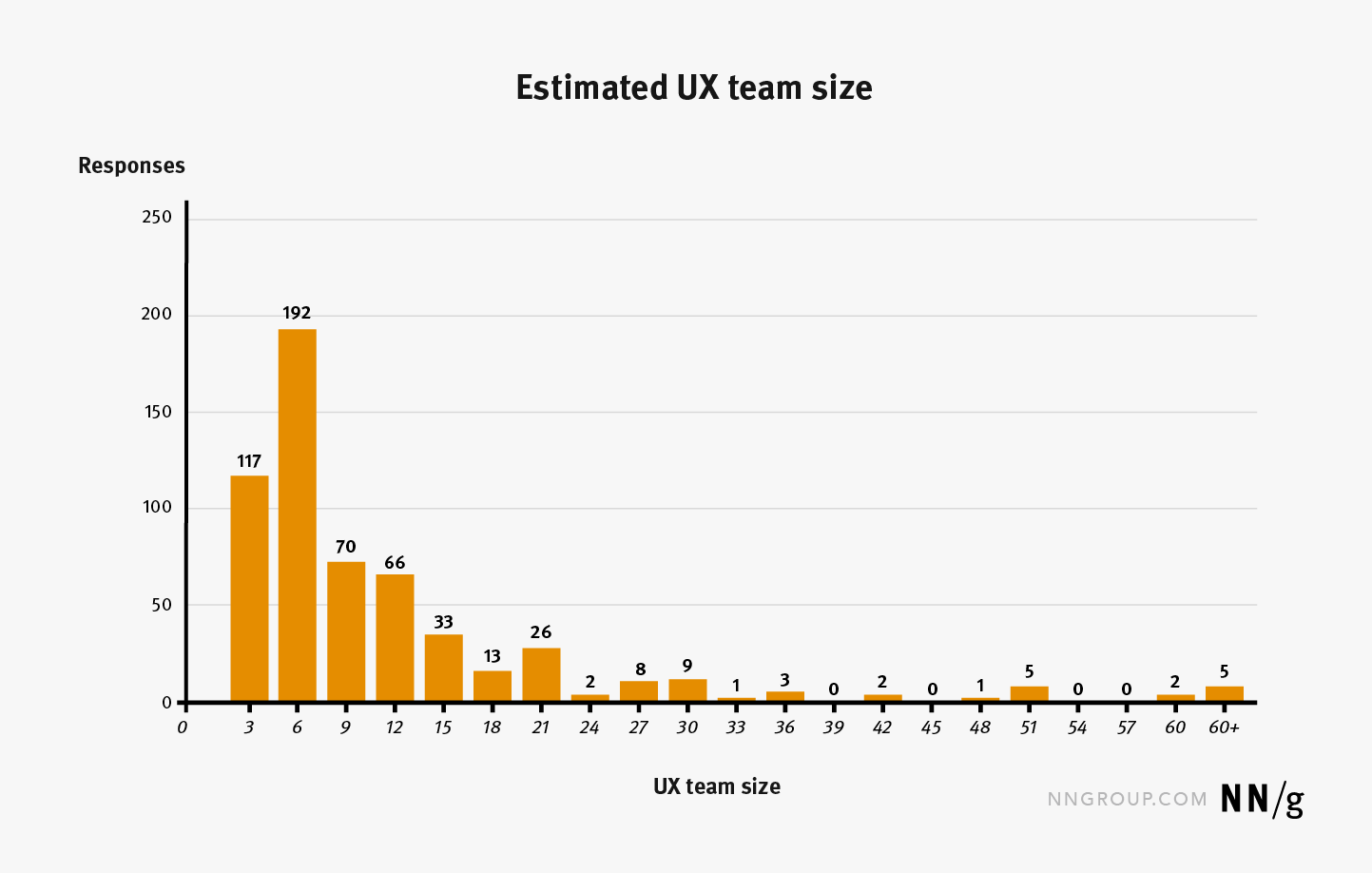
To provide context on hiring activity, we asked respondents to estimate the number of team members, including themselves, who report directly to their boss (if the respondent was not a manager) or report to them (if the respondent was a manager). The average UX-team size reported by all respondents was 9 (but some large estimates skewed the data). The median UX-team size was 6 and the mode was 5.
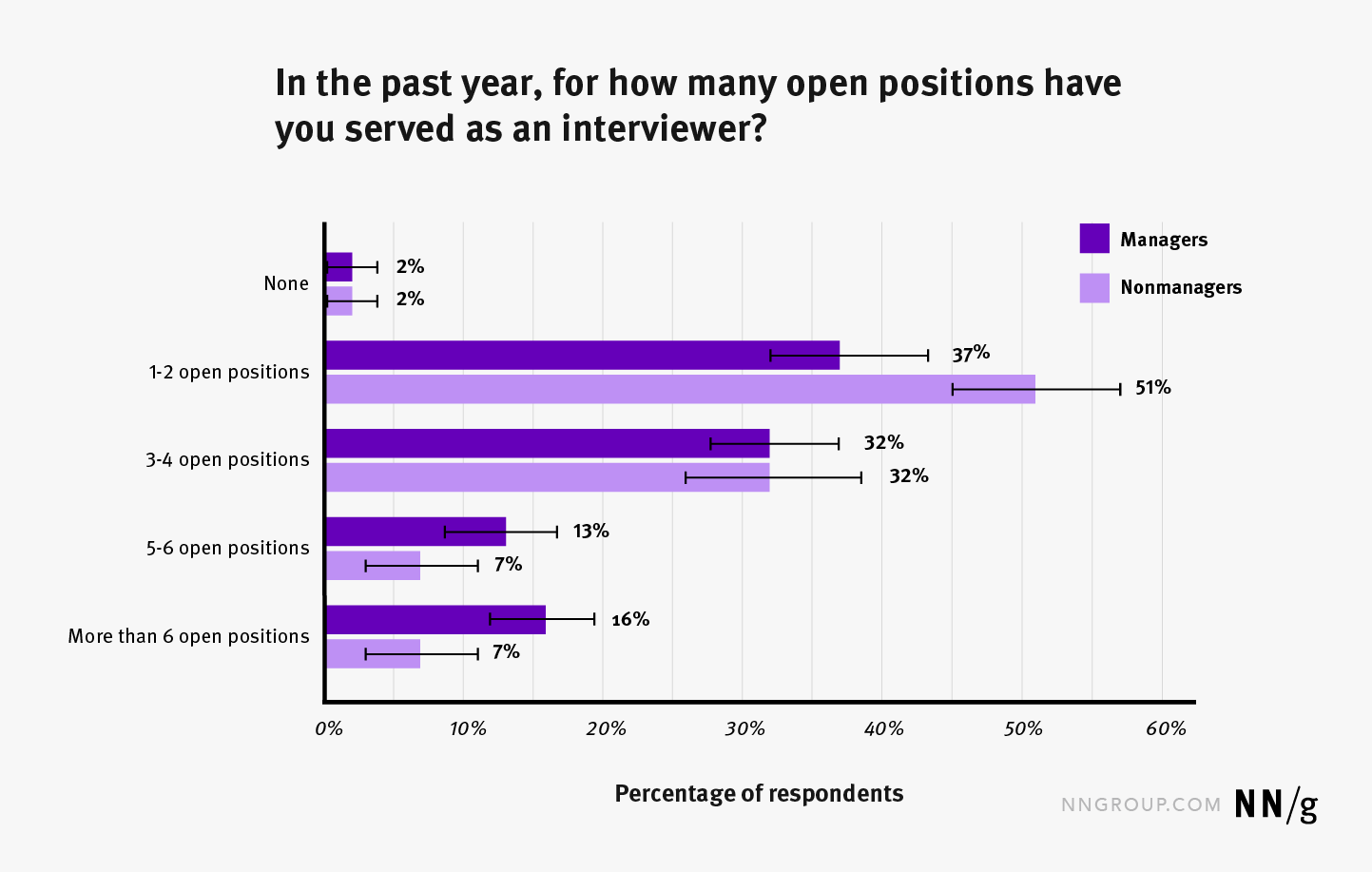
Over the past year, 42% of respondents said they had participated as an interviewer for 1–2 open positions, 32% said they had helped with 3–4 open positions, and 24% said they had helped with 5 or more. These numbers suggest very active hiring activity for these UX professionals.
Satisfaction with Hiring and Retention Topics
We also asked respondents to estimate their satisfaction with the following hiring and retention topics on a 5-point scale ranging from very dissatisfied to very satisfied:
- Confidence when making hiring recommendations on job applicants
- Their UX team's ability to filter out unqualified job applicants
- Their UX team's ability to successfully hire very qualified job applicants
- Their UX team's ability to retain high-performing employees
- Their UX team's level of diversity (such as race, ethnicity, orientation, gender identity, physical ability, location, upbringing, beliefs, world view, etc.)
- The training received on how to conduct your UX team's hiring practices
The survey displayed these topics in randomized order to reduce bias.
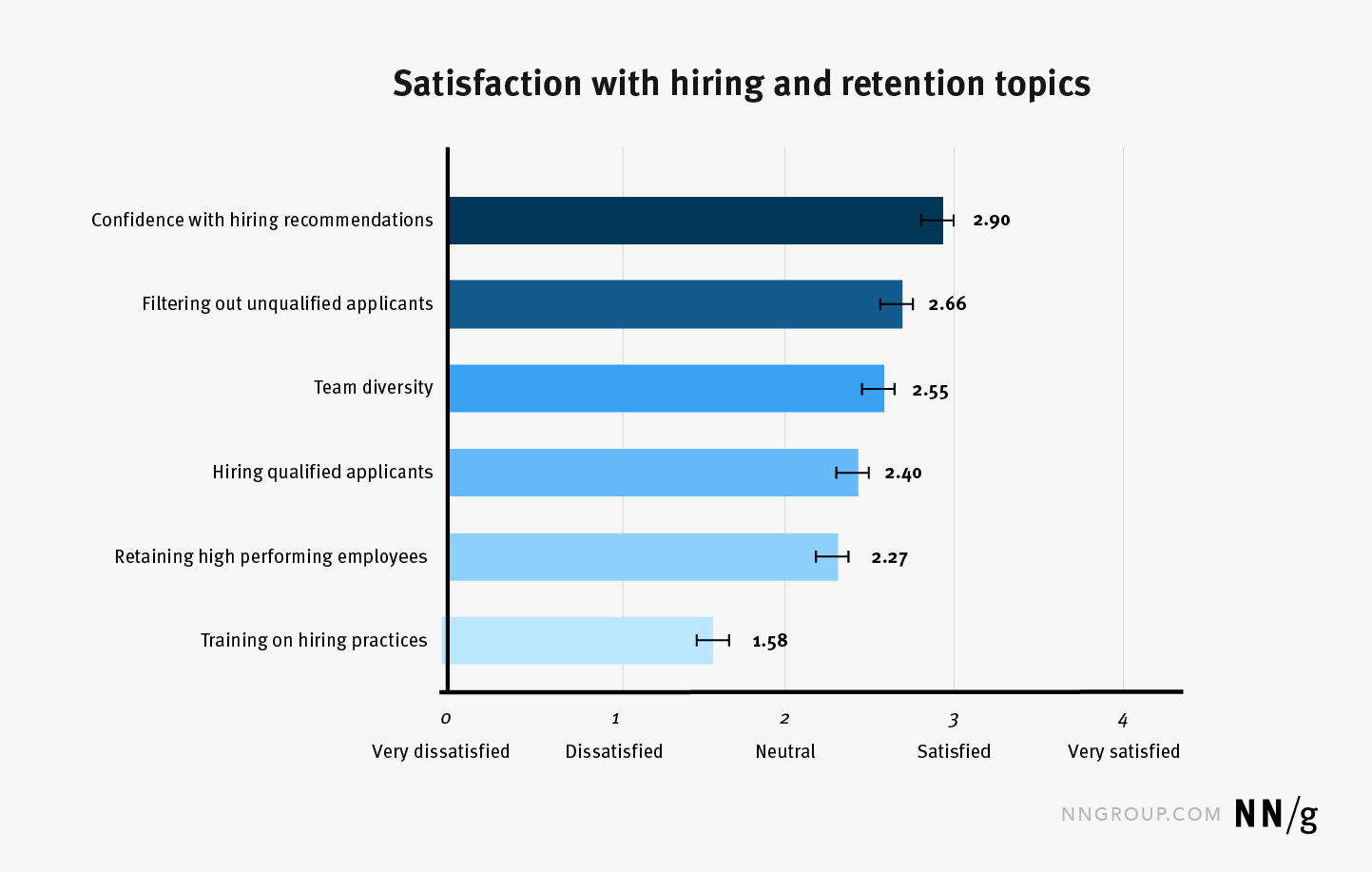
Among the different topics, confidence in hiring recommendations got the highest level of satisfaction (it was significantly higher than satisfaction with all other topics, p <0.05). Participants reported mild satisfaction (over the neutral point of 2 but less than 3, p < 0.05) with filtering out unqualified applicants, hiring qualified applicants, retaining high-performing employees, and team diversity. Training on hiring practices was the only topic that participants were dissatisfied with (less than 2, p <0.05).
Why are these UX professionals satisfied with their hiring recommendations despite lackluster training? One possible explanation that's consistent with psychology research is overconfidence. Research by Kausel, Culbertson, and Madrid suggests that information gathered from unstructured hiring interviews — the predominant hiring interview approach — breeds overconfidence and unfounded risk taking. (Daniel Kahneman describes the cognitive bias of overconfidence as the "illusion of understanding.”)
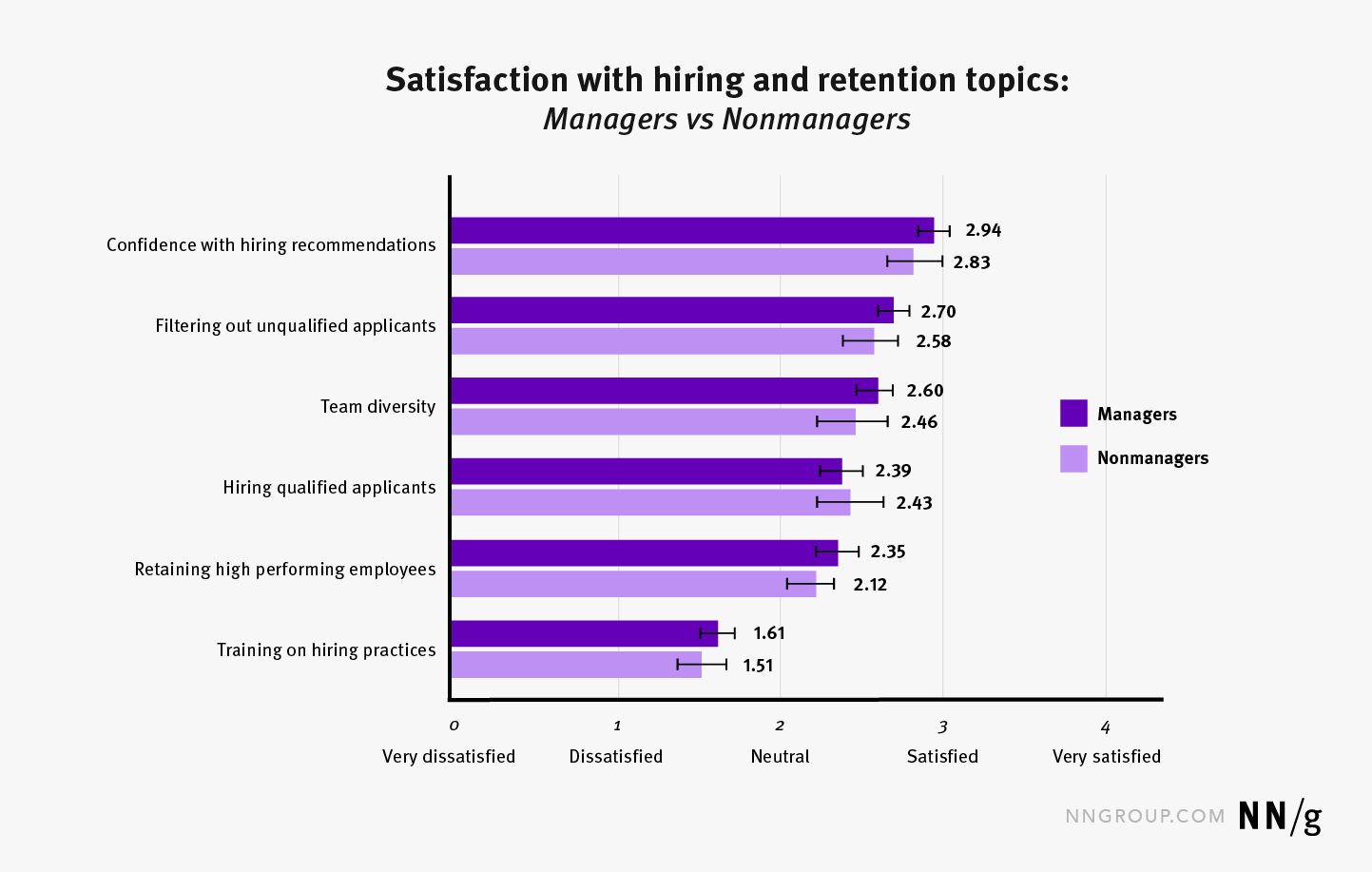
In general, even though there was a slight tendency for managers to be more satisfied with the hiring and retention topics than nonmanagers, these differences were not statistically significant, with one notable exception: nonmanagers were more dissatisfied than managers with retaining high performing employees (p <0.05). It's possible that managers were more invested in the hiring and retention process and thus may be more prone to a confirmation bias.
Use of Structure in UX-Team Hiring Interviews
There are remedies to this problem, however. Incorporating structure into UX hiring interviews is the best way to reduce the pernicious effects of cognitive biases on our decision making. But how much structure is currently being used?
To gauge the use of structure by UX teams in their hiring process, we asked respondents to select from a list of 10 structuring tactics. These tactics were chosen from a meta-analysis of hiring-interview research conducted by Levashina, Hartwell, Morgeson, and Campion. They identified the most popular tactics used in structured hiring interviews. Using more structuring tactics is generally better, but it's still an open research question whether some tactics are superior to others or whether there is an optimal number of tactics to use.
Participants were asked to select all tactics that best described how they interviewed job applicants for their UX teams. The survey displayed these tactics in a randomized order to reduce bias:
- My interview questions are based on a job analysis.
- I use the same interview questions for all job applicants to an open position.
- I use situational interview questions — these questions pose a hypothetical work dilemma and ask job applicants what they would do.
- I use past behavioral interview questions — these questions ask job applicants to recall and describe how they handled a situation from their past.
- I score job-applicant answers to my interview questions on a number scale.
- My interview questions provide me guidance on what makes for a "good" or "poor" answer.
- I take notes of job-applicant answers to my interview questions.
- I received training on how to conduct hiring interviews.
- The job applicants I interview are also interviewed by other team members.
- I interview each job applicant when I'm an interviewer for an open position.
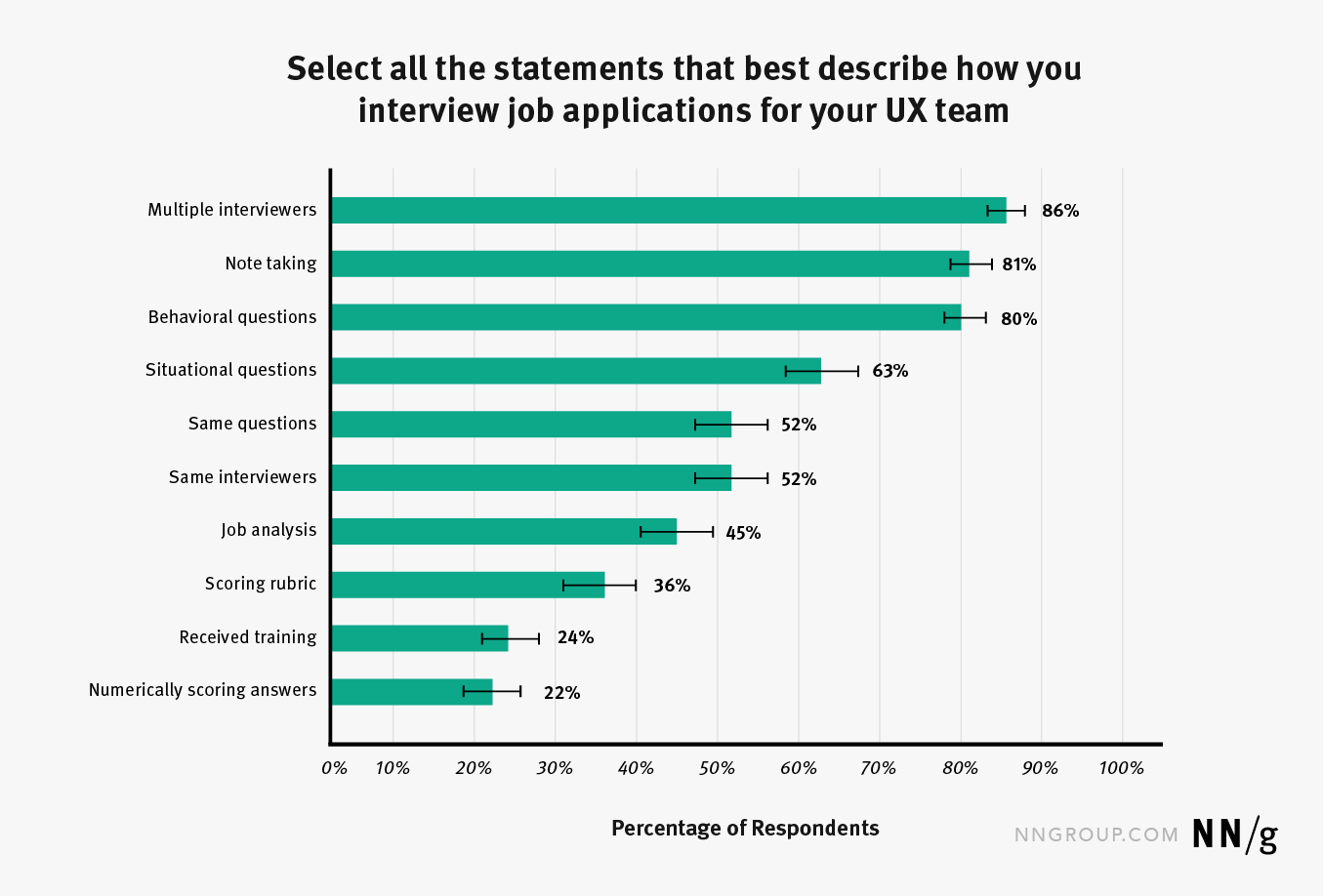
The average number of structuring tactics reported by our respondents was 3.91 (95% confidence interval from 3.69 to 4.13). We could not distinguish between respondents who skipped the survey question and those who use no structuring tactics, so this average may be slightly underestimated. The top three most selected tactics were using multiple interviewers, note taking (UX professionals take a lot of notes, after all), and asking behavioral questions. Situational-interview questions are harder to develop than behavioral questions, which may explain why they were used less often. The popularity of these tactics suggests UX professionals prioritize feedback from multiple sources and are familiar with the concept of behavioral consistency (that recent past behaviors are the best predictor of future behavior for similar situations).
About half of the respondents reported using the same questions and the same interviewers. This is good news. Both these structuring tactics drive consistency in applicant evaluations and improve decision making. However, successfully implementing these tactics requires careful planning, scheduling, and prioritization before interviews occur. For example, for teams to use the same interviewers successfully across several candidates, coordination with people's work schedules is necessary — you can't just substitute an interviewer with someone else who happens to be available. Likewise, using consistent questions across candidates requires the interviewer to plan what they're going to ask, ideally based on an analysis of productive behaviors and skills for the job (which, unfortunately, less than half of the respondents reported using). This type of work also needs to be done before starting the interviewing process.
The least popular tactics were using a scoring rubric, numerically rating candidate answers, or receiving training on hiring techniques. This finding suggests that most hiring decisions are still made based on intuition and that people do not realize that mechanical scoring can make a difference in the quality of their decisions.
What Works or Doesn't: Insights from Respondents' Comments
We used a thematic analysis to cluster respondents' open-ended comments regarding what works or doesn't in their organizations regarding hiring and retention. The following themes emerged.
Compensation and Competition Hurt Retention
Uncompetitive compensation was frequently cited as a factor for poor retention, as UX team members are motivated to leave for higher salaries elsewhere. Some respondents said that their company's lack of remote-working options hurt retention and talent pipeline:
- Our budgets don't allow us to go after top candidates and I know that my people, myself included, are watching the UX market and value skyrocket.
- The company doesn't allow full remote working and is not offering stellar income either, so it's hard to find qualified people with these boundaries.
Cultivating Self-Determination Helps Retention
When it came to retaining team members, many respondents echoed the importance of the 3 psychological pillars that form the self-determination theory: autonomy, competence, and relatedness.
Autonomy. Participants stressed that it's crucial to assign team members tasks and allow them to exercise their judgment when completing them.
What works well in retaining employees - giving my team ownership of specific tasks. When they feel it's something they own, even when it's difficult, they often pull through knowing that it's directly attributed to their own effort.
Competence. Respondents mentioned that challenges promote their team members’ growth and invest in their career development.
- Retaining talent requires keeping candidates progressing in their career and to match them with projects that stretch them in line with these goals.
- A broader understanding of the impact the team has on the products and solutions gives a sense of accomplishment that keeps the team together.
Relatedness. Survey respondents emphasized the importance of a trusting and safe, yet professional relationship between managers and team members.
Our team encourages vulnerability, trust, and care. Because of these operating principles, we have been able to hire and retain talent despite big shifts in the organization.
Standards Are Rarely Established Before Hiring
Participants frequently cited a lack of planning to identify team needs and ideal candidate qualifications before starting the hiring process. A few respondents mentioned they had no idea for which role they were evaluating candidates! In some cases, management had a low-UX-maturity perspective on UX roles, thus making recruiting and hiring difficult. Focusing heavily on UI-design skills when hiring a UX designer is one example of a narrow perspective.
- Expectations for the role or individual are not clear in the job description, interview process, or at the start of the position.
- The management doesn't have a good understanding of what requirements are for a successful UX-design candidate.
- We don't have an assessment of the skills of the team, thus we don't know exactly which skills we are looking for.
"Culture Fit" Is a Hiring Priority
Multiple respondents emphasized determining a candidate's interpersonal skills and compatibility with the UX team and the organization. There was a willingness to sacrifice experience expectations for cultural compatibility. Comments were unclear on how culture fit was determined aside from asking interview questions, and a few respondents cautioned that emphasizing it could lead to homogenous and less diverse teams.
- We tend to hire for cultural fit before hard skills, which has worked out for us. The flipside of this is it can take much longer to get the designers up to speed.
- Our approach focuses initially on cultural fit with the company and team, then understanding the candidate's experience and mastery of the respective role (e.g., UX designer, UX researcher).
Low UX Maturity Hurts Retention
Unsurprisingly, low UX maturity was corrosive to UX-talent retention. Some cited a lack of broad company support for UX, such as low UX budget, lack of leadership focus on UX, and little recognition of UX as a reason for retention problems.
- In exit interviews we often hear that our UX team is great, it's the rest of the company and constant battle to prove the value of UX that's tiring.
- No matter how amazing the challenges are here, eventually the politics and lack of UX maturity frustrate the candidates and they find work somewhere else […] I keep in touch with my ex-employees and the change in employer doesn't equate to better UX maturity, just the hope of greater UX maturity, followed by disappointment and eventually another change in employer based on the same hope.
Portfolios Reign, but Whiteboarding and Take-Home Exercises Are Popular
Aside from interviews, portfolios were the most frequently cited assessment method. They were also the most controversial assessment method, with some respondents relating their struggles discerning the candidate's specific contributions or process on team projects. Exercises, either in take-home or whiteboard form, were cited frequently as practical demonstrations of a candidate's abilities. Several respondents acknowledged the tradeoff between the additional stress of a whiteboarding exercise versus the "homework" burden of a take-home exercise. Design critiques or presentations were also mentioned but less frequently than these other methods. Participants rarely referenced resumes.
- We hold a virtual whiteboarding session, which helps me evaluate someone's thought process and approach and how well they can think through a particular (but broad) problem.
- I know design exercises are unpopular with interviewees but used consistently I have found them helpful in determining how applicants might approach a deadline-driven problem and what their level of attention to detail and quality is like.
Weak Recruiter Relationships and Talent Pipelines
Many respondents shared that they do not have enough qualified UX candidates and that senior UX talent is scarce. A few respondents reported "settling" for junior candidates instead. Recruiters (either an HR department or an external agency) were often cited as unhelpful and uninformed about UX roles. Some respondents expressed a desire for more-diverse job-applicant pools.
- I think the overall recruiting of candidates could use some work. We have open roles but very few come through the funnel. Not sure how they are sourcing new candidates, but this could use some work.
- There is an org-wide hiring focus on diversity, but this does not seem to impact the candidates we end up interviewing.
Summary of Findings and Guidance
Here is some guidance for UX teams based on the survey's data and insights:
- Review compensation and reduce seniority expectations: You must review your compensation packages to attract the best UX talent, especially experienced professionals. Targeting junior professionals and training them may be a practical necessity with tight budgets. This approach has the advantage of coaching and developing these junior hires on your team's preferred tools and techniques (instead of managing an experienced hire on unlearning unhelpful habits or assumptions). Hire for attitude and train for skill.
- Nurture self-determination: Rely on self-determination as a bulwark against attrition — it's politically easier and cheaper than asking for high salary budgets or engaging in frequent hiring cycles. Assign work tasks that promote individual growth. Meet with each team member weekly to build trusting professional relationships. Ensure team members have clear career paths with goals. With the shift to hybrid and remote working, experiment with new team traditions that promote camaraderie and social bonds regardless of location.
- Prioritize preparation and planning: Don't start the costly and time-consuming hiring process without clarifying your company's challenges and how adding UX headcount will help. Analyze business problems and unsupported projects and derive relevant interview questions for the role to ensure you're selecting a qualified candidate on relevant criteria. The worst time to develop your hiring methodology is when you need to hire someone. If your UX team is not currently hiring — start now!
- Performance over portfolios: UX-job applicants still need a portfolio. But portfolios vary across candidates and are challenging to evaluate and compare. They don't always give an accurate appraisal of an individual's contributions due to widely available templates and the collaboration UX jobs require to deliver results. Take-home or whiteboarding exercises better demonstrate individual skills, can be tailored to the job, and be fairly evaluated across all candidates. Expect to see more of these exercises in the future.
- Teamwork makes the dream work: UX hiring managers are highly protective of their team cultures and prioritize candidates demonstrating emotional intelligence, interpersonal skills, and collaborative ability. These traits are crucial to their retention strategy and their views on UX job effectiveness. Be wary of "cultural fit" blanket statements that can mask unconscious bias — define the explicit behaviors and results you want in candidates. Job seekers, do not promote yourselves as "UX ninjas" or genius soloists if you hope to join a quality UX team. Come to any UX-job interview prepared with concise anecdotes of how you compromised and worked effectively with peers.
- Adopt structuring tactics: UX teams can improve their hiring decision making by reducing their emphasis on lots of interviewers and instead employing a consistent methodology for their interviewers. Try interview question guides that illustrate effective answers and capture numerical ratings of candidate answers.
- Coach HR into a "helpful resource": Although HR teams were generally seen as unhelpful and their training absent or inadequate, there is still opportunity here. Cultivate these relationships. Coach your recruiters to differentiate between a UX researcher and a UX designer candidate. Participate in HR talent activities like university job fairs or get access to their specialized recruitment tools and actively seek out candidates to improve and diversify your UX-talent pipeline. Be a proactive collaborator and not a passive (or disgruntled) customer of their services.
A final piece of obvious advice for UX leaders: shift your company to a higher level of UX maturity to attract and keep the best UX staff. Any UX manager worth their salt should already be doing this, which is to say that delays in elevating maturity usually stem from organizational resistance rather than from lack of trying. Still — try harder! Far better to proactively invest your energy and resources in leveling up UX maturity than worrying about who may leave your UX team next.
References
Edgar E. Kausel, Satoris S. Culbertson, and Hector P. Madrid. 2016. Overconfidence in personnel selection: When and why unstructured interview information can hurt hiring decisions. Organizational Behavior and Human Decision Processes 137 (2016), 27–44. DOI:http://dx.doi.org/10.1016/j.obhdp.2016.07.005
Julia Levashina, Christopher J. Hartwell, Frederick P. Morgeson, and Michael A. Campion. 2013. The Structured Employment Interview: Narrative and Quantitative Review of the research literature. Personnel Psychology 67, 1 (2013), 241–293. DOI:http://dx.doi.org/10.1111/peps.12052