Imagine you went on a beautiful hike and along the trail you encountered a rattlesnake. What do you think you will remember more vividly about the hike: the snake you encountered or the beautiful scenery along the way? Most people will remember the rattlesnake incident better, because negative experiences tend to affect them much more than positive ones. This phenomenon is an example of negativity bias.
Definition: The negativity bias is the tendency for humans to pay more attention, or give more weight to negative experiences over neutral or positive experiences. Even when negative experiences are inconsequential, humans tend to focus on the negative.
Many scientific studies document negativity biases. For example, in behavioral economics, people tend to avoid choosing options that might result in loss: the bad feelings from losing $20 are stronger than the happy feelings of finding $20.
In social psychology, impression formation has been shown to affect negative traits disproportionately: in an election, we are more likely to vote for a candidate not because of that candidate’s personal merits, but because of the negative information about the opponent.
Think about the many compliments you have received from friends or colleagues. You probably felt flattered at the moment, but then went on with your day. Compare that to even a single snide remark. It probably affected you more deeply, maybe consumed your thoughts, and even carried over for days — or even years. To quote Linus, the Peanuts character: “Good things last eight seconds…Bad things last three weeks.”
So why are humans attuned to the negative? Bad news or negative traits signal danger. From an evolutionary perspective, learning to identify potentially hazardous situations was vital for survival in a harsh environment rich in predators. While today’s world has arguably fewer threats, humans are still wired for self-preservation.
UX Considerations
How does negativity bias manifest on the web? A single usability flaw on your site will weigh more than the many positive features that you’ve struggled to implement. To leave a lasting positive impression, user interfaces must not only be good, they must be great, and you must root out every single design flaw with a vengeance.
You might assume that as websites get better, people will regard them more favorably. Unfortunately, this is not the case. Our research shows that websites have improved over the years, yet users’ satisfaction ratings have remained the same — for two reasons: (1) UX failures count more than UX successes; (2) people judge a site by comparing it with other sites that they’ve encountered. (Remember Jakob’s law: users spend most of their time on other sites.)
In usability studies, it is common for participants to say nothing when the UI works according to their expectations. People don’t comment or even notice a fluid experience — no matter how hard the UX team and developers worked to make this happen. But when the interaction doesn’t match their expectations, they become critical and remember the incident for a long time. I once facilitated a user test in which a participant noticed a typo early on during the session. Over an hour later she was still bothered by it and vented her disapproval. User annoyances matter.
If being usable is the norm, then sites and apps must be exceptional to be memorable and noteworthy. So how can you appease vigilant users who react negatively to every single mistake? Here are a few ideas:
- Follow design standards: Novel interactions and design patterns require extra effort because they are unfamiliar and people can’t rely on existing knowledge. When users need to find the navigation or search on a website, they expect to find them in those standard locations where they appear on hundreds of other sites.
Veering from standards too wildly can degrade the user experience. For example, our research shows that moving the company logo from the left to center makes it 6 times more difficult for people to get back to the homepage.
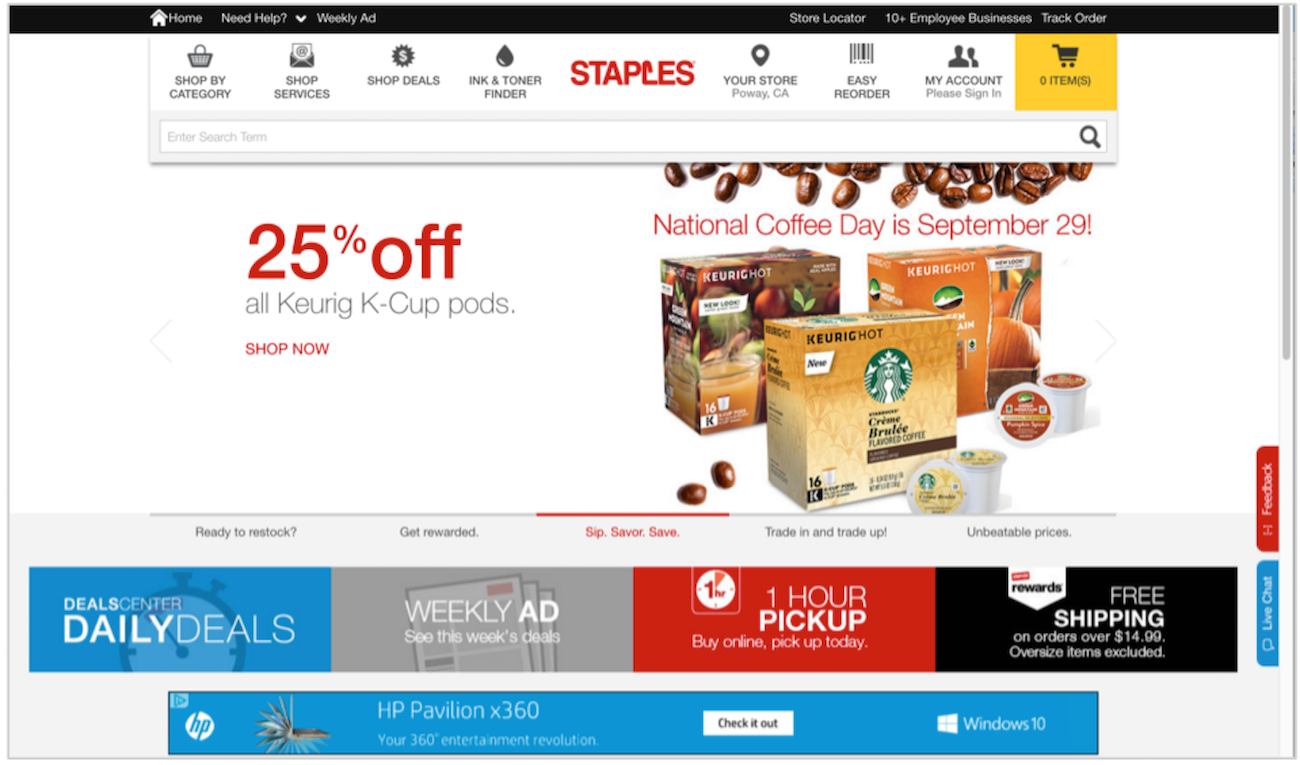
Staples.com: The homepage violates many navigation conventions, making it difficult to find essential elements such as the company logo, global navigation, and store locator. Sure, you can find these things, but it takes longer than necessary because they are positioned in unexpected places, look different, or have non standard labels (Your store vs. Store locator).
- Match workflows to user expectations: Users have mental models of how the system should behave and what steps should be involved in completing tasks. Awkward workflows that present information at the wrong levels or out of sequence take control away from users and cause frustration.
A common mistake that UX designers make is to prioritize efficiency over expectations. Sometimes, longer user flows are optimal if they meet user expectations, whereas shorter flows, if unconventional, can make users think.
Consider workflows from both micro and macro levels: the experience should be seamless both within a channel and across multiple channels. When people engage with organizations through multiple channels, they equate the brand and the company with the total interaction, not just with the interaction within a specific channel.
- Anticipate users’ concerns and address them: Pleasant encounters come in all forms and sizes. Microcopy, small bits of copy that provide instructions or alleviate concerns, can significantly boost positive impressions and prevent negative ones from ever forming. Microcopy can make a huge impact when it is presented just in time, in context, is easy to understand, and possesses the proper tone of voice.
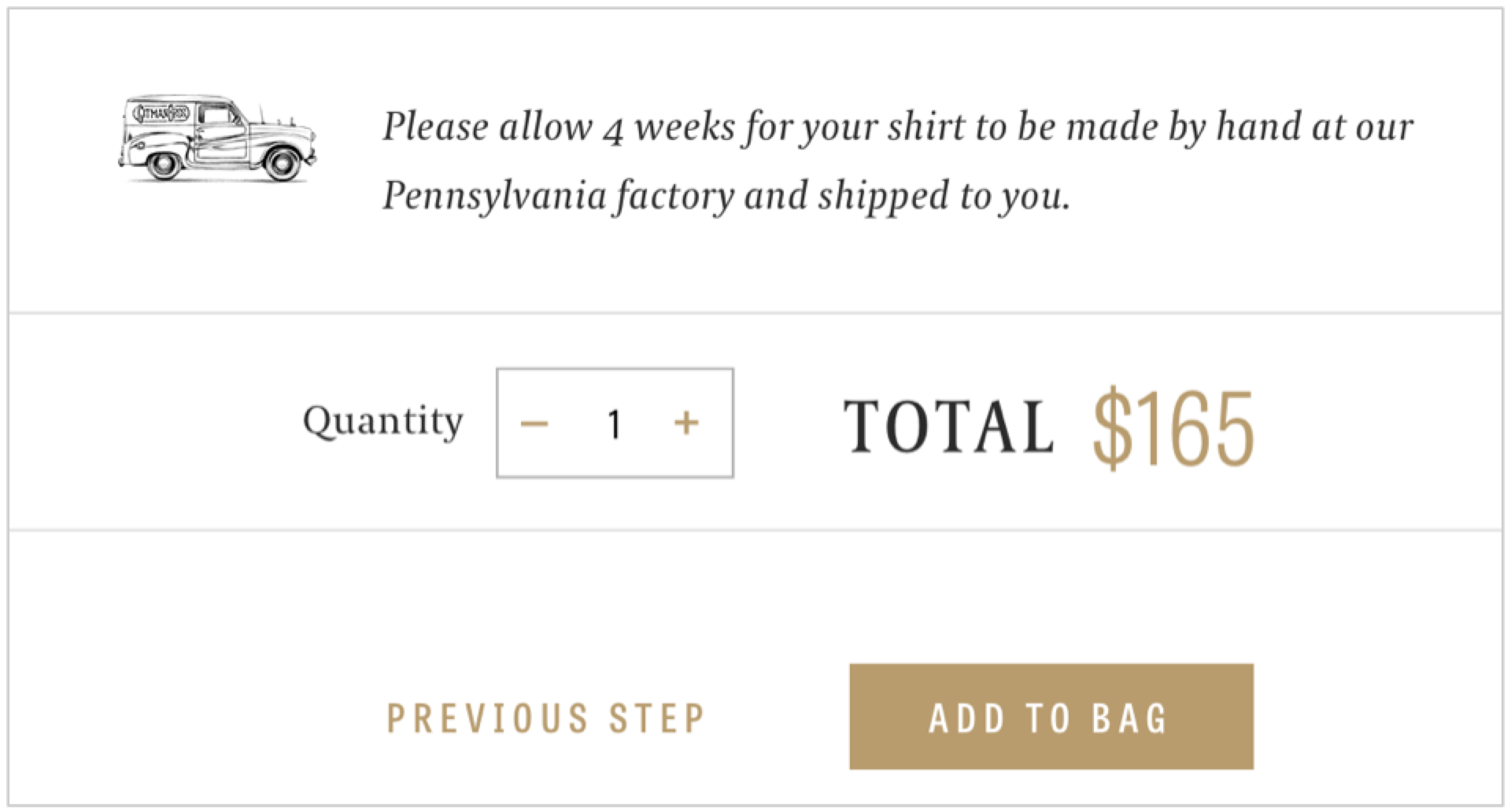
The microcopy on Gitman.com sets expectations in a polite and conversational manner. In most ecommerce situations, 4 weeks might be considered too long. However, this company softens the sting by emphasizing the positive aspect of the made-to-order craftsmanship. Now it’s worth the wait and high price tag! (And we avoid the build-up of negativity, as people would otherwise have wondered every day why they hadn’t received their shirt.)
- Write good error messages: Despite your best efforts to create an enjoyable user experience, websites sometimes need error messages to help people resolve unavoidable issues.
Encountering error messages is never pleasant, but in time of need, error messages can take the place of a customer-service agent. Harsh and obscure messages can turn a slight inconvenience to an antagonistic encounter. Courteous and helpful messages can mollify a potentially disastrous situation.
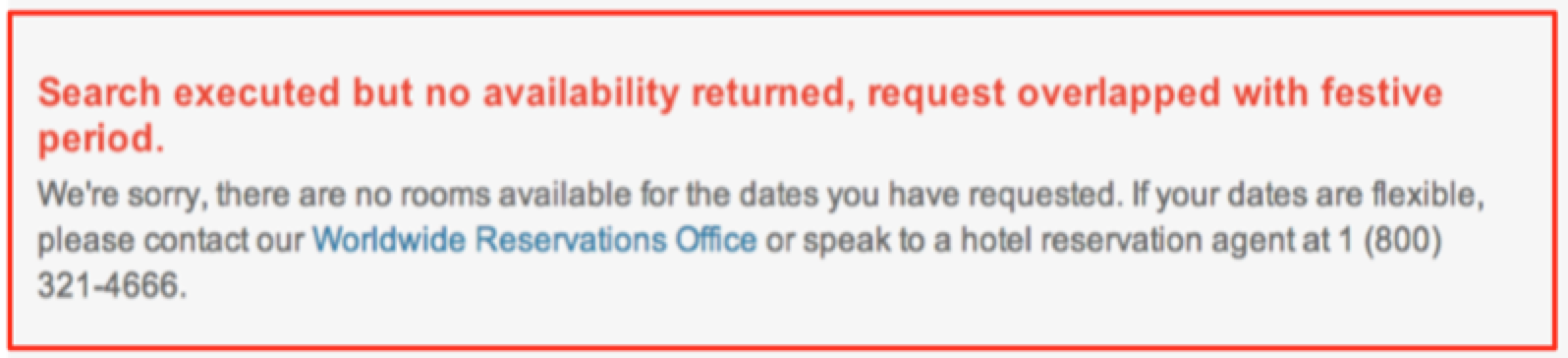
Four Seasons Hotels and Resorts: This error message on the reservations page sounds stilted and impolite, making a bad situation worse. An interaction like this could ruin an otherwise good website.
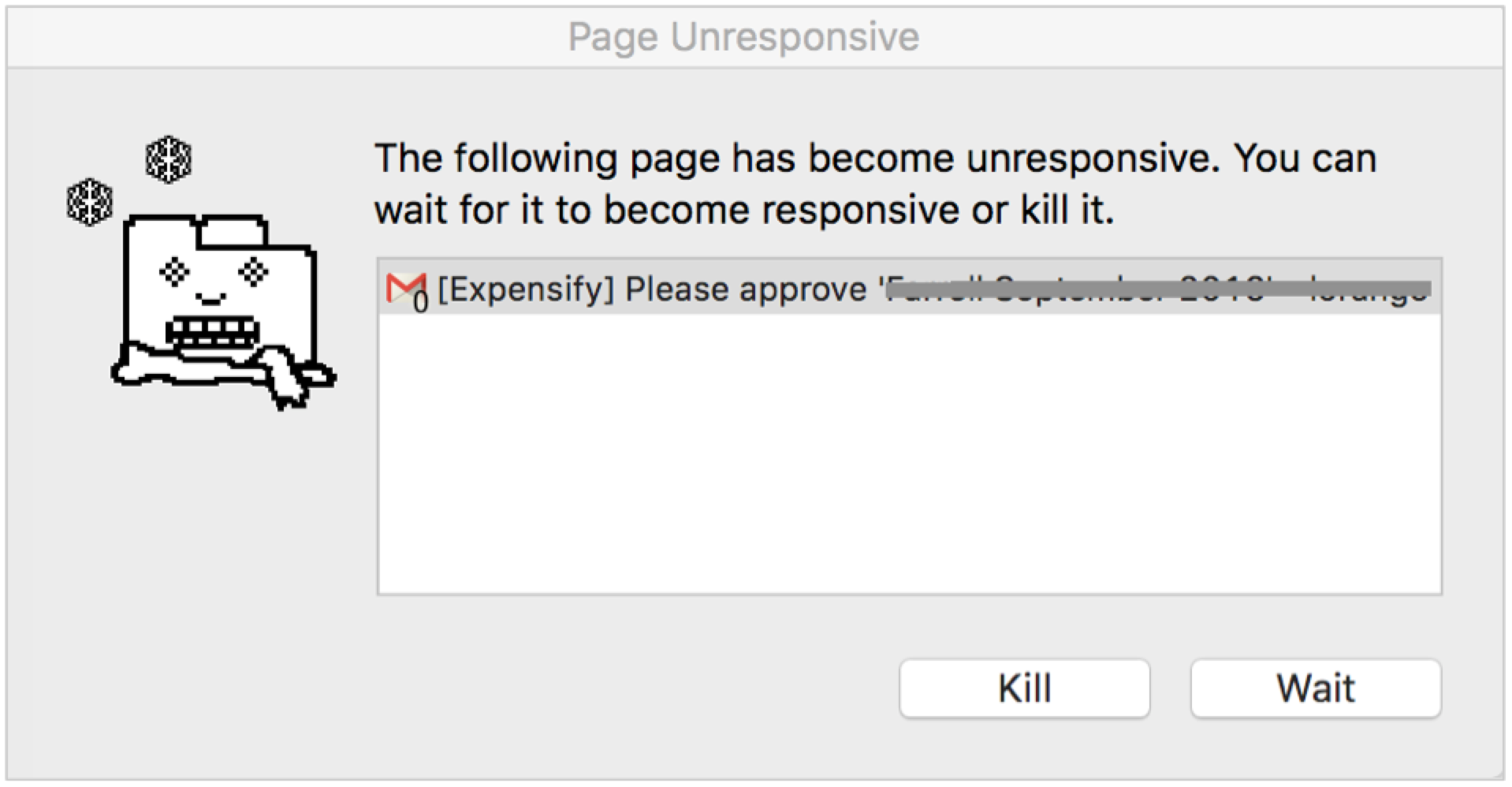
This error message illustrates an ill attempt at humor. People already have many negative associations with the word kill; its usage here fosters the negative bias.
- Sprinkle delightful encounters: As insurance, counteract negative experiences with delightful ones. Don’t be afraid to make your users smile. Sometimes, serendipitous encounters can leave lasting impressions.
Provide content that is formatted well for scanning and is written in the proper tone of voice. It’s not what you say, but how you say it. Our studies show that tone of voice has a measurable impact on users’ perceptions of a company and people’s willingness to engage with it.
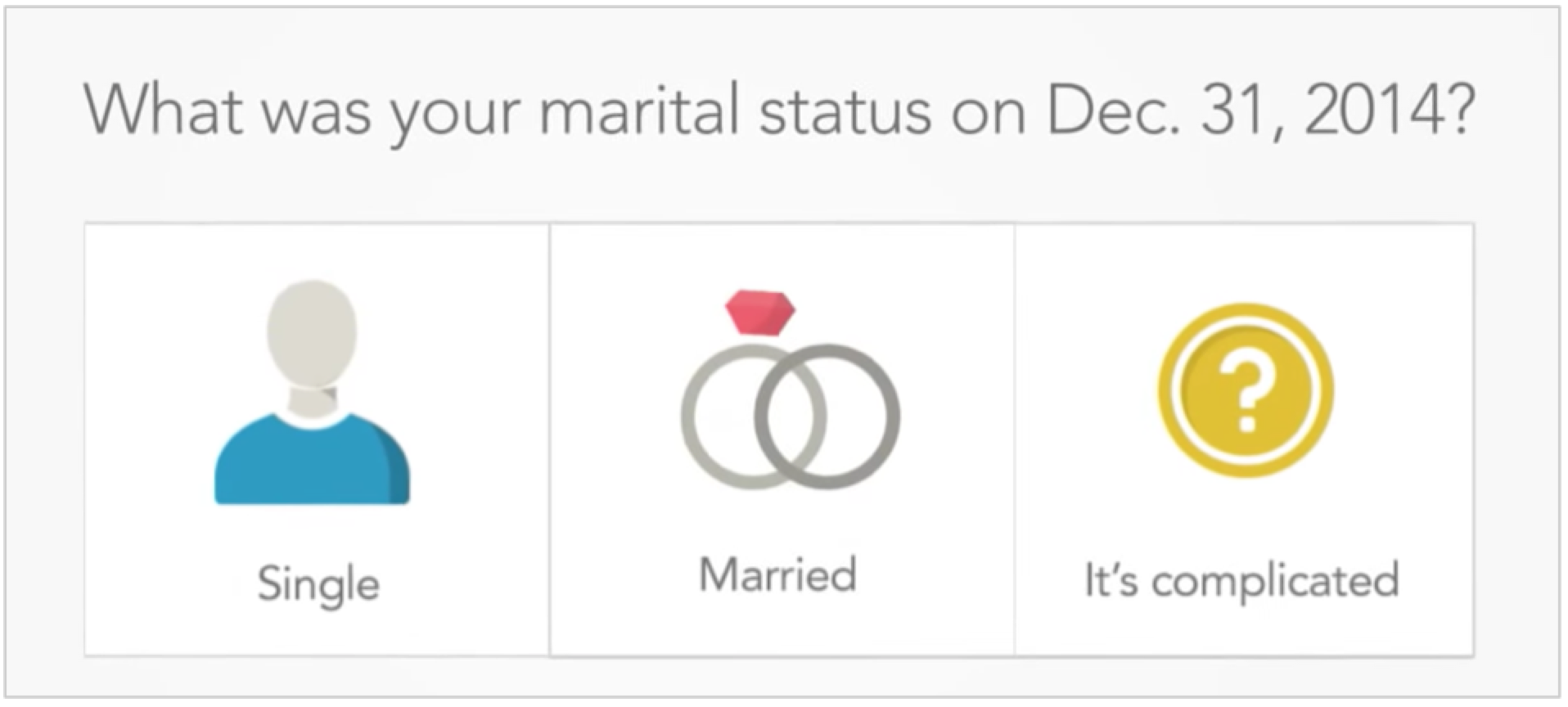
TurboTax: The questions and options are presented clearly, using language that sounds friendly and unintimidating.
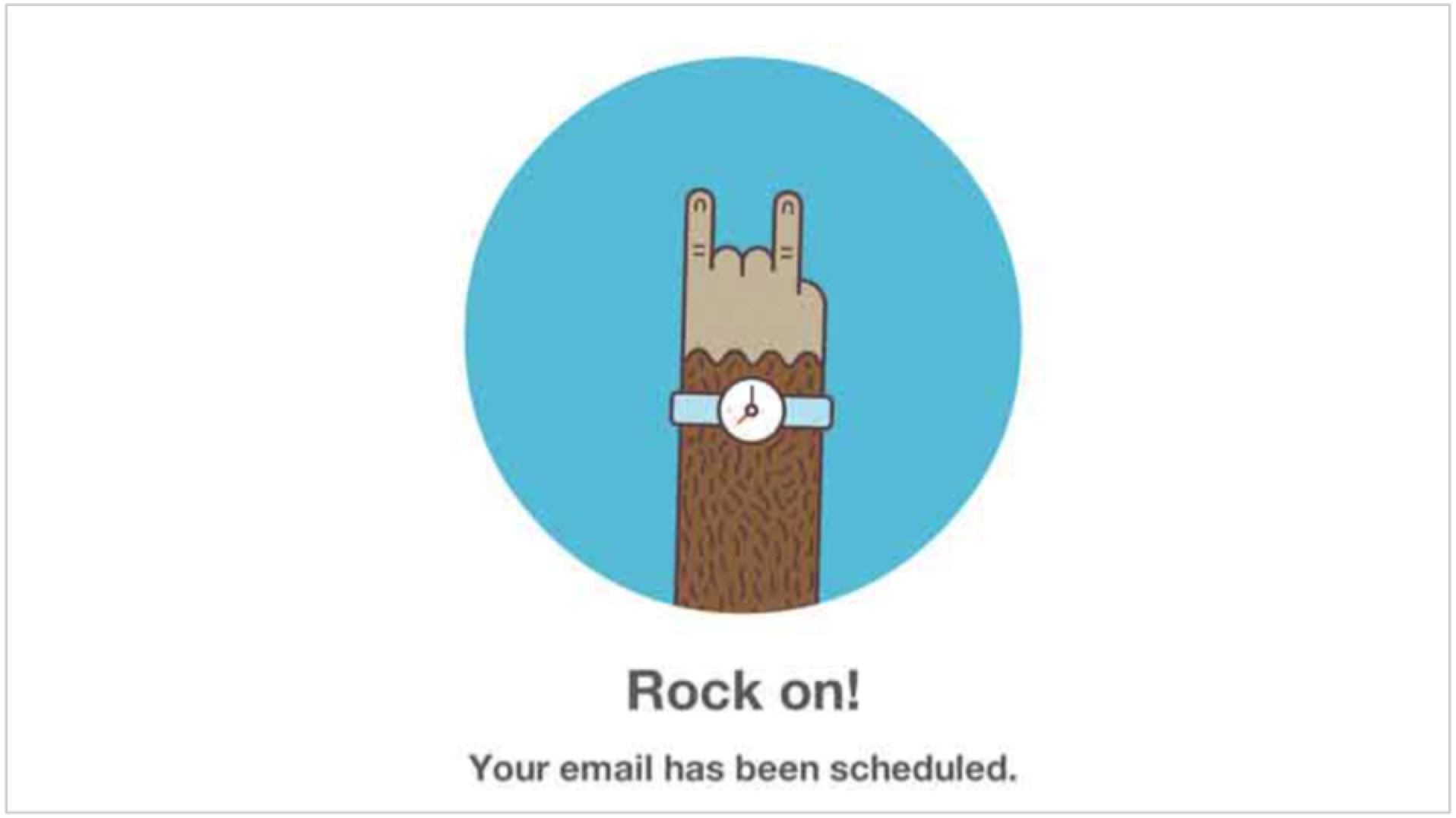
MailChimp helps administrators celebrate their accomplishment. Anyone who has sent an email newsletter to a large group of people knows how nerve wracking it feels to press that final button. This bit of playfulness is enjoyable and shows empathy.
- Test, test, and then test: Focus on designing usable websites that solve users’ problems. Understand your users and their tasks, and go out of your way to iron out as many usability hurdles (negative encounters) as you can in order to make it easy for people to reach their goals.
A core tenet of usability is recognizing that you are not your user. It is impossible to anticipate every user reaction or behavior. Conducting user research helps you reduce design risk by making decisions grounded in evidence, not personal bias. Never assume that your ideas are great. Always validate new or innovative ideas with real customers to minimize wasted effort.
Conclusion
Functionality and usability in user interfaces are required for success and should be your priority. However, don’t stop there. Account for negativity bias by going beyond user expectations and strive for delightful experiences.
Learn more on how to apply psychological principles in UX in our Human Mind Course. Learn to write for the Web in our Writing Compelling Digital Copy course.