Have you ever attended a university? Almost everyone reading this article will have some experience applying to, attending, or trying to graduate from a higher-education institution of some kind. Hopefully, it was (or is currently) a positive experience overall. However, in many cases, the college journey has plenty of challenges — the first of which is simply applying to the right schools.
The primary target audience of most university websites is still made of prospective students — at both the undergraduate and graduate levels. As we gathered data to update our report on good university-website design, many well-known findings describing the experience of prospective university students reemerged. We also discovered new insights reflecting the ever-changing state of higher education — particularly in response to COVID-19.
This article presents five major insights drawn from the many new findings added to the report and focuses on prospective university-students’ experience. Each insight is posed below as a question that UX professionals in higher education might ask themselves to determine whether they have adequately accommodated the corresponding user need in their work.
- 1 - How Easily Can Prospective Students Answer Their Top Questions?
- 2 - Can Prospective Graduate Students Accurately Picture the Online-Program Experience?
- 3 - Is the Prospective Student Already Considering Applying to the University?
- 4 - What Will Students See if They Search a Question on the Internet Before Looking on the University Website?
- 5 - How Personalized Are the Advertisements Sent to Prospective Students?
1 - How Easily Can Prospective Students Answer Their Top Questions?
Although each student is unique, most have similar questions while investigating universities. Prospective students’ top 4 questions are:
- Does this university have the program I am interested in?
- Can I afford to attend this school (considering tuition costs and financial-aid opportunities)?
- What are my chances of being admitted (given my grades and standardized-test scores)?
- What are the campus community and culture like, and will I fit in?
Additional questions focus on topics such as housing, available facilities, and study-abroad programs, but the answers to these top 4 questions are generally enough to convince a student whether a particular school is worth seriously considering. We saw some universities successfully making the answers to these questions easy to find, while others (intentionally or unintentionally) forced students to navigate through a frustrating maze to find the answers.
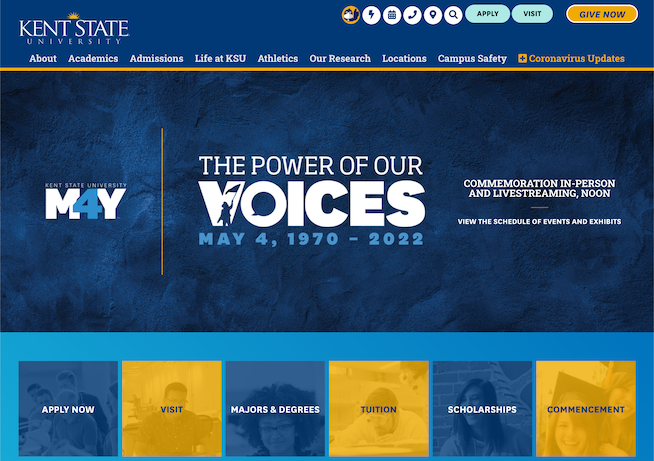
While the school’s homepage doesn’t necessarily need to include large buttons leading directly to the top 4 questions, prospective students should be able to find the answers to these questions in a few minutes or less so that they do not disregard the school. Small-sample qualitative usability tests on current designs will likely be enough to illuminate how easy it is to find the answers to these top four questions.
2 - Can Prospective Graduate Students Accurately Picture the Online-Program Experience?
In recent years, a significant number of graduate programs have begun offering online options. This shift was only accelerated by COVID-19. Many prospective graduate students — especially those pursuing master’s degrees — want to find an online offering that will allow them to continue their school while working or taking care of a family. These prospective students look for part-time and flexible programs that are asynchronous or blended. Many prospective graduate students have a hard time finding clear descriptions, illustrations, and examples of these online offerings and are frustrated because they cannot accurately picture themselves in these programs.

Program-detail pages are the best place to give prospective graduate students an accurate picture of what it will be like to participate in an online program. Placing this information on program-detail pages allows individual departments to outline what their online programs will look like, because formats often differ across the university. The most helpful information to include is:
- How much control the students will have over their schedules
- In what format students will interact with the course materials (live lectures, prerecorded videos, assigned readings, etc.)
- How long it will take to complete the degree
3 - Is the Prospective Student Already Considering Applying to the University?
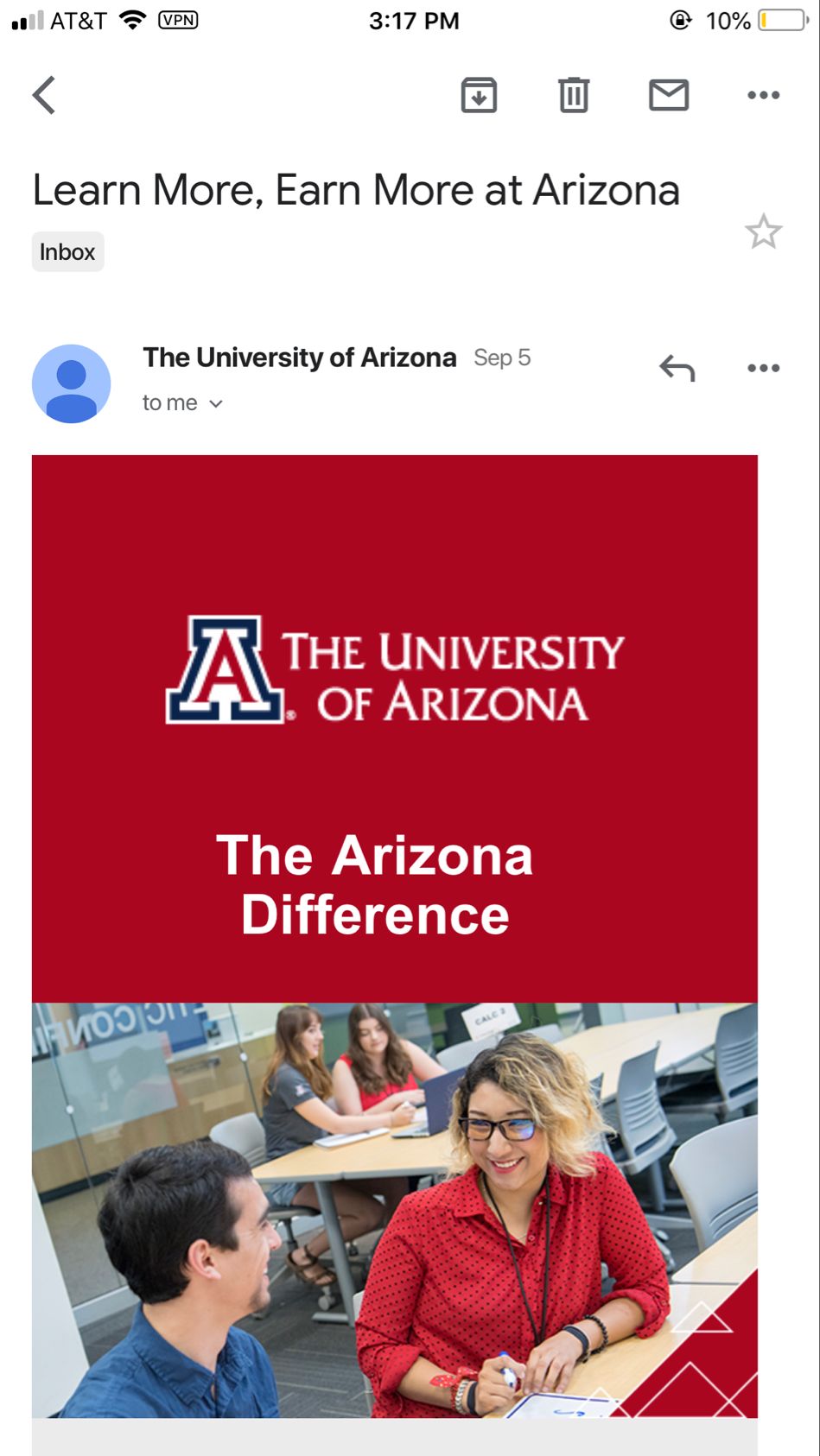
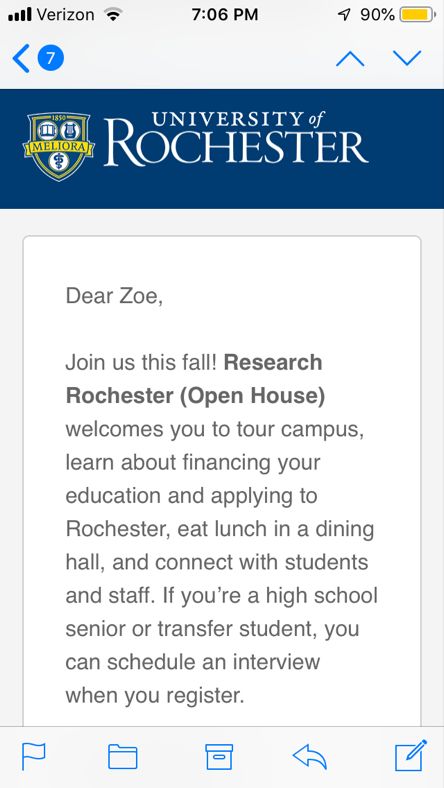
Many universities expend significant resources sending advertisements to prospective students. These advertisements generally describe the school and attempt to persuade the recipient to apply to it. They come both as printed materials in the mail (i.e., brochures, flyers, or information packets) and as emails.
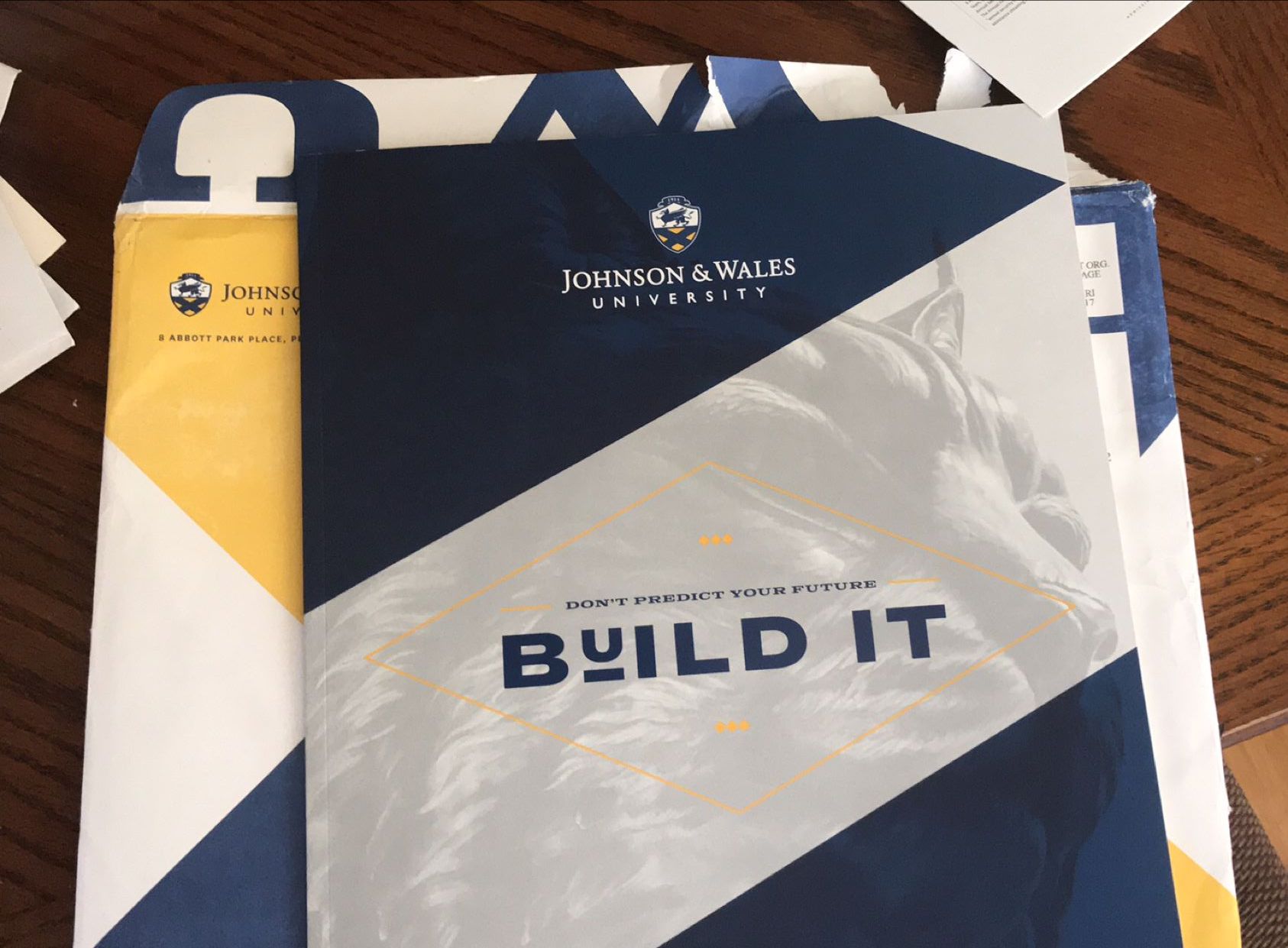
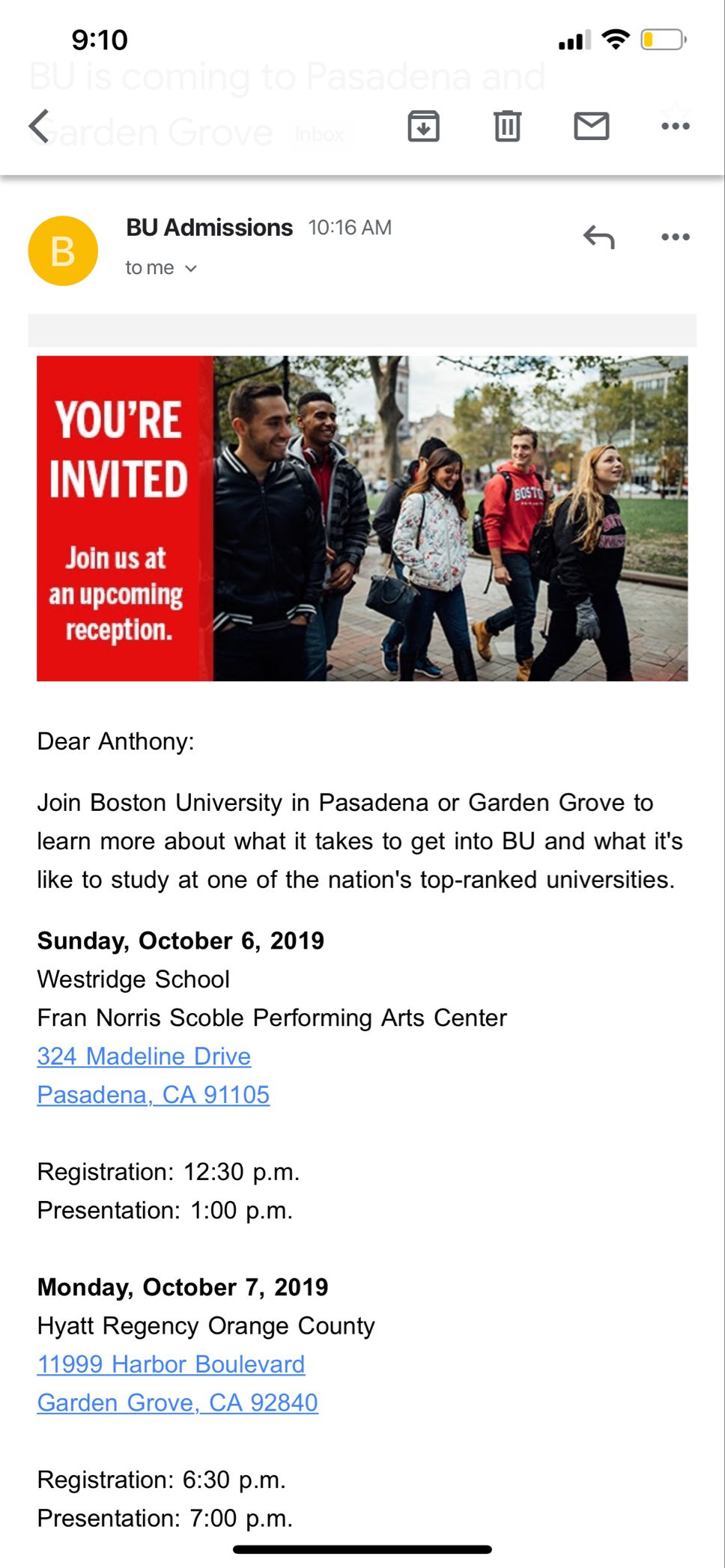
These advertisements are often sent in the fall, when most prospective students are narrowing the list of universities they are considering. Frequently, the schools that make students’ short lists are local schools or schools that friends or family have previously attended — particularly if students are trying to save money (through in-state tuition), stay near family, or haven’t decided what they want to study. In cases where students are not as concerned about cost and have decided what they want to study, schools that are farther away and have strong programs in their subject area are also likely to make it onto the short lists.
In almost every case, students are annoyed by advertisements that come from schools they are not already considering. This is partially because prospective students are overwhelmed by the effort required to read and consider every advertisement they receive. Many students reported receiving multiple advertisements a day — especially as emails. In some cases, the same schools sent multiple advertisements to the same students in a short period of time. In our research, the advertisements that students read and acted on were those that came from the schools they were already considering.
Consider the following quotes regarding such ads from 5 separate prospective undergraduate students who participated in our diary study:
- “I get a lot of emails like this. I just think they're irritating. I almost never look at them unless they're from one of the colleges that I'm applying to.”
- “I don't really act upon it mainly because, like, a lot of these colleges I’m not really interested [in].”
- “I think that … the advertising or whatever was effective… It's just not personally a college that I'd like to go to.”
- “I learned about the dates to apply, but, honestly, I am not super interested in [this university], so it didn't prompt me to take any action after receiving this brochure.”
- “I personally didn't really care about the email because I'm really indifferent to it. I didn't really want to receive the email from them. I don't even know this university.”
There is no magic way to convince prospective students to seriously consider an advertisement from your university if they are not open to receiving it. However, we do describe some common elements of effective advertisements in our full report. Some of those patterns include specifying ways that students can save money, providing clear and actionable steps, and packing information into few mailers.
4 - What Will Students See if They Search a Question on the Internet Before Looking on the University Website?
Prospective students often turn to a search engine to find the information they need. Many of the answers to their top questions take the form of numbers, dates, or short phrases, which are easily served up in featured snippets on search-engine-results pages (SERPs). When the answer they’re looking for is provided by the search engine, prospective students tend to trust it and stop their search (a behavior called good abandonment — “good” referring to the positive user experience, not necessarily to what a university would want). Prospective students are grateful when they don’t need to dig deep into a university website to find the information they are looking for.
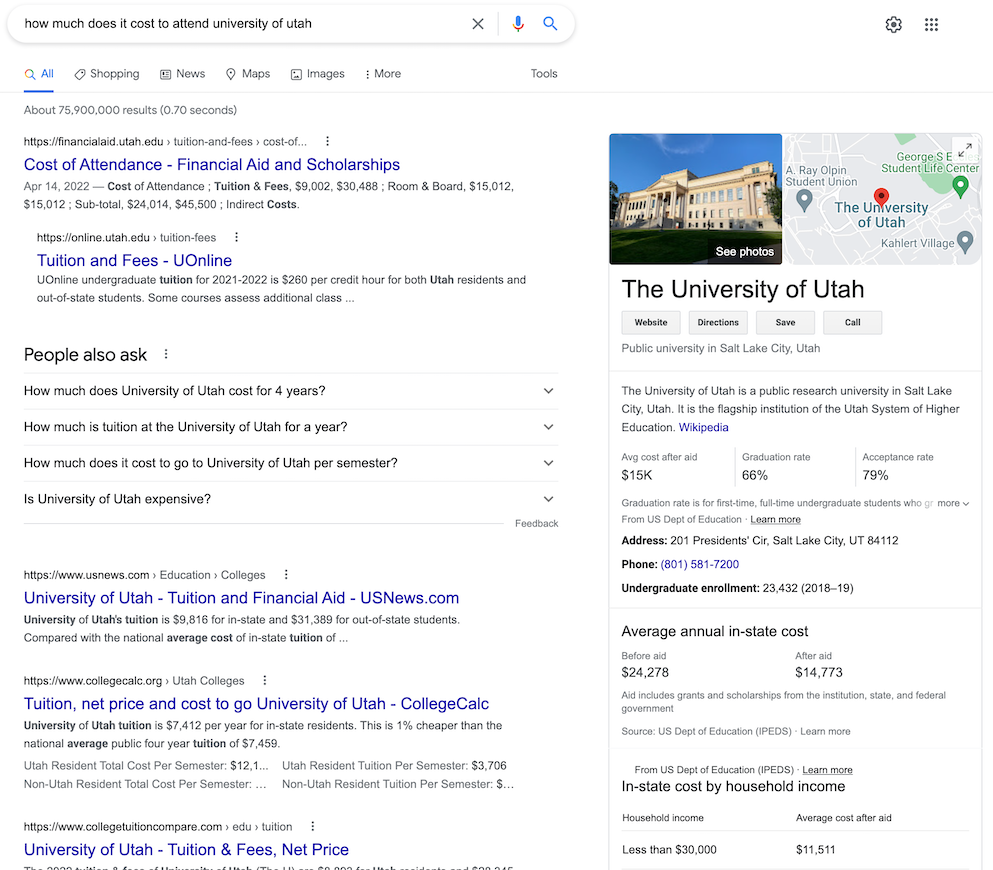
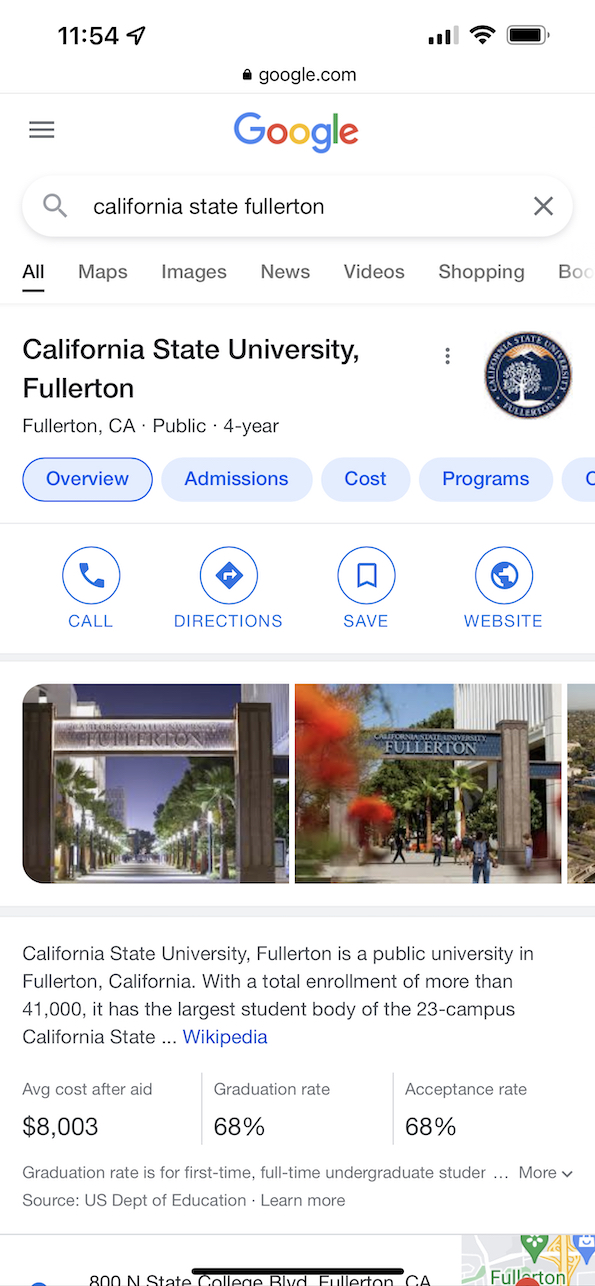
In the initial phases of school exploration, prospective students are likely to search the name of a school rather than for answers to detailed questions. They expect to see basic information which answers some of their primary questions, such as the top 4 questions referenced above. Students tend to use this information to quickly check if the university is a viable option for them.
The following quotes illustrate how prospective students use search engines to quickly find answers to their questions without ever visiting a university website:
- “This type of really quick information [from Google] made me able to decide on a dime on whether or not this is the right fit for me.”
- “I went to the Google homepage and I typed in ‘Bismark State College’ and I was I was going to click on the link to their website on the right hand side, but it popped up how much in-state tuition was. It really surprised me because I didn't think that it would just be there, and I thought I would have to go through a process of trying to figure that out on their website rather than it just being right [there].”
- “It took me longer to find out the information that I was looking for because it wouldn’t just immediately pop up [on Google]. I had to go into the actual website and look through all of the categories and find the thing that I was looking for.”
- “I went to the Google homepage and I typed in the college and I didn’t even have to log on to their school website because it was on the right side of Google and it told me that their acceptance rate is 40 percent which is super easy to find.”
The obvious implication of this finding is that universities should ensure that the information returned in featured snippets on SERPs is accurate.
However, a second implication relates to our first finding, referenced at the beginning of this article. The underlying factor causing prospective students to prefer the information in featured snippets over looking at university websites is their desire to move quickly and efficiently. University websites would be well advised to follow the pattern demonstrated by SERPs. Surfacing the answers to prospective students’ top questions on the homepage and on search-results pages will prevent them from having to read long passages and scan large amounts of text to find important information. It is also critical that the main navigation options have high information scent and guide students to the information they seek, since the answer to every question cannot sit at the top of the homepage.
An analysis of the most frequently searched words and phrases on any university’s website can reveal important prospective-student questions. The following items capture only some of the many things prospective students reported searching on the internet during our study alone:
- The phone number for a school
- The website for a school
- Scholarship opportunities
- Application deadlines
- Required information for applications (to schools and financial-aid opportunities)
- Average admission statistics (e.g., average ACT score of admitted students)
- General acceptance rates
- How to write good emails
- School rankings
- What to bring when moving into a dorm
- Tuition costs
- Where to rent equipment
- Ways to save money at college
- How to start a club at the university
- Places to eat near the campus
- Places to live near the campus
5 - How Personalized Are the Advertisements Sent to Prospective Students?
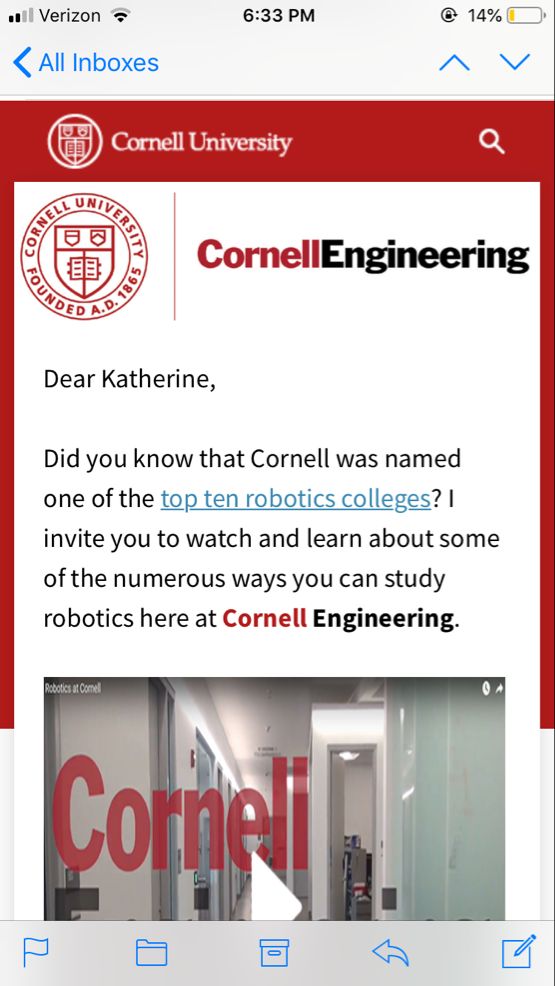
Prospective students expect the advertisements they receive from universities to be personalized and relevant to their situations. Good personalization can be very persuasive, while poor personalization tends to be harmful. Prospective students can easily tell when they have been blasted with a mass advertisement that was sent to hundreds of other students with little or no effort to personalize it. They generally see such messages, whether email or printed materials, as spam. There are three basic levels of personalization that prospective students see in advertisements:
- No personalization. These advertisements have nothing unique about them. Every recipient receives identical information — usually, broad statements that are meant to be widely applicable. Prospective students feel these types of advertisements are impersonal and not persuasive.
- Minor personalization. These advertisements contain the same basic information for each student, but swap out small elements such as name, location, or GPA so that they appear to personally address the recipient. These attempts do not fool prospective students and still feel like spam.
- Major personalization. The content of these advertisements is obviously unique to the interests of the student. These advertisements contain specific details about programs, locations, or opportunities that would obviously not apply to all prospective students. These types of advertisements are easily recognized as intentional and are generally able to pique prospective students’ interest.
Our research shows that advertisements must reach the third level to catch prospective students’ attention — especially when the students are not already considering the university that sent them.
Conclusion
Prospective university students are on a mission: to decide which universities they will apply to. Any efforts to increase the speed and efficiency with which future students can find answers to top questions raises the chances that they will apply to your school. However, prospective students are not easily swayed when they have their minds made up. It is best to focus time and resources on identifying and connecting with those individuals who already have your school on their radar.
For more information about this new research, see the second edition of our report on University Websites.