AI is introducing the third user-interface paradigm in computing history, shifting to a new interaction mechanism where users tell the computer what they want, not how to do it — thus reversing the locus of control.
Identify UX problems with error messages consistently and effectively using a scoring rubric based on established usability best practices for error messages.
Ethically sound UX research requires informed consent from a research participant. Informed consent means the participant fully understands what the study entails and the potential consequences of participating.
Inviting users to directly participate in UX Workshops can vastly improve the workshop output; however, the exact strategy and methods for including them vary based on the workshop type and goals.
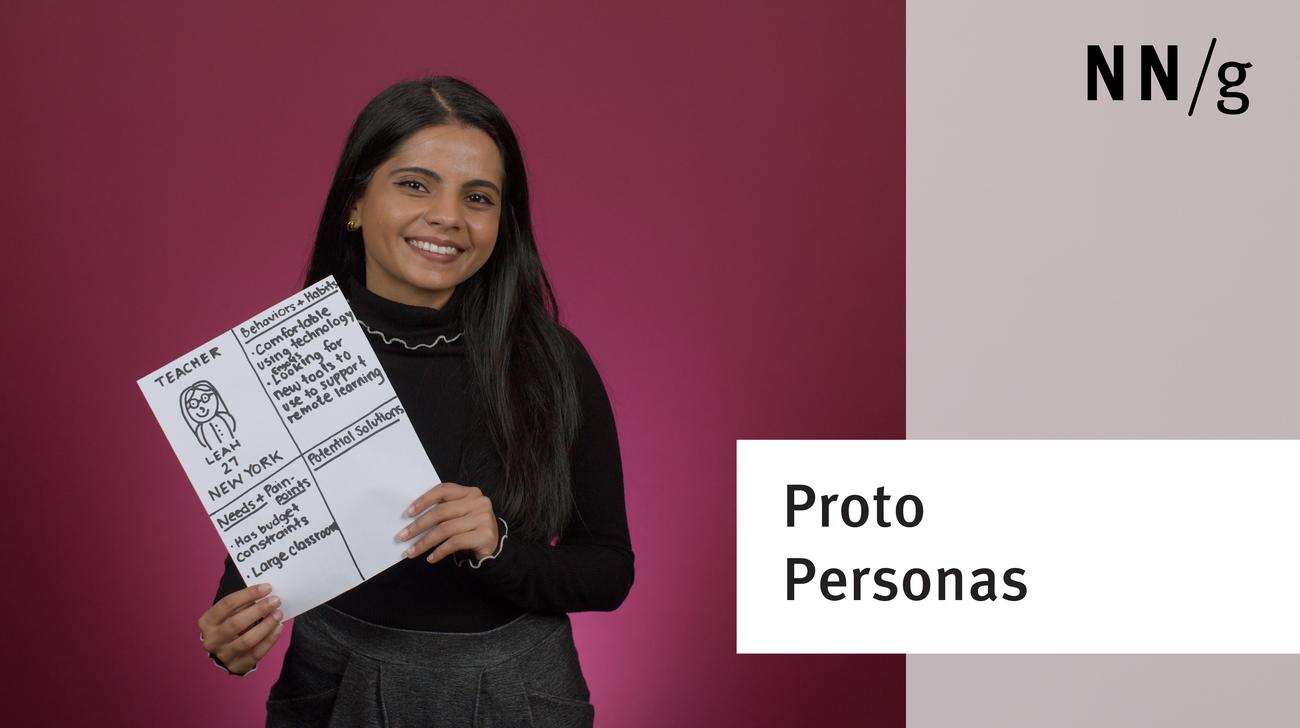
Proto personas capture a team's existing knowledge or assumptions about who their current users are. These should be used with caution because they are created with no new research.
Basic psychological principles can guide you as a UX designer because most users share many common characteristics. Consider learning more about: motivation, attention, memory, persuasion, learning, decision making, emotion, sensation, perception, or cognitive biases.
Jakob Nielsen's 10 general principles for interaction design. They are called "heuristics" because they are broad rules of thumb for UX and not specific usability guidelines.
Empathy maps help UX teams visualize user attitudes and behaviors, building a shared understanding of end users while highlighting gaps in existing user data.
Modern day UX research methods answer a wide range of questions. To know when to use which method, each of 20 methods is mapped across 3 dimensions and over time within a typical product-development process.
User interviews have become a popular technique for getting user feedback, mainly because they are fast and easy. Use them to learn about users’ perceptions of your design, not about its usability.
User journeys and user flows both describe processes users go through in order to accomplish their goals, but they differ in scope, purpose, and format.
iOS 26’s visual language obscures content instead of letting it take the spotlight. New (but not always better) design patterns replace established conventions.
Elaborate usability tests are a waste of resources. The best results come from testing no more than 5 users and running as many small tests as you can afford.
In a card-sorting study, users organize topics into groups. Use this research method to create an information architecture that suits your users' expectations.