The LATCH framework organizes information based on location, alphabet, time, category, and hierarchy. This method helps transform complex datasets into meaningful structures, facilitating effective navigation.
Card sorting studies help understand how users naturally categorize information. This information can help with creating a product's information architecture (IA) that matches users' mental models.
In a card-sorting study, users organize topics into groups. Use this research method to create an information architecture that suits your users' expectations.
Information architecture is the practice of structuring and organizing content on your site. Sitemaps are visualization tools used predominantly for planning.
Polyhierarchy is used to place a single item in more than one IA category. This can support users with different mental models but should be used judiciously.
Users’ mental models of concept categories are far less strict than you might expect. Consider keeping small numbers of outlier pages within their larger parent category, rather than creating unnecessary subcategories.
Card sorting is great for designing or evaluating an information architecture (IA), but it can be hard to interpret. Dendrograms visualize the data which can help you make the necessary decisions which are rarely clear-cut but require tradeoffs.
Tree testing is a supplement to card sorting as a user research method for assessing the categories in an information architecture (especially a website IA and its proposed or existing navigation menu structure).
Trade-off scales are a tool that UX practitioners can use to visually prioritize user needs and project dimensions to focus resources on the most important ones.
Don’t just do usability tests. Do what you need. Consider five criteria to help you determine the most effective UX research method to use for your situation, to meet research goals, and achieve desired outcomes.
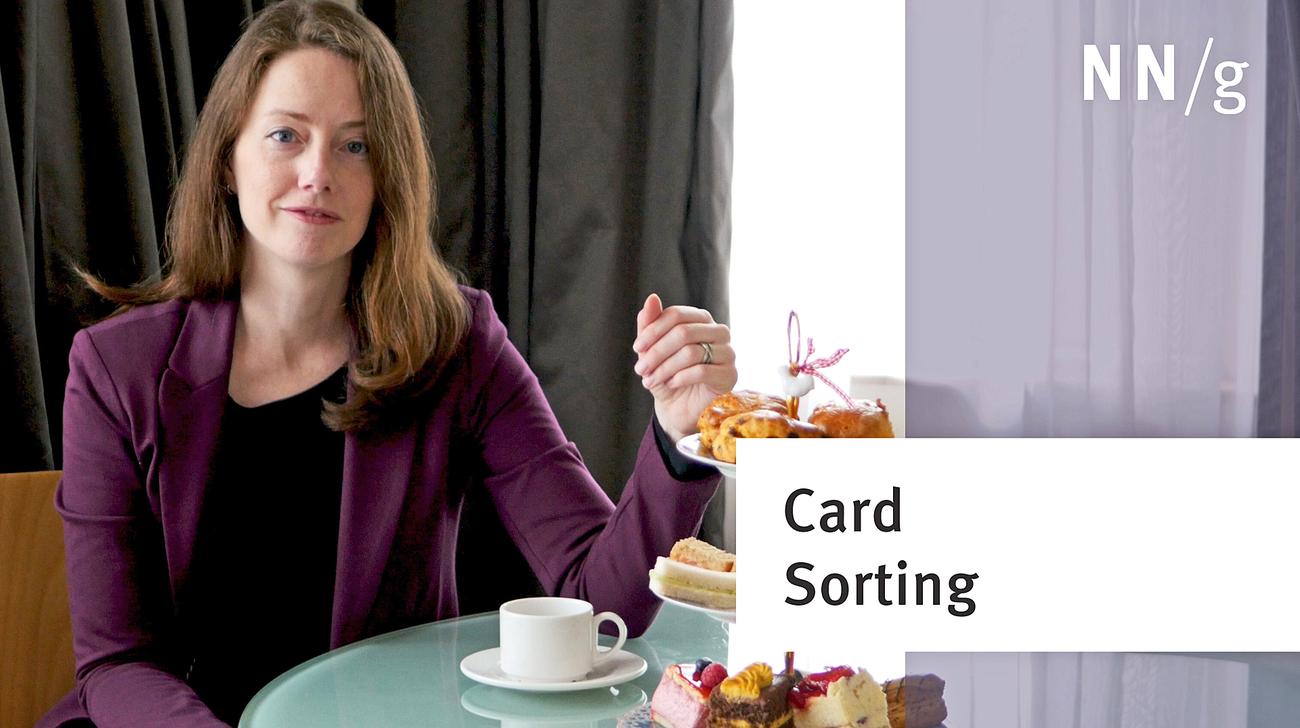
Card sorting helps you understand how to organize offerings so people who know what you have and where to find it. Even afternoon tea requires thoughtful organization and presentation.