Learn how to run a remote moderated usability test. This second video covers how to actually facilitate the session with the participant and how to end with debrief, incentive, and initial analysis with your team.
In remote usability studies, it's hard to identify test participants who should not be in the study because they don't fit the profile or don't attempt the task seriously. This is even harder in unmoderated studies, but it can (and should) be done.
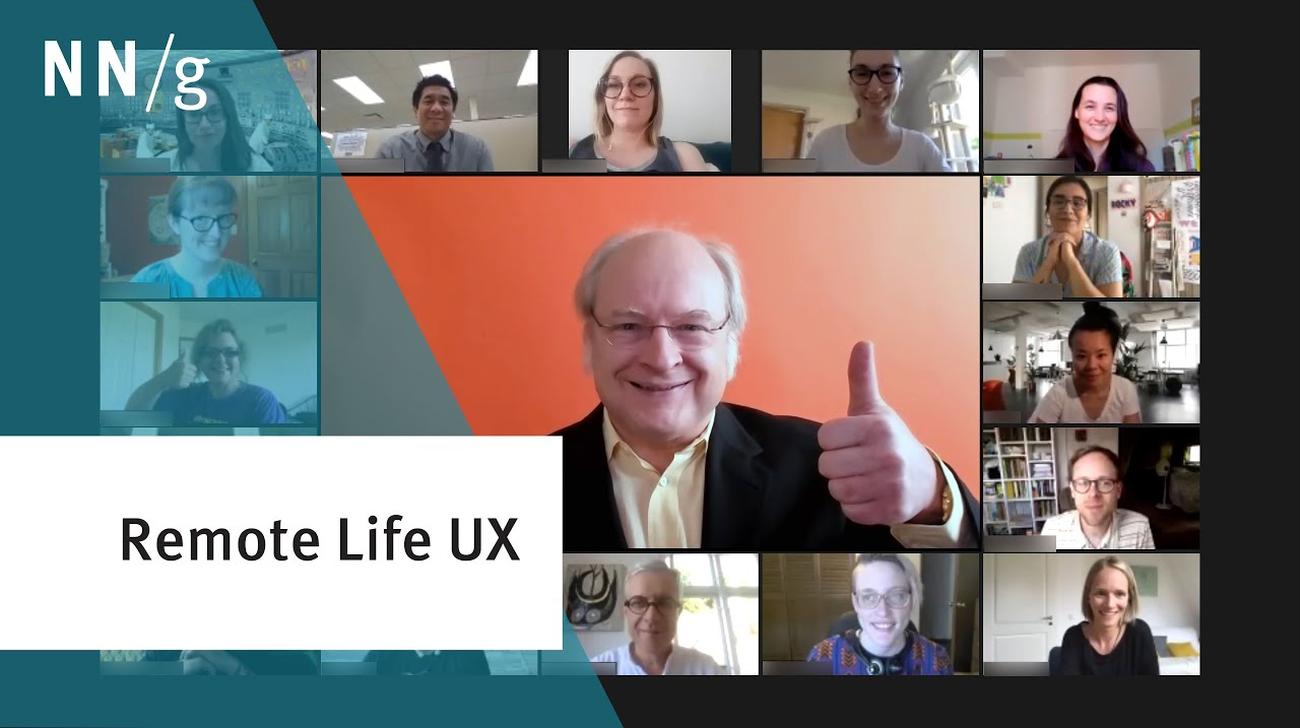
At the virtual UX Conference, Jakob Nielsen was asked "What's the most interesting UX topic at the moment?" Answer: better support for remote lifestyles.
Exact costs will vary, but an unmoderated 5-participant study may be 20–40% cheaper than a moderated study, and may save around 20 hours of researcher time.
Remote usability studies can be run completely by software (unmoderated), or a human UX researcher can facilitate the study, even if the test participant is remote (at home or their own office, rather than yours).
How to maximize team participation and the value of the outcome when running a UX workshop remotely. Different platforms have different benefits and downsides, so choose depending on your circumstances and needs.
Remote unmoderated usability testing is so fast and easy that some teams make it their only evaluation method. But don’t shy away from its more robust alternative, the remote moderated usability test, which can give you more information and is also inexpensive.
Is it possible to do all user-experience work 100% remotely? At the first Virtual UX Conference, Jakob Nielsen answered this question in an audience Q&A session.
Even though in-person UX sessions are typically ideal, sometimes budget or travel restrictions necessitate remote UX work. This article presents guidelines for remote user research, UX workshops or presentations, and collaboration.
The type of workshop will dictate which tools your team should use. Ultimately, with limited time and budget, your best bet is to use a tool your team already knows how to use.
Ideation in the UX design process can be conducted remotely: without having team members in the same room. This can be done synchronously (everybody participates at the same time) or asynchronously (people contribute at different times).
The 6 steps for running unmoderated usability testing are: define study goals, select testing software, write task descriptions, pilot the test, recruit participants, and analyze the results.
Asynchronous remote ideation allows people to contribute ideas whenever it’s convenient to do so, but synchronous sessions lead to faster results and more team building.
Remote UX work is challenging, but using digital collaboration and communication tools can mitigate some of its difficulties. Our recommendations are based on NN/g’s experience as a remote company.