Remote usability testing allows you to get customer insights when travel budgets are small, timeframes are tight, or test participants are hard to find.
For testing assignments where client teams are ready, willing and able to take immediate action, being flexible with tasks within and between participants can offer better bang for your buck.
Simple usability tests where users think out loud are cheap, robust, flexible, and easy to learn. Thinking aloud should be the first tool in your UX toolbox, even though it entails some risks and doesn't solve all problems.
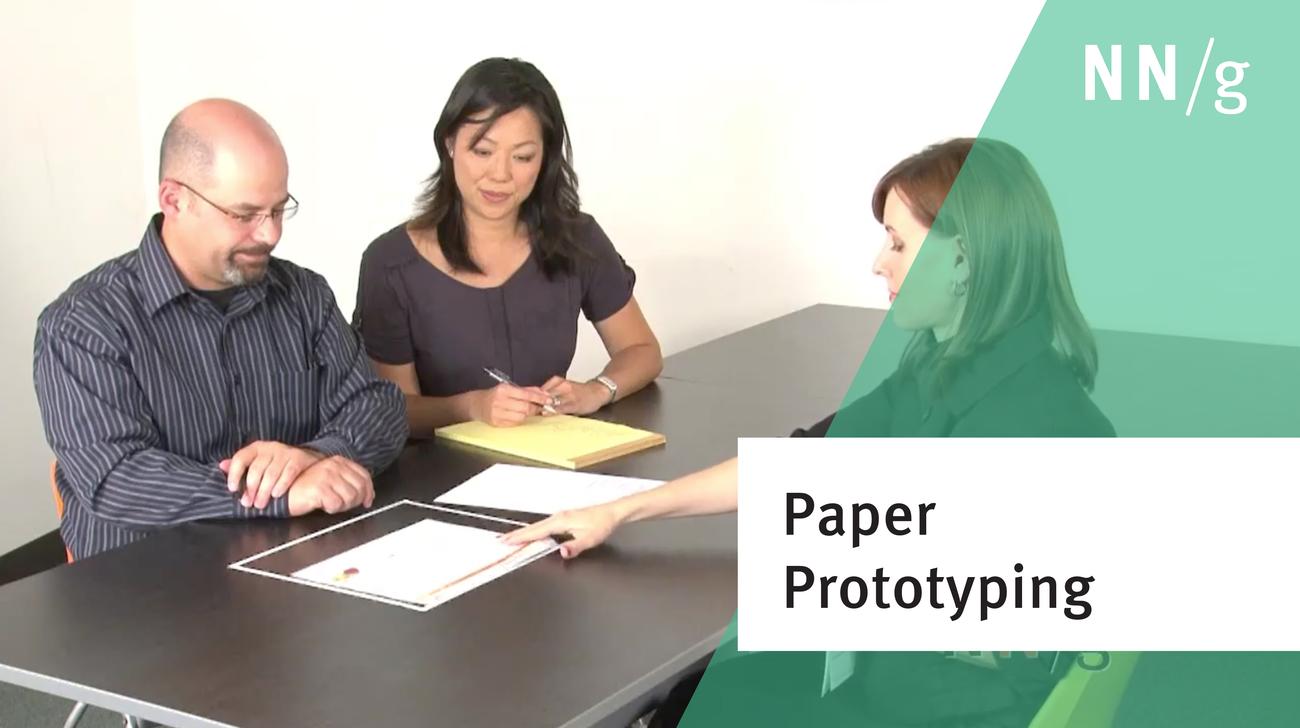
Create low-fidelity, low-commitment rapid user interface prototypes to can get early user feedback. Video shows how to conduct user testing of these simulated screens, with examples of the kinds of usability problems you can discover by testing different kinds of prototypes.
Besides usability specialists, all design team members should observe usability. It's also good to invite executives. Although biased conclusions are possible, they're far outweighed by the benefits of increased buy-in and empathy.
It's more difficult to conduct usability studies with experienced users than with novices, and the improvements are usually smaller. Still, improving expert performance is often worth the effort.
Usability is like cooking: everybody needs the results, anybody can do it reasonably well with a bit of training, and yet it takes a master to produce a gourmet outcome.
Simple user testing with 5 participants, paper prototyping, and heuristic evaluation offer a cheap, fast, and early focus on usability, as well as many rounds of iterative design.
TiVo ran 12 user tests in 12 weeks while designing its new website. As TiVo's experience shows, frequent and regular testing keeps the design usability focused.
The 1% of websites that don't suck can be made even better by strengthening exceptional user performance, eliminating miscues, and targeting company-wide use and unmet needs.