Any time you release a new user interface design, you'll get complaints. This doesn't mean that the new design is worse than the old design; it simply means that it's new, and users don't like to learn different ways of doing things. Tips for reducing change aversion (you can't avoid it completely).
Cognitive maps, concept maps, and mind maps are diagramming techniques that can be utilized throughout the UX process to visualize knowledge and surface relationships among concepts.
Don't just show your proposed user-interface solution. Set the stage with the necessary background for understanding the design, and follow through with visuals that tell the full UX story.
By placing colored dots, participants in UX workshops, activities, or collaborative sessions individually vote on the importance of design ideas, features, usability findings, and anything else that requires prioritization.
Remote UX work is challenging, but using digital collaboration and communication tools can mitigate some of its difficulties. Our recommendations are based on NN/g’s experience as a remote company.
The best user experiences are backed by research, but sometimes we move more quickly than our research does. How can we best use and track assumptions as we go through design iterations?
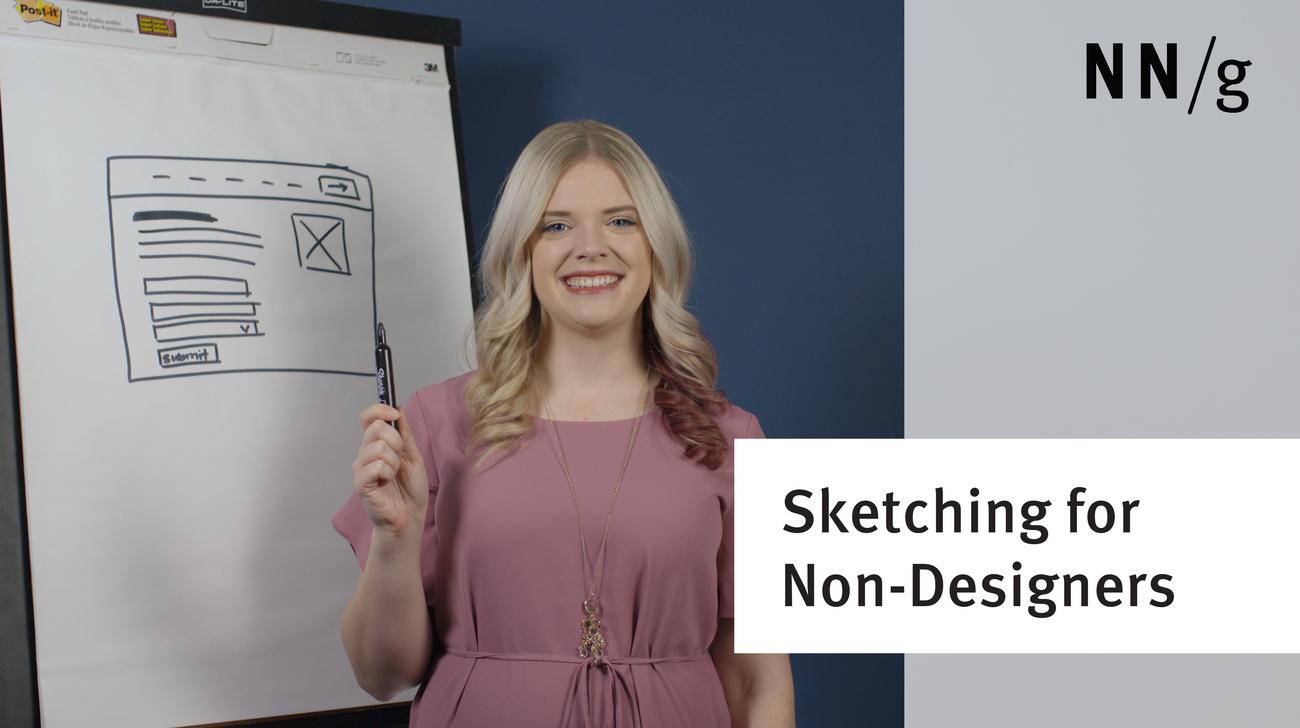
"I can't draw," is a common phrase heard in ideation. But ideation happens in early stages of design and is meant to be messy. This video shows how to use basic shapes to convey UI elements.
Whether modal or not, most overlays appear at the wrong time, interrupt users during critical tasks, use poor language, and contribute to user disorientation.
Jakob Nielsen's 10 general principles for interaction design. They are called "heuristics" because they are broad rules of thumb for UX and not specific usability guidelines.
Empathy maps help UX teams visualize user attitudes and behaviors, building a shared understanding of end users while highlighting gaps in existing user data.
Modern day UX research methods answer a wide range of questions. To know when to use which method, each of 20 methods is mapped across 3 dimensions and over time within a typical product-development process.
User interviews have become a popular technique for getting user feedback, mainly because they are fast and easy. Use them to learn about users’ perceptions of your design, not about its usability.
User journeys and user flows both describe processes users go through in order to accomplish their goals, but they differ in scope, purpose, and format.
iOS 26’s visual language obscures content instead of letting it take the spotlight. New (but not always better) design patterns replace established conventions.
Elaborate usability tests are a waste of resources. The best results come from testing no more than 5 users and running as many small tests as you can afford.
In a card-sorting study, users organize topics into groups. Use this research method to create an information architecture that suits your users' expectations.