Ideation in the UX design process can be conducted remotely: without having team members in the same room. This can be done synchronously (everybody participates at the same time) or asynchronously (people contribute at different times).
As you learn design thinking, you progress through stages: being a beginner, an intermediate practitioner, and possessing advanced expertise. This progression is like learning to cook: you won't be a master chef on day 1, but there are appropriate skills to aim for at each level.
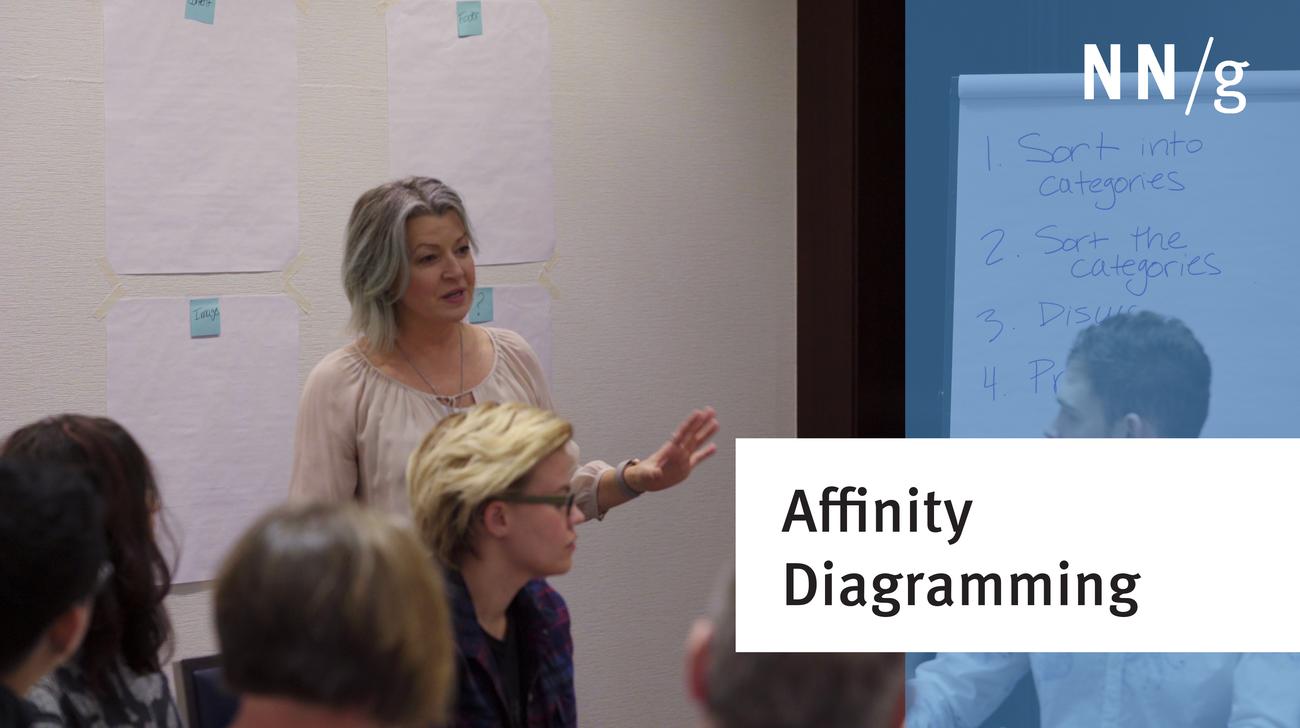
Use the affinity diagramming method with stakeholders and members to efficiently categorize then prioritize UX ideas, research findings, and any other rich topics. Work together to quickly develop a shared understanding among your team.
Workshops are a useful tool in the user-experience design process, but mistakes are common when the workshop facilitator didn't prepare right, causing the team to waste time.
As a facilitator, it’s your responsibility to make sure the time spent in workshops is as productive as possible for attendees, while at the same time ensuring that you get the insights you need in order to move your project forward.
Tips to help clarify the role of UX and how to navigate the relationship dynamics between UX and the rest of the team within an Agile development process.
Teams must combine perspectives and get buy-in from multiple business units and channel stakeholders in order to plan and execute effective omnichannel experiences.