A clear guide to UX research democratization—definition, misconceptions, benefits, research ops, templates, training, tech, and AI best practices for scaling quality insights.
No design is perfect on the first try. Combining iteration, parallel design, and competitive testing helps teams move quickly, explore broadly, and make confident, evidence-based design decisions.
If your product doesn't exist yet, and you don't even have a prototype, you can (and should) still base design decisions on user research. Observational research methods can gather information about user needs and provide input to new-product ideation.
A general technique that's helpful in many kinds of UX workshops and design ideation is to first have team members work independently to create diverging ideas and solutions. Then, as a separate step, everybody works together to converge on the final outcome.
A common problem during user experience ideation is when design teams are stuck on a traditional way of thinking about aspects of the design. Here are some tips for breaking out of such functional fixedness.
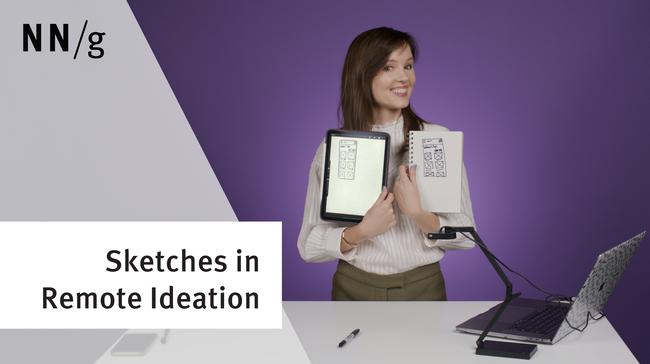
Depending on how much your team can spend, your team might want to use tablets, document cameras, smartphones, or your computers’ webcams to share sketches.
Ideation in the UX design process can be conducted remotely: without having team members in the same room. This can be done synchronously (everybody participates at the same time) or asynchronously (people contribute at different times).
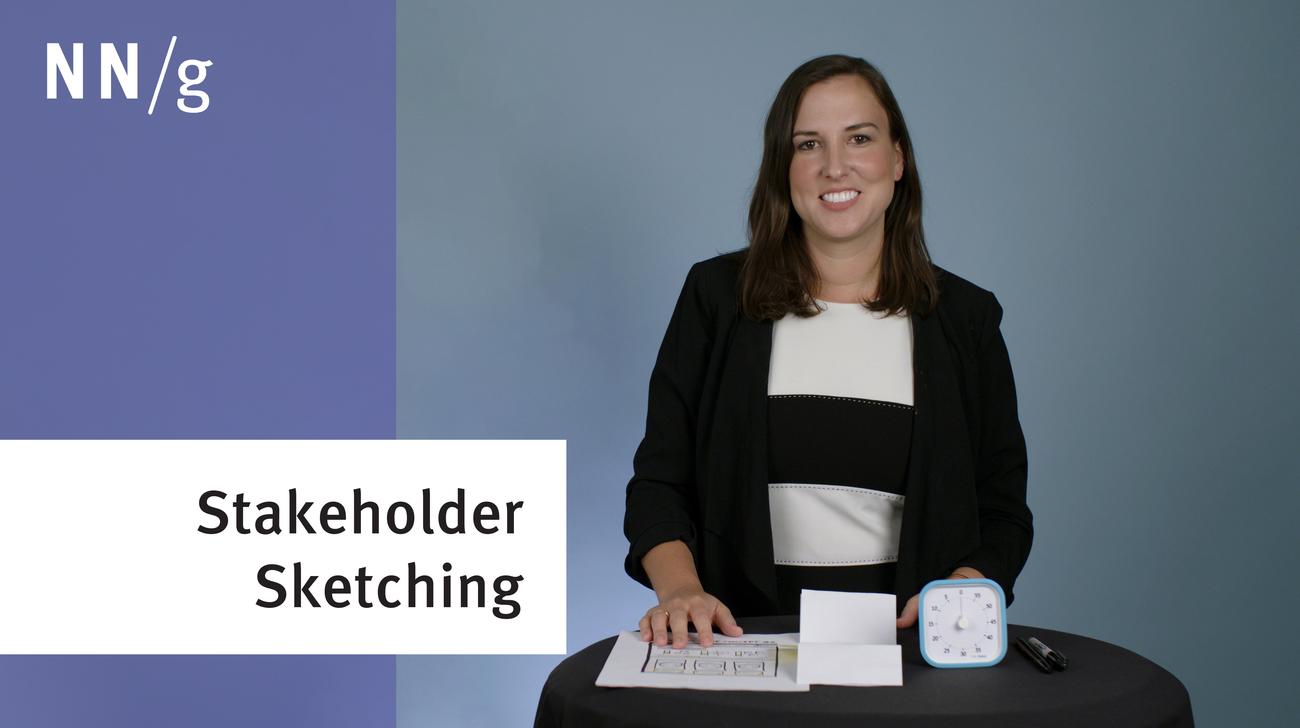
In ideation and many other UX activities, we want to include stakeholders and get them to participate in sketching UI prototypes and other visuals. Here are four tactics to getting everybody to sketch in your UX workshops.
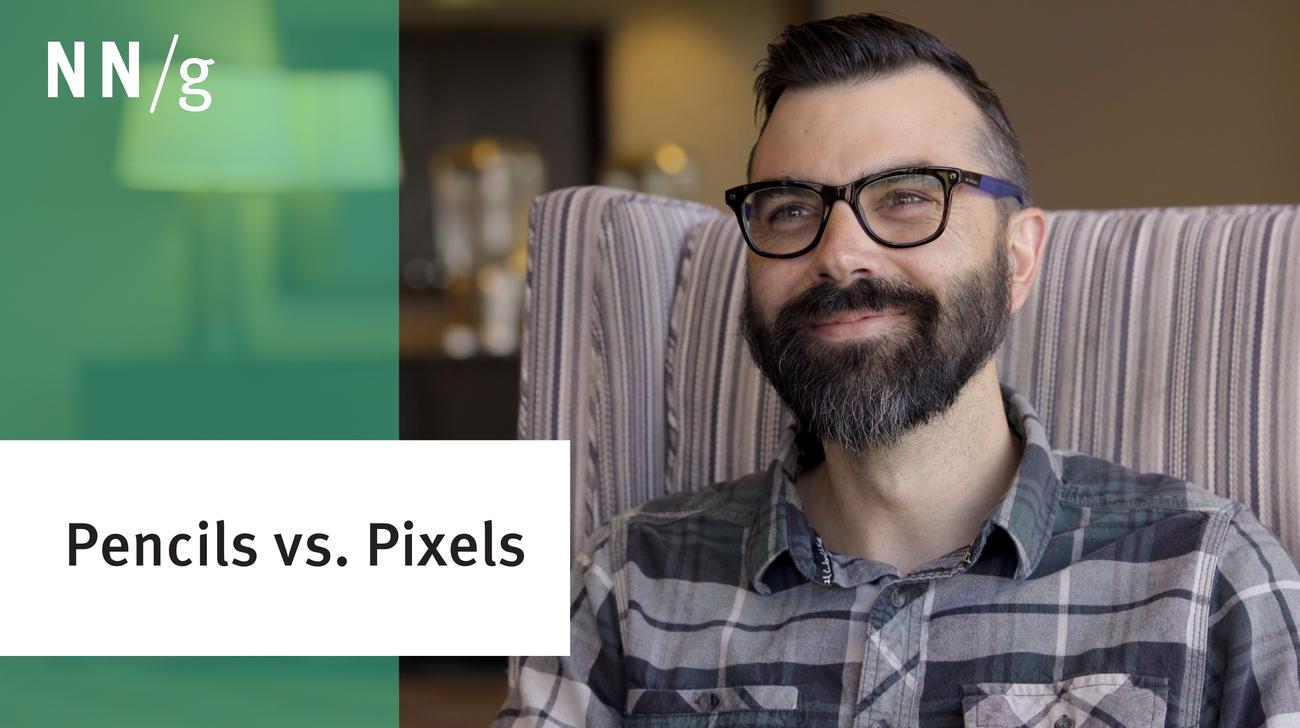
UX designers answer the question of when they prefer to use hand-drawn sketches of a user interface design vs. pixel-perfect designs generated on a computer.
Use the affinity diagramming method with stakeholders and members to efficiently categorize then prioritize UX ideas, research findings, and any other rich topics. Work together to quickly develop a shared understanding among your team.
Don't just show your proposed user-interface solution. Set the stage with the necessary background for understanding the design, and follow through with visuals that tell the full UX story.
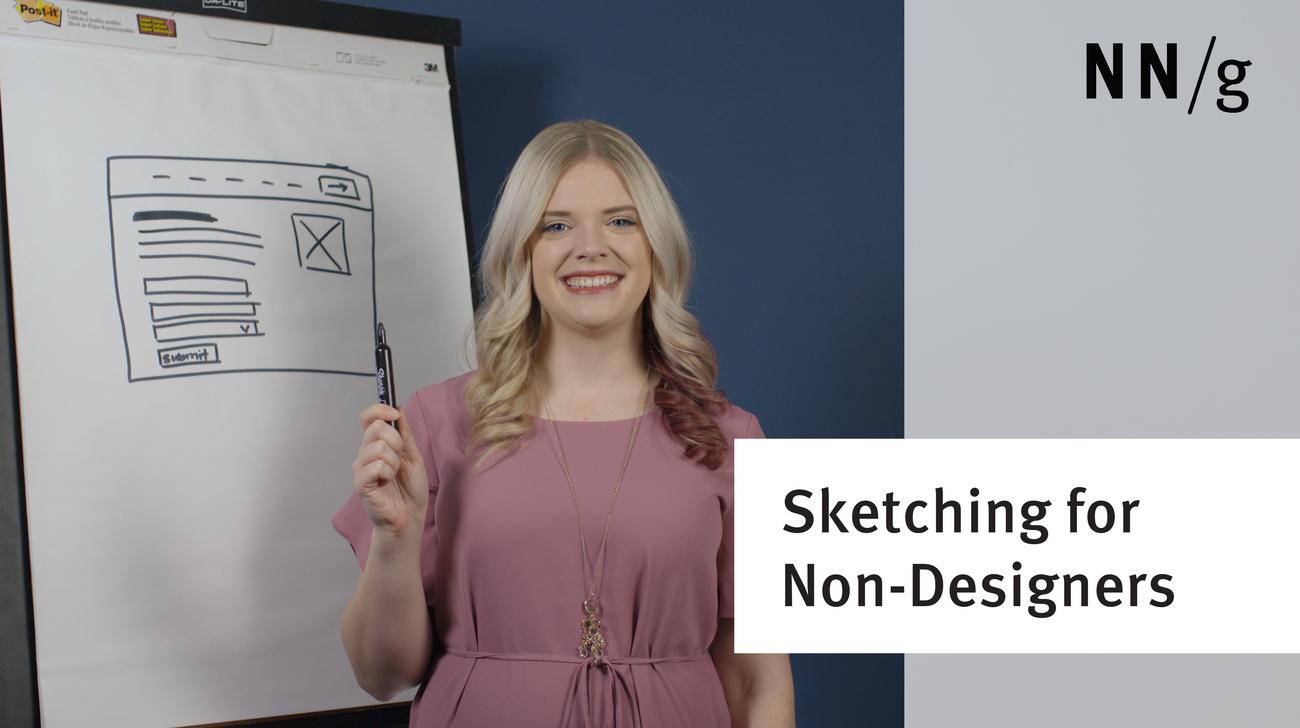
"I can't draw," is a common phrase heard in ideation. But ideation happens in early stages of design and is meant to be messy. This video shows how to use basic shapes to convey UI elements.