A clear guide to UX research democratization—definition, misconceptions, benefits, research ops, templates, training, tech, and AI best practices for scaling quality insights.
Moving from graphic design to UX doesn’t mean starting over. Most core skills are directly transferable and serve as a strong foundation to become a great UX designer.
When designs get rejected in dev review, missing specs are often the culprit. A solid spec covers layout, interactions, requirements, and project scope.
A UX team charter clarifies a team's purpose, roles, and goals to improve efficiency and collaboration. It's a commitment to shared values and working methods to make the UX team's vision actionable.
Searching for a UX job and want an edge on your competition? Stop endlessly iterating over your portfolio and start practicing storytelling to ace your UX job interviews.
Effective collaboration can be challenging, yet it is crucial for successful outcomes. By following 7 steps for better collaboration, you can avoid the most common issues and set yourself up for success.
UX job interview questions and whiteboarding challenges that ask you to resolve a situation are tough. Remember METEOR to structure your problem-solving process and give effective answers.
Design teams can face challenges caused by their organization's low UX maturity. This is a short guide of 10 communication activities to increase your organization's UX maturity and eliminate or decrease these common challenges.
Is your UX portfolio woefully outdated? Use this simple technique every new year to capture your important achievements and make the task more manageable.
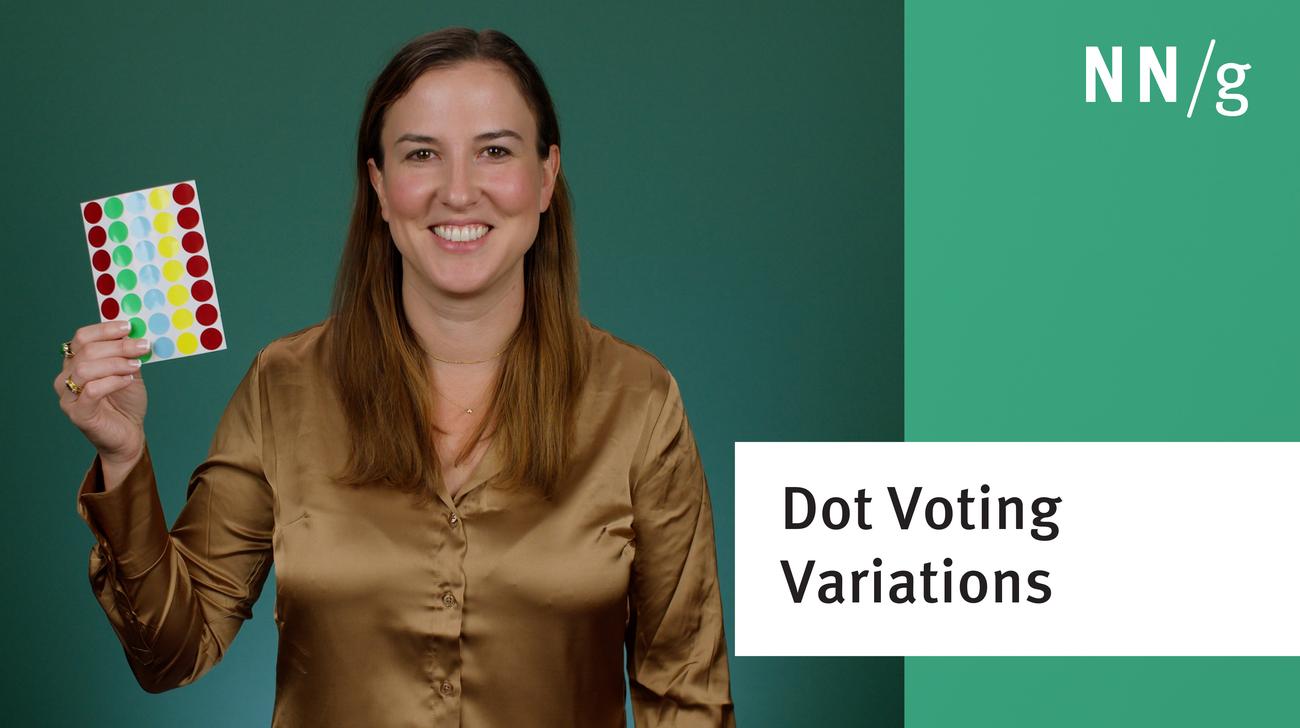
Think beyond the dot in your next UX workshop! Variations of dot voting such as heat mapping and dot coding add context and facilitate deeper discussion during UX prioritization activities.
The empathy-mapping process helps distill and categorize knowledge of the user into one place, while the artifact serves as quick, digestible way to illustrate user attitudes and behaviors.
Team up with product partners more effectively by making research accessible, framing the context and value of analytics, and establishing a regular communication cadence.