Because the field is being defined in real time, practitioners often have questions about what Design Operations means, and how to establish DesignOps practices.
As you learn design thinking, you progress through stages: being a beginner, an intermediate practitioner, and possessing advanced expertise. This progression is like learning to cook: you won't be a master chef on day 1, but there are appropriate skills to aim for at each level.
UX practitioners associate the term “service blueprinting” with an artifact, framework, or collaborative tool. Those surveyed used service blueprints early on or near the end of the product-design lifecycle.
A service design perspective is needed to avoid fragmenting the long-term customer experience by individual (but uncoordinated) touchpoints, provided by siloed internal teams.
The design thinking project life-cycle has 6 well-defined stages. Mapping these stages onto a typical Agile development project shows when designers should conduct which UX activities.
A parking lot captures unrelated questions or out-of-scope conversations during UX meetings or workshops to keep the discussion focused and maintain momentum.
We conducted research with UX professionals and designers to find out what they think Design Thinking actually is. What attributes do practitioners assign to Design Thinking, as used in practice? And how does this understanding evolve as practitioners get more experience?
When you are in the early stages of designing a user experience flow, use scenario mapping to work out how different personas will use the proposed design to solve their tasks.
Cognitive maps, concept maps, and mind maps are diagramming techniques that can be utilized throughout the UX process to visualize knowledge and surface relationships among concepts.
By placing colored dots, participants in UX workshops, activities, or collaborative sessions individually vote on the importance of design ideas, features, usability findings, and anything else that requires prioritization.
The best user experiences are backed by research, but sometimes we move more quickly than our research does. How can we best use and track assumptions as we go through design iterations?
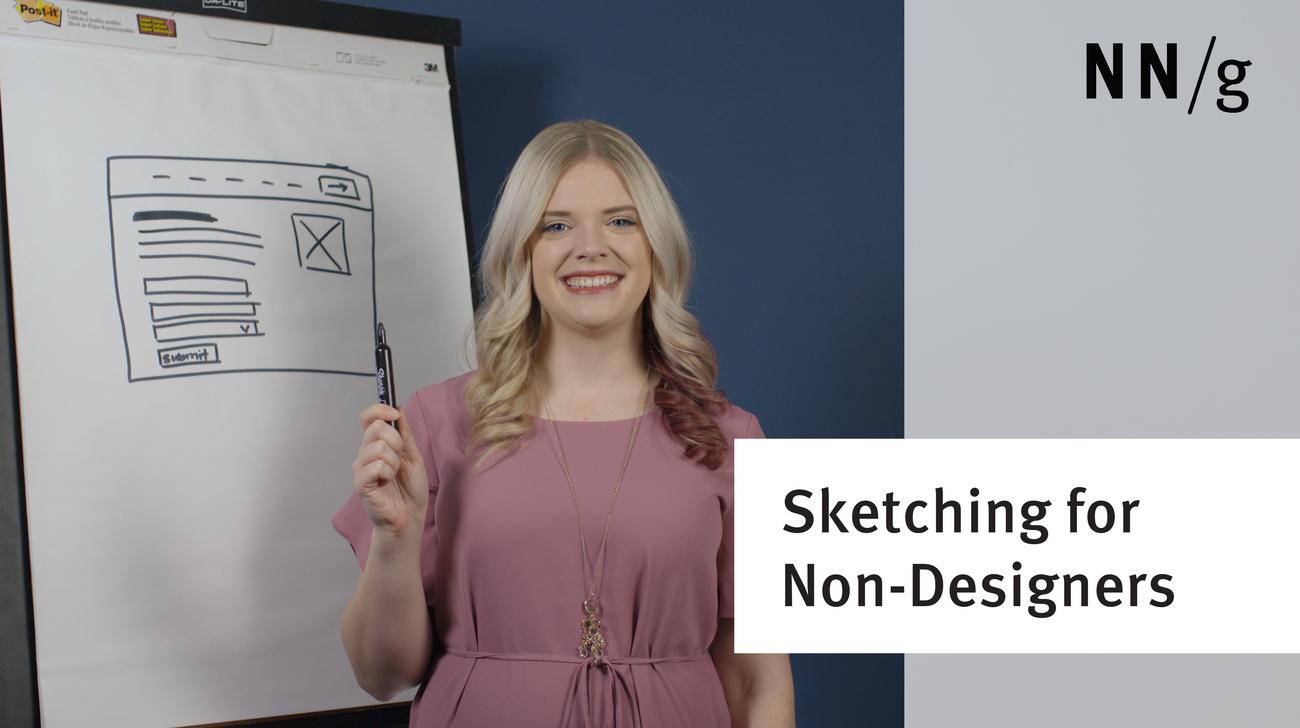
"I can't draw," is a common phrase heard in ideation. But ideation happens in early stages of design and is meant to be messy. This video shows how to use basic shapes to convey UI elements.
Using paper prototypes is a great way to test a design idea and get usability feedback quickly. You can test whether a layout makes sense to users and make immediate changes if they run into issues.
The 5 components of a journey map and the benefits of using this qualitative method as part of a UX design process to discover, document, and share the bigger picture of what users want.
Stories build empathy and make the user needs and pain points memorable to your team. Effective stories speak the language of the audience, are rooted in data, and take advantage of compelling artifacts.