Rachel Krause is the Director of Live Training at Nielsen Norman Group. She leads the design, delivery, and continuous improvement of NN/g’s live training offerings. She has expertise in UX strategy, facilitation, storytelling, product design, and stakeholder management, and is passionate about empowering UX professionals to build skills, solve complex problems, and elevate UX maturity within their organizations.
Anybody who's already a good UI designer and can make great screens, has a big head start to becoming a good UX designer, but more is required to excel in this expanded role.
A 7-step process to creating a case study for your portfolio: how to describe your design, the UX process that led to this specific user interface, and the business impact of the design.
The design thinking project life-cycle has 6 well-defined stages. Mapping these stages onto a typical Agile development project shows when designers should conduct which UX activities.
A portfolio highlighting your design process and past work shows others who you are as a designer. The process of creating a UX-design portfolio allows you to reflect on your skills and achievements.
UX designers answer the question of when they prefer to use hand-drawn sketches of a user interface design vs. pixel-perfect designs generated on a computer.
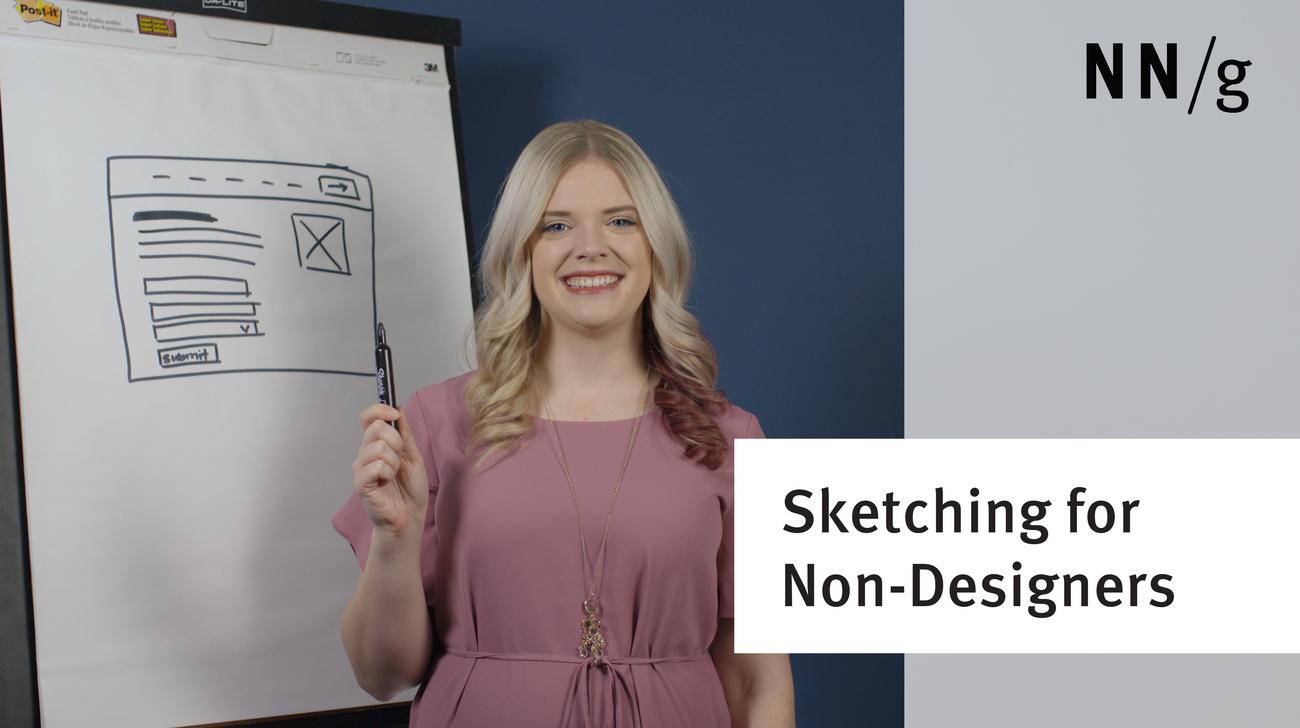
"I can't draw," is a common phrase heard in ideation. But ideation happens in early stages of design and is meant to be messy. This video shows how to use basic shapes to convey UI elements.
Using paper prototypes is a great way to test a design idea and get usability feedback quickly. You can test whether a layout makes sense to users and make immediate changes if they run into issues.
Stories build empathy and make the user needs and pain points memorable to your team. Effective stories speak the language of the audience, are rooted in data, and take advantage of compelling artifacts.
Retrospectives are a dedicated time to come together, reflect, and collaboratively improve your design team’s process. In this video, we'll walk through the four components of a retrospective and how to use this meeting effectively.