Our survey results reveal that many UX practitioners perform discoveries in some shape and form, although many are on the short side, lack user research and don’t involve the right people.
Discoveries are a powerful part of the UX design process, but unfortunately, many teams are not doing true discovery. Here are 5 main ways to go wrong.
How to maximize team participation and the value of the outcome when running a UX workshop remotely. Different platforms have different benefits and downsides, so choose depending on your circumstances and needs.
Even though in-person UX sessions are typically ideal, sometimes budget or travel restrictions necessitate remote UX work. This article presents guidelines for remote user research, UX workshops or presentations, and collaboration.
Storytelling is a powerful technique for UX teams and for working with stakeholders, but only if you use the proper words for your audience's domain. Here are tips for building vocabulary for your stories.
The most common pain points with service blueprinting are setting expectations, determining scope, and communicating insights, according to 97 UX professionals.
Although many different instigators, roles, and activities are involved in a discovery, all discoveries strive to achieve consensus on a problem to be solved and its desired outcomes.
The type of workshop will dictate which tools your team should use. Ultimately, with limited time and budget, your best bet is to use a tool your team already knows how to use.
There are 7 activities that act as a foundation for every UX exercise during a workshop or collaborative team meeting. By understanding these, you can create almost any other exercise you need.
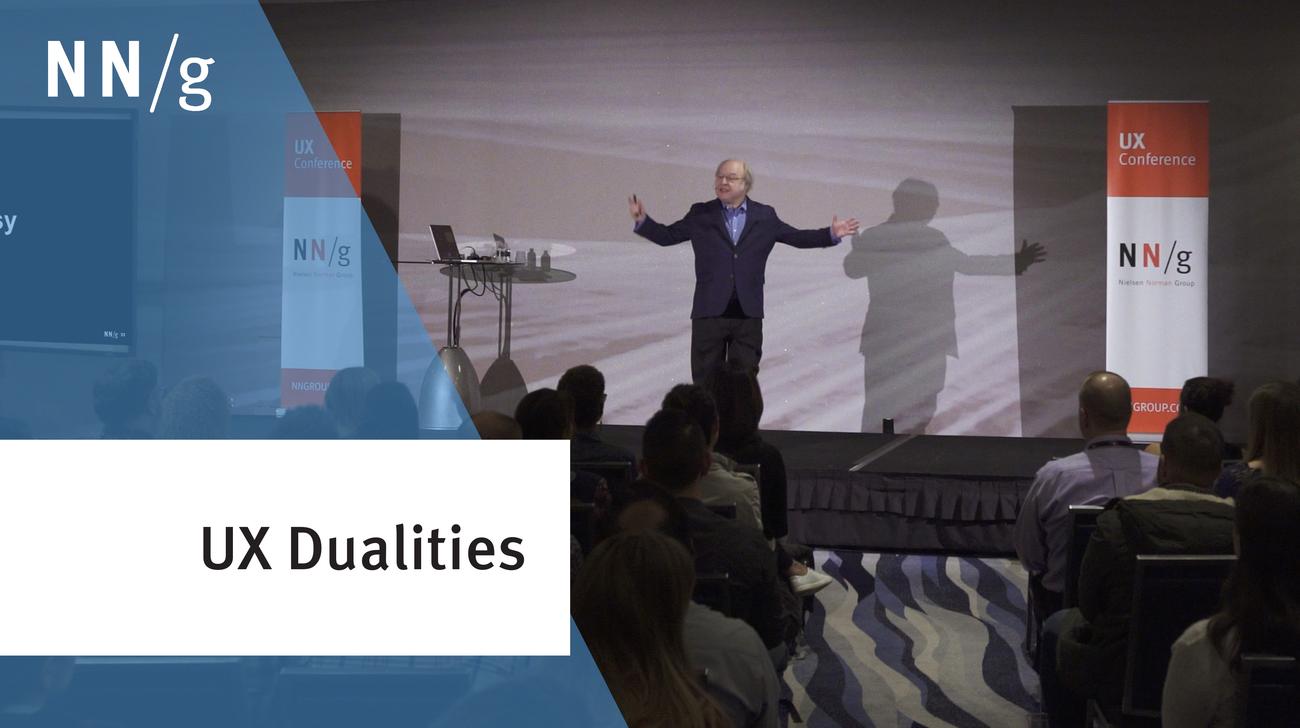
Many issues in the user-experience field don’t have a simple answer. Rather there’s a tension between two good answers that are often polar opposites. Both extremes can be useful perspectives, and both have their advocates when people debate UX. How do we resolve these differences? This was Jakob Nielsen's keynote at the UX Conference in Las Vegas.
Meetings are for sharing information; workshops are for solving a problem or reaching an actionable goal. We compare the differences in purpose, scope, length, structure, and preparation time for workshops and meetings.
Top Tasks are a tool used to focus a design team on the same, best set of user tasks. It comprises a list of 10 or fewer activities that users should be able to achieve using a design. If people can’t do these things, the design has failed. It takes a small amount of effort to create Top Tasks lists, but their impact is great.
Great design doesn't just happen. Rather, the organization must build 6 pillars that carry UX to success: capabilities, executive support, teams, resources, process, and schedule.
Collaborative sketching is a powerful tool for building buy-in for design decisions; however, it can be difficult to get stakeholders comfortable with the idea of drawing in a group setting. These variables help make group sketching more productive and effective with stakeholders.